
Last updated: 6 October 2026
Workplace Safety and Health (WSH) is the systematic practice of preventing injury, illness, and property damage at work. In facility operations, effective WSH depends on identifying two related sources of risk early: unsafe acts, which are unsafe behaviours or decisions, and unsafe conditions, which are hazardous physical or environmental circumstances. Teams must report hazards promptly, make the area safe, assign corrective work, and retain evidence that the issue was closed.
Key takeaways
- WSH means Workplace Safety and Health, covering the policies, processes, training, and controls that protect people during work.
- An unsafe act is a person’s behaviour, such as bypassing lockout procedures or using the wrong personal protective equipment (PPE).
- An unsafe condition is a hazardous workplace state, such as a wet floor, damaged cable, blocked exit, or missing machine guard.
- Fast, simple hazard reporting helps public-sector facility teams capture issues where they occur and route them to the right person.
- Corrective work needs an auditable record that links the report, risk controls, work order, verification, and closure.
What is WSH and what does WSH mean in facility operations?
WSH means Workplace Safety and Health, a structured approach to managing risks that may harm workers, contractors, visitors, and the public. WSH in facility operations includes routine inspections, hazard reporting, safe work procedures, contractor coordination, emergency readiness, preventive maintenance, and documented corrective actions.
Government and public-sector facilities face a broad safety scope. A civic office may have electrical rooms, loading bays, washrooms, public counters, plant rooms, roofs, lifts, and shared spaces. A school, community centre, library, municipal depot, or government hospital may also have a high volume of occupants and contractors. Each location requires practical controls that staff can follow in daily work.
WSH is an operating discipline, not a document stored for annual review. A safety policy establishes expectations, while frontline actions determine whether risks are found and controlled before an incident occurs. Facility managers need clear reporting routes, accountable owners, appropriate escalation, and records that demonstrate what happened after a hazard was identified.
International standards can provide useful management context. ISO 45001 sets out requirements for occupational health and safety management systems, while ISO 55000 provides asset management principles. A facility safety programme can use these principles to connect worker safety with reliable asset operation and planned maintenance.
What is the difference between an unsafe act and an unsafe condition?
An unsafe act is a hazardous behaviour, while an unsafe condition is a hazardous state of the workplace, equipment, or environment. Both can exist in the same event and both require investigation and corrective action.
| Criterion | Unsafe act | Unsafe condition |
|---|---|---|
| Definition | A person takes an action or omits a required action that increases risk. | A physical, environmental, or system-related hazard exists in the workplace. |
| Primary source | Behaviour, decision-making, competence, supervision, or procedure adherence. | Equipment, infrastructure, layout, housekeeping, maintenance, or environmental conditions. |
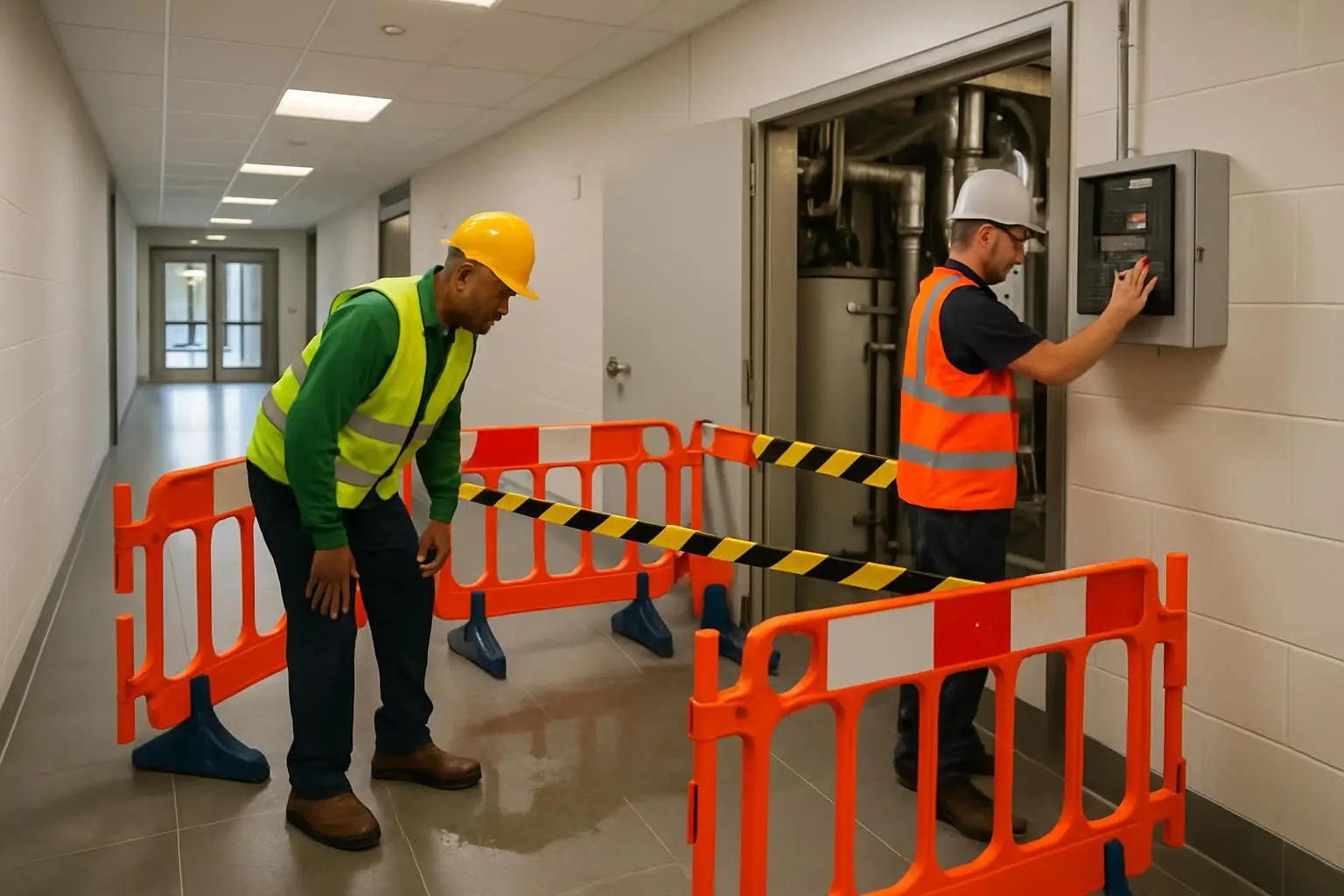
| Facility example | A contractor enters a plant room without authorisation or required PPE. | A plant-room floor is slippery due to an uncontained water leak. |
| Immediate response | Stop unsafe work, protect people, and confirm the correct safe procedure. | Isolate, barricade, clean, repair, or otherwise control the physical hazard. |
| Long-term control | Training, supervision, task planning, permit controls, and clearer procedures. | Maintenance, engineering changes, inspections, replacement, and housekeeping standards. |
The phrases unsafe act unsafe condition, unsafe acts and unsafe conditions, and unsafe action and unsafe condition are often used together because they influence one another. For example, a technician may take an unsafe action by using an unsecured ladder. The unsafe condition may be an uneven floor, poor lighting, a damaged ladder foot, or inadequate access equipment supplied for the task.
Avoid treating the distinction as a search for blame. An unsafe act can indicate that a procedure was impractical, supervision was insufficient, equipment was unavailable, signs were unclear, or work pressure encouraged shortcuts. A useful WSH review asks what controls failed and what changes will prevent recurrence.
Which unsafe acts should facility teams look for every day?
Facility teams should look for behaviours that bypass established controls, create exposure to hazards, or put other occupants at risk. Unsafe acts occur during planned maintenance, cleaning, delivery activities, contractor work, and urgent fault response.
Common unsafe acts in facility operations include:
- Working at height without approved fall protection, a safe access method, or an exclusion zone below.
- Starting electrical work without isolation, lockout/tagout, testing for dead, or authorisation under site rules.
- Entering a confined space without the required permit, atmospheric testing, communication plan, and standby arrangements.
- Removing, defeating, or ignoring machine guards, interlocks, warning signs, and barriers.
- Using damaged tools, improvised equipment, or equipment beyond its rated purpose.
- Wearing unsuitable PPE, or failing to wear PPE identified in the risk assessment or permit conditions.
- Lifting heavy or awkward loads without mechanical aids, task planning, or team lifting support.
- Operating vehicles or mobile equipment too quickly in shared pedestrian areas.
- Leaving a work zone unsecured while tools, cables, chemicals, or open access panels remain present.
- Beginning high-risk contractor work before the required permit to work has been approved.
Supervisors should observe activities in the field and record positive safe behaviours alongside hazards. Consistent recognition reinforces the safe practices that make procedures work under real operating conditions.
Which unsafe conditions create the highest facility risks?
Unsafe conditions are physical or environmental hazards that can expose people to slips, trips, falls, electrical shock, fire, harmful substances, struck-by incidents, or equipment failure. Many unsafe conditions are visible during routine rounds, provided staff know what to look for and have a frictionless reporting route.
| Area | Examples of unsafe conditions | Typical immediate control |
|---|---|---|
| Public areas and corridors | Wet floors, loose mats, damaged handrails, poor lighting, trailing cables | Guard the area, display warnings, remove the hazard, raise a repair request |
| Fire and life safety | Blocked exits, obstructed extinguishers, wedged fire doors, damaged exit signs | Clear obstructions, restore door function, escalate life-safety defects |
| Electrical and plant rooms | Exposed wiring, leaking equipment, missing panel covers, poor housekeeping | Restrict access, isolate if authorised, arrange qualified inspection and repair |
| Work at height | Damaged ladders, unprotected edges, unstable platforms, unsafe roof access | Stop work, tag defective equipment, install suitable controls |
| Washrooms and cleaning areas | Water leaks, chemical spills, broken tiles, overflowing bins | Clean or contain, cordon off, arrange maintenance or cleaning work |
| Loading and service areas | Poor segregation, damaged dock edges, blind corners, uneven surfaces | Set traffic controls, mark routes, repair surfaces, brief users |
A reported unsafe condition and unsafe act may point to a broader operational gap. Repeated wet-floor reports near a washroom may require leak repair, revised cleaning rounds, better drainage, sensor-triggered alerts, or a review of consumable replenishment. Closing each individual report matters, while trend analysis helps eliminate recurring causes.
How should staff report an unsafe act or unsafe condition?
Staff should report an unsafe act or unsafe condition immediately through the fastest approved channel, with enough detail for a supervisor to protect the area and assign corrective work. Reports should never depend on a person remembering to enter data later at a desktop computer.
A practical hazard report includes:
1. Exact location: Building, floor, room, asset area, or nearby landmark. 2. Hazard description: State what is unsafe and who may be exposed. 3. Photo or video evidence: Capture the condition only when it is safe to do so. 4. Immediate actions taken: For example, barricaded the area, stopped work, informed security, or isolated equipment under authorised procedures. 5. Risk and urgency: Identify whether there is an immediate threat to people, public access, operations, or critical services. 6. Reporter contact: Enable the safety or facilities team to clarify details when needed.
Messaging-first reporting can reduce friction in large public facilities. FacilityBot enables employees and authorised occupants to report faults and hazards through familiar messaging channels such as WhatsApp, Microsoft Teams, Telegram, Slack, or Line. The report can then become a trackable facility work item with a location, images, responsible team, and status history.
For inspection-led reporting, digitised checklists provide consistency across sites and shifts. Use digitised facility inspections, checklists, SOPs, and compliance audit trails to define what inspectors check, what constitutes a failed item, and what evidence is required before closure.
What should happen after a WSH hazard is reported?
After a WSH hazard is reported, the responsible team must control immediate risk, assess the issue, complete corrective work, verify the result, and preserve the closure record. A report without follow-through can leave the same people exposed to the same danger.
Use the SAFE Loop for Facility Hazards to make this workflow consistent:
S: Secure the area
Secure the people and place first. Stop the unsafe task, set up barriers, isolate affected equipment where authorised, redirect public access, and contact emergency services or site security when the risk requires it.
A: Assess the risk and assign ownership
Assess severity, likelihood of exposure, affected groups, and criticality of the affected asset or service. Assign a named owner and due time. High-risk hazards need immediate escalation, while lower-risk defects still need controlled completion dates.
F: Fix the direct cause and contributing causes
Create and track a work order for repairs, cleaning, replacement, engineering modification, or contractor action. Review contributing causes such as inadequate signage, lack of spares, poor access design, incomplete maintenance, or unclear work instructions.
For recurring asset defects, connect WSH findings with a preventive maintenance schedule for facility assets. Planned inspections and maintenance tasks can prevent hazard reports from becoming a permanent reactive workload.
E: Evaluate and verify closure
A competent person should confirm that corrective work has removed or reduced the risk. Verification can include photographs, inspection results, test records, contractor documents, and comments from the person responsible for the area. Reopen the item if the fix is incomplete.
A documented workflow also supports incident learning. Where an injury, near miss, or service-impacting event occurs, use a structured incident reporting and fault reporting workflow to preserve facts, coordinate response, and investigate root causes.
How does e-Permit to Work control high-risk facility activities?
An e-Permit to Work system controls high-risk work by confirming authorisation, hazards, precautions, roles, and close-out steps before work begins. Permits are particularly important for activities such as hot work, electrical isolation, confined-space entry, work at height, and work that affects live public facilities.
FacilityBot’s e-Permit to Work module can provide a digital approval trail for permit requests, supporting documents, risk controls, issuer and receiver acknowledgements, and permit closure. The permit workflow should require teams to identify site-specific controls, rather than treating a generic checklist as automatic permission to start.
A permit does not replace competent supervision or risk assessment. It creates a reliable control point where the facility manager, contractor, and work team confirm the safe conditions needed for the specific task. If conditions change, work should pause and the permit should be reviewed.
How can public-sector facility teams track WSH performance?
Public-sector facility teams should track WSH performance through timely, evidence-based measures that show hazard reporting, corrective action, overdue risks, and repeat issues by location or asset type. The objective is to direct resources toward unresolved exposure and recurring failure patterns.
Useful operational measures include:
- Number of unsafe acts and unsafe conditions reported by site, area, and category.
- Time from report to initial risk control.
- Time from report to verified closure.
- Overdue high-risk corrective actions and permit-related actions.
- Repeat hazards involving the same asset, space, contractor, or task.
- Inspection completion and failed checklist items.
- Open versus closed work orders connected to safety reports.
Data should lead to a clear management decision. For example, recurring reports of damaged doors at a public building may justify a planned replacement programme. Repeated permit issues may show a contractor onboarding or supervision gap. Persistent washroom hazards may require revised cleaning schedules, repair priorities, or smart alerts that create cleaning work orders.
Cost planning should consider both the software workflow and the operational time saved through faster reporting, reduced manual follow-up, and better audit readiness. Review FacilityBot pricing when evaluating the scope of fault reporting, digital inspections, work orders, and e-PTW controls for a government or public-sector estate.
FAQ
Is a near miss an unsafe act or an unsafe condition?
A near miss is an event that could have caused injury, illness, or damage but did not result in actual harm. A near miss may involve an unsafe act, an unsafe condition, or both. The report should document the event, immediate controls, and underlying causes so the hazard can be removed before a future incident.
Who is responsible for reporting unsafe conditions at work?
Everyone who sees an unsafe condition should report it, while supervisors and facility managers are responsible for ensuring that the report is assessed and resolved. Contractors, cleaners, security teams, employees, and visitors may all observe hazards that routine inspections miss.
What evidence should be retained for WSH corrective actions?
WSH corrective-action records should retain the original report, location, risk assessment, assigned owner, work order history, photos, permit records where relevant, verification evidence, and closure approval. These records support audits, investigations, trend reviews, and accountability.
A strong WSH programme turns everyday observations into timely controls, completed work, and verifiable improvement. Book a FacilityBot demo to explore messaging-first hazard reporting, digital inspections, work orders, and e-Permit to Work for your facility operations.
