
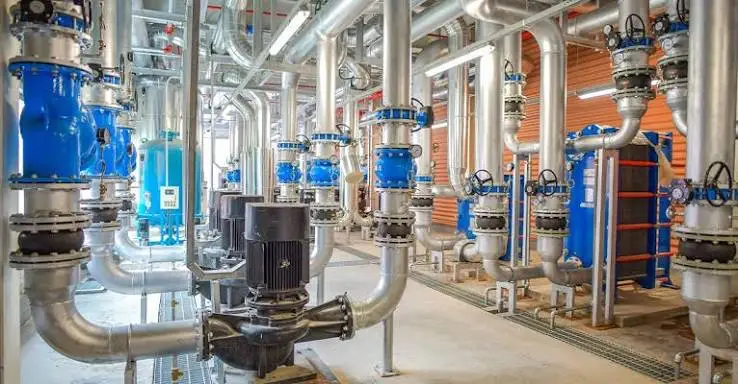
A chiller is usually the largest single energy user and one of the most expensive pieces of plant in a building. It is also one of the least forgiving. When a chiller goes down on a hot afternoon, there is no quick workaround: occupants get uncomfortable, process loads overheat, and the repair bill arrives with an emergency surcharge.
Good chiller maintenance is what separates the plants that run quietly for decades from the ones that lurch from one breakdown to the next. This guide walks through what a chiller maintenance program needs to cover, how often each task should happen, and a complete chiller preventive maintenance checklist you can adapt to your own equipment. It also covers what to log, which readings reveal trouble early, and how to keep the whole program on schedule.
What a Chiller Does, and Why It Is Different From Other HVAC Equipment
A chiller removes heat from a fluid, usually water or a water and glycol mix, and that cooled fluid is then circulated to air handlers, process equipment, or other cooling loads. The heat is rejected either to the outdoor air (air-cooled chillers) or to a condenser water loop and cooling tower (water-cooled chillers).
Chillers differ from simpler HVAC equipment in several ways that shape how they must be maintained:
- They are sealed refrigeration machines. Refrigerant, oil, and moisture control matter, and much of the work needs qualified technicians.
- They are data-rich. Pressures, temperatures, approach values, currents, and flows tell you how healthy the machine is long before it trips.
- They depend on the plant around them. Pumps, strainers, cooling towers, water treatment, and controls all affect the chiller. A fault that shows up at the chiller often starts elsewhere.
- Failures are expensive. Compressor and heat exchanger damage can be costly and slow to repair.
For that reason, chiller maintenance is more condition-driven than the calendar-driven routines that suit filters and belts on an air handler. If you maintain both, our guide to air handling unit maintenance shows the more routine, inspection-led side of HVAC care.
The Main Chiller Types, and How Maintenance Differs
Maintenance details change with the machine. Know which you have.
| Chiller type | How it rejects heat | Maintenance emphasis |
|---|---|---|
| Air-cooled | Fans move outdoor air across condenser coils | Coil cleanliness, fan motors and bearings, fin condition, ambient and airflow obstructions |
| Water-cooled | Condenser water carries heat to a cooling tower | Tube cleanliness, water treatment, tower condition, condenser water flow and temperature |
| Centrifugal | Compressor uses an impeller | Oil analysis, vane and bearing wear, purge operation on low-pressure machines, vibration |
| Screw | Twin rotors compress refrigerant | Oil pressure and separation, slide valve operation, discharge and suction superheat |
| Scroll | Orbiting scrolls compress refrigerant | Refrigerant charge, discharge temperature, electrical condition |
| Magnetic bearing (oil-free) | Frictionless bearings, no oil system | Bearing controller and drive checks; no oil analysis |
| Absorption | Heat-driven cycle with a salt solution | Solution concentration, vacuum integrity, purge, crystallisation prevention |
Always work from the manufacturer’s manual for the exact model. The checklist below is a general framework, not a substitute.
Why Chiller Maintenance Matters
Energy. Fouled tubes and coils force the compressor to work harder for the same cooling. Even a thin film of scale can reduce efficiency noticeably.
Reliability. Most chiller failures are preceded by drift in readings. Regular checks catch that drift while it is still a planned repair.
Equipment life. Clean heat exchangers, healthy oil, correct charge, and sound electrical connections reduce wear on the most expensive components.
Freeze and flood protection. Low flow, wrong glycol concentration, or failed controls can freeze an evaporator, which risks ruptured tubes and water ingress.
Compliance and warranty. Refrigerant handling, leak testing, and documented maintenance are often required by regulation and by manufacturer warranties.
Comfort and process continuity. Buildings and processes that depend on cooling cannot tolerate long outages.
Safety and Preparation
Chiller work combines electrical, mechanical, pressure, and chemical hazards.
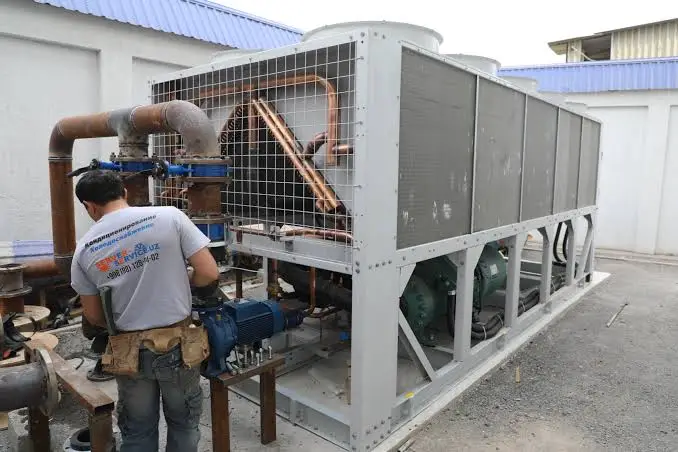
- Follow the manufacturer’s procedures, and only carry out work you are trained and authorised to do.
- Lock out and tag out electrical supplies and isolate water and refrigerant circuits as required before opening equipment.
- Verify isolation with the right test equipment before touching anything.
- Ventilate the plant room and know where refrigerant detectors, ventilation controls, and emergency stops are.
- Use appropriate PPE for electrical, chemical, and mechanical tasks.
- Leave refrigerant handling, recovery, and recharging to certified technicians. Log any added or recovered refrigerant for environmental compliance.
- Plan outages with the building. Tell occupants, the BMS operator, and any process owners before shutting down a chiller.
Tools and Equipment You Will Want on Hand
A basic kit makes routine checks far more reliable:
- Multimeter and clamp meter for electrical checks
- Insulation resistance tester (megohmmeter) for motor windings, operated by a qualified person
- Calibrated thermometers, pressure gauges, and flow meters
- Refrigerant leak detector suitable for your refrigerant
- Inspection mirror and torch
- Coil and tube cleaning equipment
- Glycol refractometer, if the system uses glycol
- Water test kits for water-cooled systems
- A log book or digital checklist
The Complete Chiller Preventive Maintenance Checklist
Frequencies below are typical starting points. Adjust them based on manufacturer guidance, local regulations, operating hours, water quality, and the criticality of the plant.
Daily Checks
These are quick rounds, often done by operators or technicians on duty.

- Record chilled water supply and return temperatures
- Record condenser water or ambient temperatures
- Record suction and discharge pressures, and any other readings the controller shows
- Check the sight glass for bubbles or moisture indication, if fitted
- Listen for unusual noise and check for abnormal vibration
- Look for oil, water, or refrigerant leaks
- Check the compressor oil level, where applicable
- Verify the control panel shows no active alarms and setpoints are correct
- Confirm chilled water and condenser water pumps are running as expected
- Check cooling tower water level on water-cooled systems
- Keep the area around the chiller clean and clear
Weekly Checks
- Test water chemistry and adjust treatment on water-cooled systems
- Clean strainers and inline filters in the water circuits
- Check the oil return system operation
- Inspect the condenser water regulating valve operation
- Check motor and bearing temperatures
- Inspect electrical connections visually and check for signs of heating
- Review electronic controls and sensor readings for anything implausible
- Test safety controls where the procedure allows
- Clean air-cooled condenser coils if debris loading is heavy
Monthly Checks
- Check compressor oil for clarity and signs of contamination
- Inspect motor starter contacts and connections
- Check oil heater operation
- Clean or replace air filters in the plant area or control cabinets
- Check economiser operation, if fitted
- Record superheat and subcooling values and compare with previous readings
- Check refrigerant moisture indication
- Test purge unit operation on low-pressure centrifugal machines
- Measure and record motor voltage and current at a stable load
- Tighten electrical connections with power isolated
Quarterly Checks
- Clean water strainers and check valves
- Thoroughly clean air-cooled condenser coils
- Inspect vanes and bearings for wear where accessible
- Test and calibrate temperature sensors
- Test and calibrate pressure sensors
- Check expansion valve operation
- Test flow switches and interlocks
- Check pipework insulation for damage and condensation
- Inspect vibration isolators and mounts
- Perform an insulation resistance test on motor windings, carried out by a qualified person
Semi-Annual Checks
- Check capacity control operation through its range
- Send a compressor oil sample for laboratory analysis, where the machine uses oil
- Inspect heat exchanger tubes for fouling, and carry out eddy current testing where specified
- Check motor starter operation and contacts
- Test all alarms and safety trips
- Inspect refrigerant storage and recovery equipment
- Check control panel components for signs of overheating
Annual Checks
- Perform a full refrigerant leak test across the system
- Review oil analysis results and change oil and filters as the laboratory recommends
- Clean condenser and evaporator tubes on water-cooled machines
- Replace filter-drier cores where required
- Inspect the compressor and carry out a teardown inspection if analysis or readings call for it
- Check motor winding condition
- Lubricate bearings to the manufacturer’s specification
- Check alignment of drives and couplings
- Carry out a thermographic scan of electrical components
- Test and recalibrate safety controls
- Run a full performance test and compare against commissioning and previous results
- Review overall efficiency, refrigerant use, and spare parts
Mechanical Component Checks
- Compressor mounting and isolation
- Coupling alignment, where applicable
- Gears and bearings for wear, where applicable
- Mechanical shaft seals on compressors and pumps
- Valves for correct operation and leaks
- Pipe supports and hangers
- Condenser fan motors and blades on air-cooled units
- Pump mechanical seals for leakage
Electrical Component Checks
- Control panel wiring and terminal tightness
- Motor contactors and starters
- Relays and control devices
- Variable frequency drives, including cooling fans and filters
- Overload protection settings
- Grounding and bonding
- Capacitors for bulging or leakage
- Safety and control circuits
Air-Cooled Chiller Additional Checks
- Condenser coils for bent fins, corrosion, leaks, and blockages
- Condenser fan bearings, belts, and couplings
- Fan blades and guards
- Clearances around the unit, with nothing blocking airflow
- In winter, ice and snow build-up around outdoor units
- In summer, pollen, debris, and recirculating hot air
Key Maintenance Practices in More Detail
Keep a Daily Log
If you do one thing, do this. A simple record of temperatures, pressures, flows, currents, and fluid levels, taken at consistent conditions, is the most reliable early-warning system a chiller has. Over weeks, the numbers show drift that no single reading would reveal.
Keep Heat Exchanger Surfaces Clean
Heat transfer is the entire point of a chiller. Scale, biofilm, corrosion products, and debris insulate tubes and coils, forcing the compressor to work harder. Plan tube cleaning at least annually on water-cooled machines, more often where water quality is poor, and clean air-cooled coils as dust and pollen loads demand. Use trending of approach temperatures to decide when cleaning is genuinely due rather than relying on the calendar alone.
Watch the Approach Temperatures
Two numbers tell much of the story:
- Condenser approach: the difference between the condensing refrigerant temperature and the leaving condenser water temperature. A rising trend points to fouled condenser tubes or non-condensables.
- Evaporator approach: the difference between the refrigerant evaporating temperature and the leaving chilled water temperature. A rising trend suggests evaporator fouling or distribution problems.
Record them at comparable load, compare with the manufacturer’s design values, and investigate steady increases.
Maintain Water Flow
Chillers are designed for a specific flow range. Too little flow can cause poor heat transfer and, in the worst case, freezing in the evaporator. A commonly cited design range is around 2.5 to 3 gallons per minute per ton of cooling, giving a temperature difference of roughly 8 to 10°F, but design values vary, so always use your chiller’s specification. Keep strainers clean, confirm pumps and valves are operating correctly, and verify flow switches work.
Check Glycol Concentration
If the loop uses glycol for freeze protection, test concentration with a refractometer and keep it within the specified range. The fluid’s freeze point must sit comfortably below the lowest temperature the chiller can produce. Evaporators are the most vulnerable part, because ice quickly restricts flow, which causes more freezing and eventually ruptured tubes.
Manage Refrigerant and Look for Leaks
Cooling capacity depends on the right refrigerant charge. Valve stems can loosen with vibration, joints can weep, and moisture can enter the circuit. Test for leaks systematically at least annually, watch for oil staining at joints, and never top up refrigerant without finding the cause of the loss. Log every addition or recovery for compliance.
Deal With Non-Condensables
Air and moisture in the refrigerant circuit raise condensing pressure and waste energy. Low-pressure machines use purge units to remove them, and the purge run counts are worth tracking. A rising purge rate often indicates a leak.
Analyse the Oil
On oil-lubricated machines, laboratory oil analysis shows acid level, moisture, and wear metals long before a bearing fails. Sample at consistent conditions with clean equipment, label samples properly, and compare each result with previous ones. Magnetic bearing machines do not use oil, so this item does not apply to them.
Inspect Motors, Starters, and Drives
Check connections for tightness, contactors for wear, drives for cooling and filter condition, and motors for insulation resistance and temperature. Rising motor current at the same load is a classic sign of developing trouble.
Treat Condenser Water and Cooling Towers
On water-cooled systems, the tower and water chemistry directly affect the chiller. Scale, corrosion, and biological growth reduce heat transfer and can create health risks. Keep a water treatment program, test chemistry regularly, inspect towers for fouling, nozzles, fans, and fill, and follow your Legionella risk management requirements.
Consider Variable Speed Drives
Chiller motors use a great deal of electricity. Variable speed drives on compressors, pumps, and fans can improve part-load efficiency, but they must be evaluated for your plant and maintained properly.
Reading the Warning Signs
Many chiller problems announce themselves before they stop the machine.
| Warning sign | What it may indicate | First checks |
|---|---|---|
| Rising condenser approach | Fouled condenser tubes or non-condensables | Water flow, tube condition, purge activity |
| Rising evaporator approach | Fouled evaporator or refrigerant distribution problem | Water chemistry, flow, charge |
| Increasing motor current at same load | Bearing wear, overcharge, rising lift | Vibration, charge, condenser conditions |
| Falling oil pressure differential | Pump wear, filter restriction, oil dilution | Oil filter, oil heater, oil analysis |
| High discharge temperature | Condenser fouling, non-condensables, low flow | Condenser approach, purge, airflow or tower |
| Short cycling | Low loop volume, oversized plant, control settings | Differential settings, staging logic |
| Capacity falling short of load | Fouling, low charge, valve or control faults | Approach temperatures, superheat, subcooling |
| Repeated alarm trips | Underlying fault being reset away | Fault history, flow, sensors |
When alarms do occur, read the full fault history rather than only the latest message. Our guide to chiller fault codes explains how to interpret common codes, what to check first, and when to call a technician.
Seasonal Maintenance Tips
Before summer
- Run a pre-season readiness check, including clearances, coils, strainers, flow switches, and setpoints
- Clean condenser coils or tubes
- Verify cooling tower fans, nozzles, fill, and water treatment
- Monitor condenser water or ambient temperatures more closely during heat waves
Before winter
- Confirm glycol concentration where freeze protection is needed
- Check heat trace and insulation on exposed pipework
- Clear ice and snow from around outdoor units
- Drain or protect idle equipment and lines that could freeze
During shoulder seasons
- Use quieter periods for major tasks such as tube cleaning, oil analysis follow-up, and calibrations
Documentation: What to Record and Keep
A chiller’s history is as valuable as its manual. Keep, for each machine:
- Make, model, serial number, capacity, refrigerant type, compressor type, installation date, and location
- Manufacturer’s manuals, sequence of operation, and commissioning data
- Daily and periodic operating readings
- Inspection, cleaning, calibration, and repair records
- Oil analysis reports and tube inspection results
- Refrigerant leak test results and a log of refrigerant added or recovered
- Alarm and fault history, and the actions taken
- Water treatment records for water-cooled systems
- Contractor reports and certificates
- Photographs of condition before and after major work
Good records support warranty claims, regulatory compliance, budget requests, and replacement planning.
Tracking Performance Over Time
Maintenance tasks are the inputs. Performance is the output. Track a handful of indicators for each chiller:
- Approach temperatures at comparable load
- Motor current at comparable load
- Energy use per unit of cooling
- Oil pressure and condition on oil-lubricated units
- Number of alarms and trips
- Planned versus reactive work
- Availability across the cooling season
Our guide to OEE for buildings shows how to combine availability, performance, and quality into a single view, and our article on real-time asset data in a CMMS explains how to feed run hours, alarms, and key readings from controllers into your maintenance system without overwhelming it.
Building a Chiller Maintenance Program That Sticks
A checklist alone does not maintain anything. To turn it into a program:
- Create an asset record for every chiller, including related pumps, towers, and strainers.
- Convert the checklist into scheduled tasks with frequencies, owners, and estimated times.
- Separate in-house tasks from specialist work. Refrigerant, compressor, and electrical testing often belong to qualified contractors.
- Book contractors early, especially for seasonal work.
- Define alarm response procedures so operators know what to check, what to record, and when to escalate.
- Stock critical spares, such as filter-driers, sensors, strainer elements, and contactors.
- Track completion and overdue work every month.
- Review failures and trends and adjust intervals.
- Train staff to take consistent readings and spot warning signs.
Our guide on how to start a preventive maintenance program covers the foundations in more detail.
Paper vs. Digital Chiller Logs
Paper log sheets are better than nothing, but they are hard to trend, easy to lose, and difficult to audit. A digital checklist lets technicians record readings on a phone or tablet, attach photos, flag defects, and trigger work orders on the spot. It also makes it simple to compare this month’s reading with last year’s and to prove to an auditor that a task was done.
To see how this works in practice, read why a CMMS is essential for preventive maintenance and how it can streamline preventive maintenance. If you are comparing platforms, FacilityBot’s CMMS software page shows how asset records, schedules, and checklists fit together.
Common Chiller Maintenance Mistakes
Relying on the calendar alone. Chillers are condition-driven, so trend readings as well.
Resetting alarms without reading the history. The latest code can mask the original fault.
Topping up refrigerant without finding the leak. It is a diagnostic mistake and may breach regulations.
Neglecting the cooling tower and water treatment. The chiller inherits every problem from the water side.
Skipping flow and glycol checks. Freeze damage is expensive and avoidable.
Treating sensors as infallible. Drifting sensors cause false trips and hide real problems, so calibrate them.
Ignoring small changes in motor current or approach temperature. Slow drift is the early warning.
Leaving records incomplete. Without history, repeat faults are invisible.
Postponing cleaning until efficiency collapses. Scheduled cleaning is cheaper than the energy and failures it prevents.
Starting the cooling season without a readiness check. The first hot day is the worst time to find a fault.
Frequently Asked Questions
What is chiller maintenance?
Chiller maintenance is the routine inspection, cleaning, testing, calibration, and servicing of a chiller and its supporting equipment, including pumps, strainers, cooling towers, controls, and electrical components, to keep it efficient and reliable and to prevent unplanned breakdowns.
What should a chiller preventive maintenance checklist include?
A good chiller preventive maintenance checklist covers daily operating readings and leak checks, weekly strainer and chemistry tasks, monthly oil and electrical checks, quarterly calibration and coil or tube cleaning, semi-annual oil analysis and safety tests, and annual leak testing, tube cleaning, drive and motor checks, and performance testing.
How often should a chiller be serviced?
Operators typically take daily readings, with more detailed tasks weekly, monthly, quarterly, semi-annually, and annually. The right schedule depends on the manufacturer’s recommendations, operating hours, water quality, and how critical the plant is.
How often should chiller tubes or coils be cleaned?
Many facilities clean water-cooled condenser tubes at least once a year, and some quarterly where water quality is poor. Air-cooled coils may need cleaning several times a year depending on dust, pollen, and debris. Rising approach temperatures are a better trigger than the calendar alone.
What readings should I log for a chiller?
Chilled water supply and return temperatures, condenser water or ambient temperatures, suction and discharge pressures, motor current and voltage, oil level and pressure where applicable, flow rates, and any alarms. Record them at consistent operating conditions so trends are meaningful.
Do all chillers need oil analysis?
No. Oil analysis applies to oil-lubricated machines such as many centrifugal and screw chillers. Magnetic bearing, oil-free machines do not use oil, so it does not apply.
What are the most common chiller problems?
Fouled condenser and evaporator tubes, refrigerant leaks, low water flow, non-condensable gases, oil system problems, electrical and drive faults, sensor drift, and freezing of the evaporator.
Can in-house staff maintain a chiller?
Staff can usually handle daily logging, visual inspections, strainer and filter cleaning, and basic checks. Refrigerant work, compressor service, electrical testing, and specialised diagnostics should be done by qualified technicians, and all work should follow lockout and tagout.
How do I prevent an evaporator from freezing?
Maintain correct chilled water flow, keep strainers clean, test glycol concentration so the freeze point is well below the lowest operating temperature, and make sure flow switches and low-temperature safeties work.
How does a CMMS help with chiller maintenance?
A CMMS schedules recurring tasks, stores each chiller’s manuals and history, records readings, turns defects into work orders, tracks refrigerant logs and contractor reports, and flags repeat faults. This makes the program consistent and auditable.
Simplify Chiller and Facility Management With FacilityBot
A chiller program only works when every reading is taken, every task is signed off, and every fault leaves a record. FacilityBot helps facilities teams make that routine. Our facilities management software holds each chiller’s asset record, checklist, schedule, and service history in one place, so the next technician starts with the full picture. As a facility management solution built for lean teams, it connects preventive tasks, contractor visits, and reactive repairs to the equipment they affect. Because it is cloud based CMMS software, technicians can work through the chiller preventive maintenance checklist on a phone, log readings, attach photos, and raise a work order for a leaking valve before leaving the plant room. And with built-in fault reporting software, staff and occupants can report a warm zone or a noisy plant room the moment they notice it, so early signs of trouble reach your team before they become chiller shutdowns. Book a demo to see how FacilityBot can support your chiller maintenance.
