
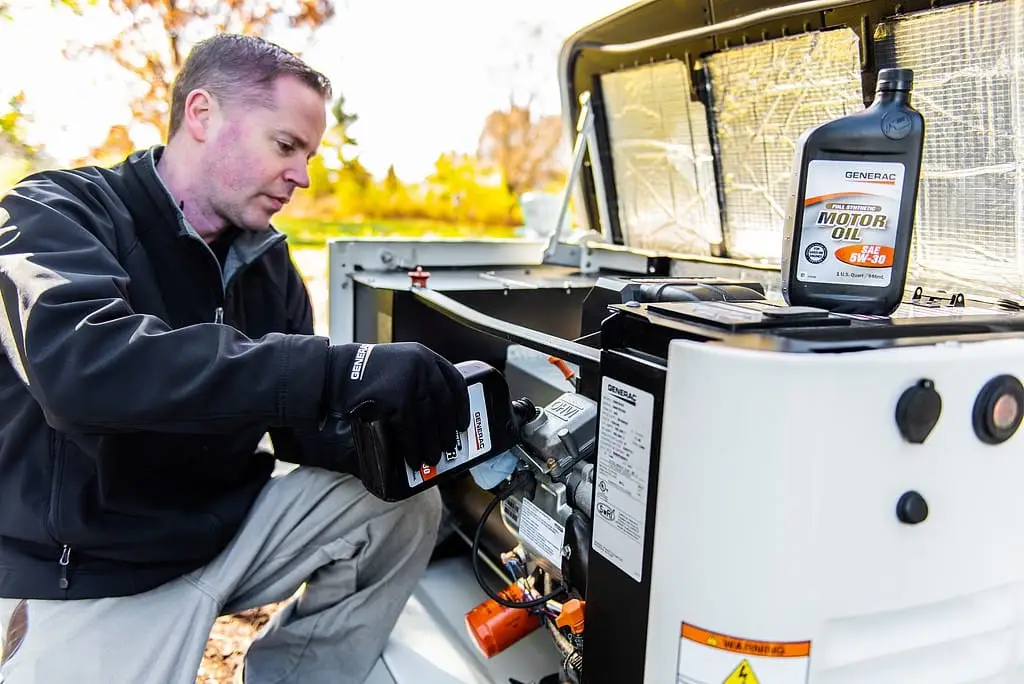
A backup generator is the one piece of equipment in your building that is judged almost entirely on a single moment. For months, it sits idle. Then the grid fails, and for the next few hours, everything from lighting and lifts to fire pumps, servers, and refrigeration depends on it starting on the first attempt and carrying load without a hiccup.
That moment exposes every shortcut. A weak battery, stale fuel, a blocked radiator, a transfer switch that has never been exercised, or a controller alarm left to sit can each turn a generator into an expensive ornament.
Sound backup generator maintenance is what prevents that. This guide explains what a maintenance program should cover, what to do weekly, monthly, quarterly, and annually, how to run load tests properly, and how to keep records that satisfy inspectors and insurers. It includes a practical generator maintenance checklist you can adapt to your own equipment.
Always treat this as a framework. Your manufacturer’s manual, your fuel type, the applicable standards for your building type (such as NFPA 110 in many jurisdictions), your insurer, and local regulations set the intervals that actually apply.
What a Backup Generator System Includes
The generator set is only one link in the chain. A standby power system typically includes:
| Part | What it does | What goes wrong |
|---|---|---|
| Engine | Drives the alternator | Oil and filter neglect, overheating, worn belts and hoses, fuel starvation |
| Alternator | Produces electrical power | Insulation breakdown, bearing wear, voltage regulation faults |
| Fuel system | Stores and delivers fuel | Stale or contaminated fuel, water in fuel, clogged filters, leaks |
| Cooling system | Keeps the engine within temperature limits | Low coolant, blocked radiator, failing fan, belt wear, hose cracks |
| Starting system | Cranks the engine | Weak or corroded batteries, failed charger, loose terminals |
| Exhaust system | Removes combustion gases | Leaks, corrosion, blocked outlets |
| Controls and protection | Start, stop, monitor, and protect the set | Alarms ignored, sensor drift, loose wiring, wrong settings |
| Transfer switch | Moves load between utility and generator | Contact wear, failed mechanisms, never tested under load |
| Enclosure, room, and ventilation | Protect the set and supply air | Blocked louvres, moisture, poor ventilation, pests |
| Switchgear and distribution | Deliver power to critical loads | Loose connections, overheating, labelling gaps |
A program that only checks the engine will miss the transfer switch, the batteries, and the fuel, which are common reasons generators fail to deliver.
Why Backup Generator Maintenance Matters
Reliability on demand. The failure that matters is the one that happens during an outage. Regular running and testing exposes faults while there is still time to fix them.
Life safety. Generators often supply emergency lighting, fire pumps, alarms, lifts, and medical or process systems.
Business continuity. An outage can interrupt operations, spoil stock, corrupt data, or force a building to close.
Compliance. Many building types need documented testing, and records are often inspected. Our guide on fire pump maintenance shows how closely generator and fire protection requirements can be linked.
Equipment life. Fuel, oil, coolant, and battery care determine how long a generator lasts, and good records support warranty claims and resale value.
Cost control. A planned repair costs far less than emergency call-outs, rental generators, or lost production.
Know Your Generator Before You Use the Checklist
| Detail | Why it matters |
|---|---|
| Fuel type: diesel, natural gas, propane, or gasoline | Determines fuel quality, storage, and starting checks |
| Rating (kVA or kW) and typical load | Sets load test levels and sizing checks |
| Prime, standby, or continuous duty | Affects service intervals and expected running hours |
| Hour meter reading | Many tasks are usage-based |
| Age and condition | Older units need closer inspection |
| Transfer switch type and configuration | Defines testing and contact inspection |
| Location and environment | Heat, dust, humidity, and cold change what needs attention |
| Connected critical loads | Sets how important reliability is |
| Applicable standards and AHJ requirements | Fix the minimum test frequency and load levels |
Keep the manual, wiring diagrams, commissioning data, and previous test results with the asset record.
The Three Kinds of Generator Maintenance
Maintenance falls into three overlapping types. A good program uses all three.
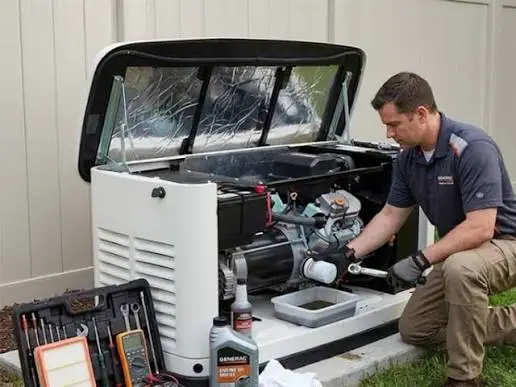
- Usage-based: tasks triggered by running hours, such as oil and filter changes
- Calendar-based: tasks done on a fixed schedule whether or not the unit has run, such as weekly inspections, coolant checks, and annual service
- Event-based and predictive: extra checks before expected storms, utility work, or other known risk periods, plus condition monitoring that catches drift early
Standby generators often run very few hours, so calendar-based tasks matter more than hour-based ones. Oil and fuel age even when the engine is idle.
Factors That Change How Often You Need to Service
- Climate. Extreme heat, cold, heavy rain, or snow demand extra protection, such as block heaters, enclosure checks, and drainage.
- Dust and debris. Windy, dirty, or leafy locations clog radiators and air filters faster.
- Machine age. Older sets need more frequent inspections.
- Humidity and salt air. These accelerate corrosion on terminals, panels, and enclosures.
- Running pattern. Units that run rarely and at light load behave differently from those used regularly.
- Criticality. The more life safety or revenue depends on the unit, the tighter the schedule.
Safety Before You Start
Generator work combines electrical, mechanical, fuel, exhaust, and noise hazards.
- Follow the manufacturer’s instructions and only do work you are trained and authorised to perform.
- Lock out and tag out before working on engines, belts, or electrical equipment. Disable automatic starting when working near moving parts.
- Isolate the generator from the building with the transfer switch and breakers as required before electrical work, and verify de-energisation.
- Treat stored energy with respect. Batteries, capacitors, and pressurised cooling systems can injure.
- Let the engine cool before opening coolant caps or touching exhaust parts.
- Handle fuel and used oil safely, with spill kits, correct containers, and no ignition sources.
- Ventilate the room and never run engines in enclosed spaces without proper exhaust.
- Wear hearing protection and PPE, including gloves and eye protection.
- Leave high-voltage, switchgear, and major engine work to qualified technicians.
- Tell the building before any test that may transfer load, because tests can briefly interrupt power to some systems.
The Generator Maintenance Checklist by Frequency
The frequencies below follow common practice and combine weekly, monthly, quarterly, and annual cycles. Your manufacturer, standards, and insurer may specify different intervals, so confirm before adopting them.
Weekly Checks
Visual and general
- Walk around the unit and inspect for leaks of fuel, oil, or coolant
- Remove dirt, dust, and debris from the unit and surrounding area
- Check for rust, loose connections, loose panels, and signs of pests
- Check that the generator room or enclosure is clear, dry, and ventilated
- Check that the circuit breaker is securely closed
Fluids and fuel
- Check oil level
- Check coolant level
- Check fuel level, and confirm the tank is adequately filled with the correct fuel
- Inspect fuel lines for leaks
- Drain the water separator where fitted
- Check fuel filters for restriction indicators
Controls
- Check the control panel for alarms, warning lights, and fault messages
- Verify alarm and warning lights function
- Confirm the controller is in automatic mode and ready to start
Test run
- Start the generator, normally at no load, and run for the period your procedure specifies, commonly 15 to 30 minutes at minimum
- Allow a brief warm-up, then check voltage, frequency, and current readings
- Check for unusual noise, vibration, smoke, or smell
- Record all operating parameters and the hour meter reading
- Shut down using the normal sequence and return the controller to automatic
Monthly Checks
Engine and mechanical
- Inspect belts for wear, cracks, and tension
- Inspect hoses for cracks, bulges, and leaks
- Check engine mounts and supports
- Inspect the exhaust system for leaks, corrosion, and secure mounting
- Check the air filter, and clean or replace as needed
- Review oil level and condition, and top up as needed
Cooling system
- Inspect the radiator for blockages and clean fins
- Check coolant hoses and clamps
- Test coolant concentration
- Verify cooling fan operation
- Check the coolant heater operation, where fitted
- Test temperature sensors where the manufacturer specifies
Starting and electrical
- Check battery charge, terminals, and signs of corrosion or leakage
- Clean battery terminals and secure connections
- Test battery specific gravity where applicable, or use a battery analyser for sealed batteries
- Test battery charger function
- Inspect electrical connections, terminals, and wiring for looseness and corrosion
- Verify voltage regulator operation
Transfer switch and load
- Test transfer switch operation, following your procedure and any applicable standard
- Perform a load test where required, running the generator under real or simulated load for the period and load level your standard and manufacturer specify. Many programs aim for loads of at least 30% of nameplate rating, with the exact requirement depending on the standard
- Record operating temperatures, vibration, noise, and governor response
- Check automatic transfer switch behaviour under load
Safety systems
- Test the emergency stop
- Verify low oil pressure and high coolant temperature shutdowns, using the manufacturer’s safe test method
- Check the fire extinguisher is present and in date
- Verify room ventilation and louvre operation
- Confirm control power backup is working
Documentation
- Update the maintenance log and record hour meter readings
- Record all test results
- Note defects and raise work orders
- Update the schedule and book the next service
Quarterly Checks
- Change oil and filters if your hours or manufacturer’s guidance call for it
- Change fuel filters as required
- Clean the generator area, including connections and fluid caps
- Inspect and tighten electrical connections with power isolated
- Check the exhaust system and silencer more closely
- Test fuel quality and drain water from tanks
- Review log trends for hours, fault codes, and readings
Semi-Annual Checks
- Carry out an in-depth battery diagnostic check
- Inspect drive belts and replace if worn
- Inspect the exhaust system thoroughly
- Inspect air cleaner units
- Inspect the coolant heater
- Check coolant lines and connections
- Inspect AC wiring and accessories for damage or loose connections
- Inspect DC wiring and accessories, and confirm the control panel functions correctly
- Check all system hoses and connectors
- Inspect for fuel and oil leaks throughout
Annual Checks
- Carry out a load bank test, bringing the generator to a higher load than normal operation to prove capacity and burn off deposits. Follow your standard and the manufacturer’s guidance on duration and load steps
- Inspect the transfer switch thoroughly, including contacts, mechanisms, and control wiring, with power isolated
- Replace the air filter, fuel filter, oil, oil filter, and coolant according to the manufacturer
- Replace spark plugs on spark-ignited engines
- Flush the cooling system and verify coolant concentration
- Clean the crankcase breather
- Inspect the alternator, including insulation resistance testing by a qualified person
- Test and calibrate protective devices and controls
- Perform a full system inspection, or arrange a professional service
- Review spare parts, fuel stock, and consumables
- Review logs for the year, and compare performance against commissioning data
After Extended Use
- Perform a full inspection and fluid check
- Check oil, coolant, fuel, and filters
- Dispose of used fluids properly and restock supplies
- Refuel and return the unit to ready state
- Record running hours and any faults
Before Predicted Outages
- Carry out a thorough inspection
- Top up fuel, oil, and coolant
- Check batteries and charger
- Test run the generator to confirm startup and shutdown
- Verify the transfer switch is ready
- Confirm spare fuel, filters, and supplies are on hand
- Address any repairs before the event arrives
Usage-Based Tasks: Oil and Filters
Sources differ on oil change intervals, which is a good reason to follow your own manual. A commonly cited approach is to change oil and filter after a set number of running hours, often around 500, or at least yearly for standby units that rarely run. Some checklists schedule more frequent changes for units that run regularly under load. Use the manufacturer’s interval, and add oil analysis if the generator supports critical loads.
Fuel: The Most Common Hidden Failure
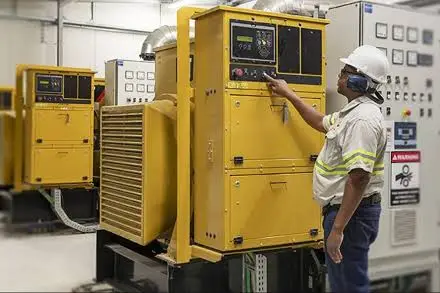
Fuel problems cause many standby generator failures.
- Keep fuel clean. Use high-quality fuel, and avoid contamination.
- Check quality. Look at appearance and smell, and test periodically.
- Control water. Drain water separators and tank bottoms, because water encourages microbial growth in diesel.
- Use treatment where appropriate. Stabilisers and biocides can help in stored fuel, according to the manufacturer and fuel supplier.
- Polish or replace aged fuel. Standing fuel degrades over time.
- Keep tanks sufficiently full. This reduces condensation and ensures runtime.
- Plan for runtime. Know how many hours your fuel supports at expected load, and how quickly you can refuel.
- For gaseous fuels, check supply pressure, regulators, and connections.
If your plant room also contains a boiler, our guide on the boiler maintenance checklist covers fuel train and combustion checks for that equipment.
Batteries: Small Parts, Big Consequences
A generator that cannot crank is just a heavy box.
- Check voltage, terminals, and electrolyte levels where applicable
- Clean corrosion and secure connections
- Confirm the charger is working and holds the correct float voltage
- Load test batteries periodically, and replace them before they fail. Batteries commonly last a few years, so follow the manufacturer’s guidance and your test results
- Keep batteries warm enough for reliable cranking, and confirm block heaters work
- Record installation dates
Load Testing: How to Do It Properly
Running a generator with no load proves it starts, but it does not prove it can carry a building. Lightly loaded engines, particularly diesels, can accumulate unburned fuel and carbon deposits in the exhaust system, often called wet stacking, which hurts reliability over time.
A sound load testing approach includes:
- Warming up the engine before applying load
- Applying load in steps, for example moving through increasing percentages of rated capacity, as your standard or manufacturer specifies
- Monitoring parameters closely, including voltage, frequency, current, oil pressure, coolant temperature, exhaust condition, vibration, and noise
- Checking governor and voltage regulator response as load changes
- Testing the transfer switch under load, where permitted and planned
- Returning to no load and allowing cool-down before shutdown
- Annual load bank testing where building load is too low to exercise the set, so it reaches a higher load safely
- Recording everything and comparing with previous results
Standards for emergency and standby power set minimum test loads and durations for many building types, so confirm what applies to you.
Transfer Switches: Do Not Forget Them
The transfer switch decides whether the building actually receives generator power.
- Operate the switch regularly through its test function
- Inspect contacts for pitting, overheating, and wear
- Check control wiring, sensing circuits, and timers
- Verify settings, such as transfer delays and retransfer behaviour
- Confirm indicators and alarms work
- Perform annual inspection with power isolated and a qualified person present
- Include the transfer switch in load tests
Reading the Warning Signs
| Symptom | Possible causes | First checks |
|---|---|---|
| Fails to start | Weak battery, fuel problem, controller fault, closed fuel valve, safety lockout | Battery voltage, fuel level and quality, controller alarms |
| Starts but trips | Low oil pressure, high temperature, overspeed, fuel starvation | Fault code, oil level, coolant, fuel filters |
| Hunting or unstable speed | Governor issues, fuel supply, load imbalance | Fuel delivery, governor settings, load |
| Overheating | Low coolant, blocked radiator, failed fan, worn belts | Coolant level, radiator fins, fan, belts |
| Black or white smoke | Fuel or air problems, light load running, worn components | Air filter, fuel system, load testing history |
| Low voltage or frequency | Regulator or governor issues, overload | Regulator settings, load level |
| Transfer failure | Switch mechanism, control circuit, sensing fault | Transfer switch alarms, control wiring |
| Leaks | Gaskets, hoses, fittings, seals | Source, fluid type, hose condition |
| Excessive vibration or noise | Loose mounts, belt wear, engine problems | Mounts, belts, exhaust, engine condition |
| Repeated warning lights | Underlying fault being reset | Fault history, readings, sensors |
When a controller alarm or trouble signal appears, record it rather than only resetting it. Our guides on chiller fault codes and fire alarm panel trouble codes show how to read, record, and escalate this kind of signal.
Spare Parts and Consumables Worth Holding
- Oil, oil filters, fuel filters, and air filters
- Coolant and test strips
- Belts and hoses
- Batteries, or at least a tested spare
- Fuses, relays, and control fuses
- Spark plugs on spark-ignited engines
- Fuel treatment products
- Gaskets and common fittings
- Spill kits and absorbents
For critical sites, consider additional spares for high-wear items and confirm supplier lead times.
Use Live Data to Spot Problems Between Tests
Modern generator controllers record run hours, starts, battery voltage, oil pressure, coolant temperature, fault history, and fuel level, and they can send alarms to a building system. Feeding the right events into your maintenance system lets a failed start, low fuel, or battery alarm create a work order automatically. Our guide on real-time asset data in a CMMS explains how to choose what to connect without overload, and our article on OEE for buildings shows how to measure availability for assets that must work on demand.
Documentation: The Records That Prove Readiness
For each generator, keep:
- Make, model, serial number, rating, fuel type, and installation date
- Manuals, wiring diagrams, commissioning results, and controller settings
- Weekly run logs, with date, time, tester, hour meter, and readings
- Monthly and quarterly checks and load test results
- Annual load bank results and comparisons with previous years
- Oil, filter, coolant, and battery service history
- Fuel quality tests and delivery records
- Transfer switch test and inspection records
- Fault and alarm history, with causes and corrective actions
- Contractor reports and certificates
- Photographs of condition before and after major work
Good records support warranty claims, insurance, regulatory inspections, and resale value, and they make repeat faults easy to spot. Retention rules vary, so confirm what your standard and AHJ expect.
Building a Backup Generator Maintenance Program
A checklist alone does not make a generator ready. To turn it into a program:
- Create an asset record for every generator and its transfer switch, fuel tank, batteries, and room.
- Convert the checklist into scheduled tasks with frequencies, owners, and expected completion times.
- Separate in-house and specialist work. Staff can usually handle weekly rounds, fluid checks, and basic records. Annual service, load bank testing, alternator testing, and switchgear work belong to qualified technicians.
- Book annual testing and service early, especially ahead of storm or peak seasons.
- Define alarm and failure procedures so operators know what to record and when to escalate.
- Stock critical consumables and spares.
- Plan fuel supply, including delivery contracts for extended outages.
- Track completion and overdue tasks every month.
- Review trends and failures, and adjust intervals.
- Train staff to run tests consistently and to spot warning signs.
Our guide on how to start a preventive maintenance program covers the foundations in more detail. Generators also keep other critical systems alive, so our guides on chiller maintenance, cooling tower maintenance, and rooftop unit maintenance cover equipment that depends on emergency power during an outage.
Why a CMMS Suits Generator Maintenance
Generator readiness is a scheduling and records problem as much as a technical one. A CMMS helps by:
- Issuing weekly, monthly, quarterly, and annual tasks automatically and reminding technicians before they are due
- Capturing readings and test results against the asset, not just a tick
- Triggering usage-based tasks from hour meter readings
- Escalating overdue or failed tests to supervisors and into priority work orders
- Storing manuals, certificates, and test reports with the generator
- Flagging repeat faults, such as recurring battery failures or fuel issues
- Producing a timestamped history for inspectors and insurers
To see how this works, read why a CMMS is essential for preventive maintenance and how it can streamline preventive maintenance. If you are comparing platforms, FacilityBot’s CMMS software page shows how asset records, schedules, and checklists connect.
Common Backup Generator Maintenance Mistakes
Running with no load only. It proves the engine starts, not that it can carry the building.
Neglecting fuel. Old, wet, or contaminated fuel is a leading cause of failure to run.
Waiting for batteries to fail. Test and replace them on condition.
Ignoring the transfer switch. A perfect generator is useless if load cannot move to it.
Treating alarms as nuisances. A warning light is a defect to investigate.
Leaving the controller in the wrong mode. A unit left in manual will not start automatically.
Blocking air flow. Storing items against louvres or radiators causes overheating.
Skipping the log. Missing records are a common inspection finding and hide repeat faults.
Running out of fuel in a long outage. Know your runtime and refuelling plan.
Postponing annual service. Deferred oil, coolant, and filter changes shorten life.
Testing without telling anyone. Unplanned transfers can disrupt people and systems.
Frequently Asked Questions
What is backup generator maintenance?
Backup generator maintenance is the routine inspection, testing, servicing, and documentation of a standby generator and its related equipment, including the engine, fuel, cooling, batteries, controls, and transfer switch, so it starts and carries load reliably during an outage.
What should a generator maintenance checklist include?
A generator maintenance checklist should cover visual inspections, fluid and fuel checks, battery and charger condition, the weekly test run, belts, hoses, filters, cooling system, exhaust, electrical connections, safety shutdowns, transfer switch tests, load testing, annual service, and records of every result.
How often should a backup generator be tested?
Many programs run the generator weekly or at least monthly, with a load test at a regular interval and an annual load bank test. The right schedule depends on the manufacturer, applicable standards, your AHJ, and your insurer.
How long should I run a generator during a weekly test?
Many procedures use a run of around 15 to 30 minutes at minimum, long enough to reach operating temperature and record readings. Follow the duration in your standard and manufacturer’s manual.
How often should I change generator oil?
Intervals vary by manufacturer and use. A common guide is every 500 running hours or at least annually for standby units, but some programs change oil more often on frequently exercised units. Check your manual and consider oil analysis for critical sites.
Why is load testing important?
Load testing proves the generator can carry real demand, helps prevent deposits that form under light loading, and reveals problems with cooling, governors, and transfer switches that a no-load run will not show.
How often should generator batteries be replaced?
Many batteries last a few years, but life depends on temperature, charger condition, and use. Test them regularly and replace them on condition, before they fail to crank the engine.
What is the most common reason a standby generator fails?
Starting system problems, especially weak batteries, and fuel issues, including old or contaminated fuel, are among the most common causes. Both are preventable with regular checks.
Can in-house staff maintain a backup generator?
Trained staff can usually handle weekly inspections, fluid checks, test runs, and records. Annual servicing, load bank testing, alternator and switchgear work, and major repairs are better left to qualified technicians.
What records should I keep?
Run logs, test results, service history, fuel quality results, battery tests, transfer switch tests, alarm history, repairs, and contractor reports, each dated and signed.
How does a CMMS help with generator maintenance?
A CMMS schedules recurring and hour-based tasks, records readings and test results, stores manuals and certificates, escalates overdue or failed tests, and builds an auditable history for inspectors and insurers.
Simplify Generator and Facility Management With FacilityBot
A generator is only ready if every test happens on time and every result is on record. FacilityBot helps facilities teams make that routine. Our facilities management software holds each generator’s asset record, checklists, schedules, and service history in one place, so readiness does not depend on a binder or one person’s memory. As a facility management solution built for lean teams, it connects preventive tasks, contractor visits, and reactive repairs to the equipment they protect. Because it is cloud based CMMS software, technicians can work through the generator maintenance checklist on a phone beside the unit, record hour meter and battery readings, attach photos, and raise a work order for a leaking hose before leaving the site. And with built-in fault reporting software, staff and occupants can report a warning light, an odd noise, or a fuel smell the moment they notice it, so early warning signs reach your team before they become failures. Book a demo to see how FacilityBot can support your backup generator maintenance.
