
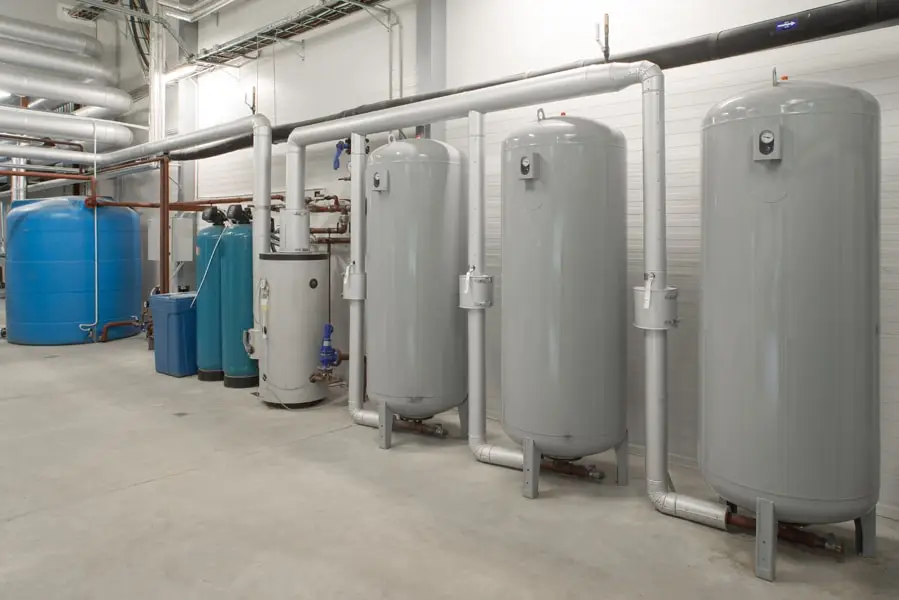
Hot water is one of those services nobody notices until it stops. A kitchen cannot run its dishwasher, a hotel gets a flood of complaints, a gym closes its showers, a hospital wing loses a core service. In every case the cause is usually the same: a piece of plant that worked quietly for years and was never looked at.
Commercial water heaters work much harder than their residential cousins. They are larger, run more hours, face heavier and more variable demand, and often serve buildings where hot water is a safety and hygiene requirement, not just a comfort.
Sound commercial water heater maintenance keeps that plant efficient, safe, and available. This guide covers what a hot water system includes, how often each task should happen, a practical checklist, how to deal with sediment, anode rods, valves, and temperature control, how Legionella risk fits in, and what records to keep. It also explains broader hot water system maintenance, since the heater is only one part of the loop.
Treat this as a framework. Always follow your manufacturer’s manual, local codes, your water management plan, and the advice of licensed professionals for gas, electrical, and pressure-related work.
What a Commercial Hot Water System Includes
The water heater is the centre of the system, but problems often start elsewhere.
| Part | What it does | What goes wrong |
|---|---|---|
| Water heater (tank type) | Heats and stores water | Sediment build-up, corrosion, failed elements or burners, leaks |
| Tankless or instantaneous units | Heat water on demand | Scale on heat exchangers, flow sensor faults, venting problems |
| Burners or heating elements | Provide the heat | Dirty burners, failed igniters, burnt or scaled elements, loose wiring |
| Thermostat and controls | Regulate temperature | Drift, wrong setpoints, failed sensors |
| Temperature and pressure (T&P) relief valve | Protects against overheating and overpressure | Seized, leaking, or blocked valve |
| Anode rods | Sacrificial protection against tank corrosion | Depleted rods, coating with scale |
| Venting and combustion air | Remove exhaust gases and supply air | Blockage, corrosion, disconnected sections |
| Expansion tank | Absorbs thermal expansion | Waterlogged or failed bladder |
| Circulation pumps and return loops | Keep hot water available at outlets | Pump wear, scale, stuck valves, poor balancing |
| Mixing and thermostatic valves | Control delivered temperature at outlets | Drift, scale, failure |
| Isolation, drain, and check valves | Allow service and prevent backflow | Seizing, leaks |
| Pipework and insulation | Carry and retain heat | Corrosion, leaks, missing insulation |
| Water treatment or softening | Reduce scale in hard water areas | Exhausted media, dosing faults |
A program that only looks at the tank will miss the circulation loop, the mixing valves, and the temperature records, which are common sources of complaints and compliance trouble.
Why Commercial Water Heater Maintenance Matters
Reliability. Hot water supports operations in restaurants, hotels, healthcare, schools, gyms, laundries, and many industrial processes. Outages are disruptive and sometimes force closure.
Safety. A faulty relief valve, blocked flue, or wrong temperature setting can lead to scalding, carbon monoxide risk, or tank failure.
Water quality and health. Water held too cool can encourage Legionella growth in tanks and pipework. Temperature control, flushing, and monitoring are part of managing that risk.
Efficiency. Sediment and scale insulate heating surfaces, forcing the unit to burn more fuel or use more electricity for the same output.
Equipment life. Commercial units are a significant investment. Flushing, anode care, and valve testing extend their service life.
Damage prevention. Leaks and tank failures can damage floors, stock, and equipment.
Compliance. Many buildings need documented temperature checks, water management plans, and inspections. Our guide on cooling tower maintenance covers the same water safety thinking on the cooling side.
Know Your Water Heater Before You Use the Checklist
| Detail | Why it matters |
|---|---|
| Fuel: gas, propane, electric, or other | Determines burner, element, venting, and electrical checks |
| Tank or tankless | Changes flushing, descaling, and anode considerations |
| Capacity and recovery rate | Helps spot declining performance |
| Age and installation date | Older units need closer inspection and replacement planning |
| Water hardness | Hard water speeds up scale and may call for more frequent service |
| Operating pattern | Continuous, shift-based, or seasonal use affects schedules |
| Venting type | Affects combustion safety checks |
| Warranty and service requirements | Missing service records can affect claims |
| Applicable codes and water management plan | Set temperature and testing requirements |
Keep the manual, wiring or piping diagrams, installation details, and past service history with the asset record.
Safety and Preparation
Water heater work combines hot water, electricity, gas, pressure, and confined spaces.
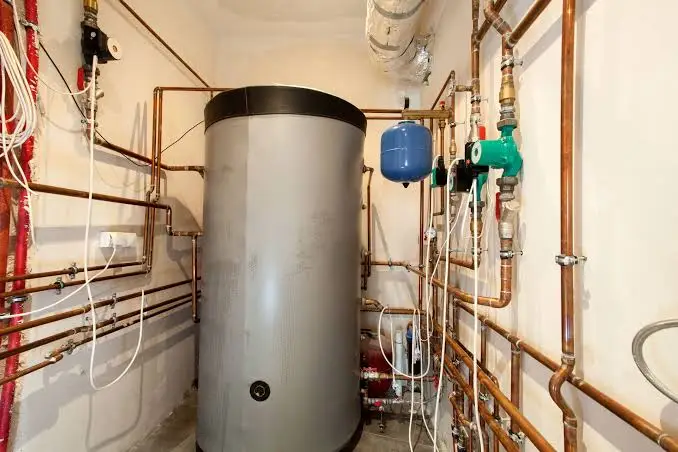
- Follow the manufacturer’s instructions and only do work you are trained and licensed to perform.
- Isolate energy. For electric units, switch off and lock out the breaker. For gas units, close the gas supply valve and follow shutdown procedures.
- Let the unit cool before draining or opening panels. Stored water can cause serious scalds.
- Control the discharge. Drain hoses should run to a safe drain, and discharge from relief valves and drains must be directed safely.
- Ventilate the plant room and be alert to combustion gases. Where combustion equipment is installed, carbon monoxide detection is advisable.
- Use PPE, including gloves and eye protection, and heat-resistant gloves where hot surfaces or water are likely.
- Leave gas work, electrical work, and pressure vessel repairs to licensed professionals.
- Tell the building before any shutdown, since hot water loss affects kitchens, washrooms, and processes.
- Plan restart carefully, with the tank full and air purged before power or gas is restored.
The Commercial Water Heater Maintenance Checklist by Frequency
Use these intervals as starting points. Your manufacturer, local codes, water hardness, and operating demand may call for different frequencies, and many commercial units benefit from service more than once a year.
Daily or Per-Shift Checks
- Walk past the unit and look for leaks, water on the floor, or unusual smells
- Listen for new noises such as banging, popping, or rumbling
- Check the controller or display for alarms and fault messages
- Confirm hot water is reaching key outlets at the expected temperature
- Look for blocked air louvres, stored items near the unit, and anything touching flues
Weekly Checks
- Check delivered hot water temperatures at selected outlets, and record them
- Check the thermostat setting and confirm it has not been altered
- Inspect pipework and connections for drips and corrosion
- Check circulation pump operation and return line temperatures
- Confirm drain and relief valve discharge pipes are clear and unobstructed
- Check that the area around the heater is clean, dry, and well ventilated
Monthly Checks
- Inspect the exterior of the tank for rust, moisture, and discolouration
- Inspect valves and connections for leaks, using soapy water on joints if helpful. Bubbles mean a leak
- Check the T&P relief valve discharge pipe and look for signs of weeping
- Inspect venting for secure joints, corrosion, and blockage
- Check combustion air openings
- Check electrical connections and wiring for looseness and signs of heating on electric units
- Verify mixing and thermostatic valve outlet temperatures
- Review temperature logs and look for drift or sudden changes
- Look for scale or deposits at outlets, aerators, and showerheads
- Check the expansion tank pressure where the manufacturer specifies
Quarterly Checks
- Check burner flame condition on gas units, and look for sooting or irregularities
- Inspect heating elements and wiring on electric units
- Test and verify thermostats and high limit controls
- Check circulation pump bearings, seals, and flow
- Inspect insulation on tanks and hot water pipework
- Flush a small amount of water from the drain valve to check for sediment, especially in hard water areas
- Review water hardness test results and softener or treatment condition
Semi-Annual Service (Spring and Fall)
Many commercial units benefit from service twice a year, especially where water is hard or demand is high.
- Shut down safely and allow the unit to cool
- Flush sediment from the tank through the drain valve
- Inspect and clean burners, combustion chamber, and flue passages on gas units
- Inspect heating elements for corrosion and scale on electric units, and test continuity
- Test the T&P relief valve according to the manufacturer’s method
- Check the thermostat and verify the setpoint
- Inspect connections, fittings, and valves
- Check venting thoroughly
- Inspect the anode rod, and note its condition
- Check expansion tank operation
- Inspect electrical components and safety devices
- Refill the tank, purge air, and restart carefully
- Record all readings and findings
Annual Checks
- Carry out a full professional inspection by a licensed technician
- Test and, where needed, replace safety valves
- Descale heat exchangers and tankless units where hardness calls for it
- Inspect the tank interior if access allows, or arrange an internal inspection for large vessels
- Check combustion performance and flue gas where equipment allows
- Test controls, sensors, and safety shutdowns
- Verify circulation loop balance and flow
- Service mixing and thermostatic valves
- Review service history, replace worn parts, and plan end-of-life replacement
- Update the water management plan and test results records
Anode Rod Checks and Replacement
Anode rods protect the tank lining from corrosion by corroding first.
- Inspect the rod at each service visit
- Replace it when it has eroded significantly or is coated with scale. A common rule of thumb is when more than about half its material has gone
- Many rods need replacement every three to five years, and sooner in hard or aggressive water
- Record the date and condition each time
How to Flush a Tank Water Heater
Sediment is one of the most common causes of lost efficiency and early failure. A typical flush follows this pattern:
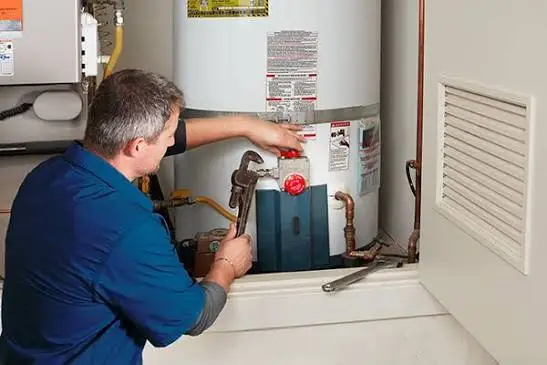
- Shut down safely. Switch off electric supply or turn off gas, and allow the tank to cool.
- Isolate the cold water supply as the procedure requires.
- Attach a hose to the drain valve, and run it to a safe drain.
- Open a hot water outlet to let air in so the tank drains properly.
- Open the drain valve and drain the tank. Be careful because the water may still be hot.
- Flush with fresh water. Briefly open the cold supply to stir sediment and flush it out until the water runs clear.
- Inspect and clean components while the tank is empty and access panels are open, such as burners and elements.
- Close the drain valve and refill. Open the cold supply, and keep a hot tap open so air can escape as the tank fills.
- Confirm the tank is full and water flows steadily before restoring power or gas.
- Restore energy and verify operation, then check temperatures, leaks, and relief valve discharge.
Large commercial vessels may have specific procedures, so follow the manufacturer’s instructions and use qualified staff.
Temperature Control: Balancing Scald Risk and Legionella Risk
Temperature is the single most important setting on a hot water system, and it pulls in two directions.
- Too low can allow Legionella and other bacteria to multiply in stored water and pipework.
- Too high increases scalding risk and energy use.
Many guidelines suggest keeping stored hot water hot enough to limit bacterial growth, often around 140°F (60°C), and delivering lower, safer temperatures at the point of use through thermostatic mixing valves. Other guidance quotes ranges such as 120°F to 140°F depending on the building type and risk assessment. Because requirements differ by jurisdiction and building type, follow your local code, your water management plan, and the advice of a qualified water treatment or public health professional.
Good practice generally includes:
- Setting and locking thermostats at the agreed temperature
- Verifying delivered temperatures at representative outlets regularly
- Using thermostatic mixing valves where scald protection is needed, and servicing them
- Maintaining circulation so hot water does not sit stagnant in dead legs
- Flushing infrequently used outlets
- Recording temperatures so trends and deviations are visible
- Acting on out-of-range readings with documented corrective steps
Hot Water System Maintenance Beyond the Heater
Complaints about lukewarm water often come from the loop, not the heater.
- Circulation pumps: Check operation, flow, and noise, and replace worn bearings or seals.
- Return lines: Confirm return temperatures are close to supply temperatures, since a big drop suggests flow problems.
- Balancing valves: Check they are set correctly after any pipework changes.
- Dead legs: Remove or minimise sections of pipe with no flow, which hold stagnant water.
- Insulation: Repair damaged or missing pipe insulation to save energy and keep temperatures up.
- Mixing valves: Test and service them, since failure can mean scalding or cold water.
- Backflow prevention: Test devices as the local code requires.
- Expansion control: Confirm expansion tanks and relief devices work.
- Water softening and treatment: Maintain softeners and dosing systems in hard water areas.
- Outlets: Descale aerators and showerheads and flush rarely used outlets.
Reading the Warning Signs
| Symptom | Possible causes | First checks |
|---|---|---|
| Inconsistent or lukewarm water | Thermostat fault, sediment, failed element or burner, circulation problem | Setpoint, element or burner condition, pump, return temperatures |
| Rumbling, popping, or banging | Sediment build-up, scale on elements, water hammer | Tank flush history, element condition, pipe supports |
| Leaks | Corrosion, loose connections, failed valve, tank failure | Source of water, fittings, T&P valve, tank condition |
| Rusty or discoloured water | Corroding tank or pipes, depleted anode | Anode rod, tank condition, pipework |
| Unpleasant odour | Bacterial growth, anode reaction | Water testing, temperature records, anode type |
| Running out of hot water | Undersized plant, failed element, sediment, demand change | Recovery rate, element or burner, load pattern |
| High energy use | Scale, poor insulation, wrong setpoint, loop losses | Flushing record, insulation, thermostat |
| T&P valve discharging | Overpressure, overheating, valve fault, expansion problem | Expansion tank, thermostat, valve condition |
| Soot, flame problems, or tripped safeties | Burner fouling, combustion air or venting problems | Burner, flue, combustion air |
| Carbon monoxide alarm | Blocked flue or incomplete combustion | Shut down, ventilate, and call a licensed professional immediately |
| Frequent alarms or lockouts | Underlying fault being reset | Fault history, sensors, controls |
When controllers or building systems raise alarms, record them instead of only resetting them. Our guides on chiller fault codes and boiler maintenance checklists show how to turn alarm messages into useful maintenance records, and the same approach applies to water heater controls.
Spare Parts and Consumables Worth Holding
- Anode rods
- Heating elements and thermostats for electric units
- Igniters, flame sensors, and thermocouples for gas units
- T&P relief valves
- Drain valves
- Expansion tank, where the site relies on it
- Circulation pump seals or spare pumps for critical sites
- Mixing valve cartridges
- Gaskets, fittings, and pipe insulation
- Descaling products approved for the equipment
For critical sites, such as healthcare, hotels, and kitchens, consider holding a spare circulation pump or planning for rapid hire of a temporary unit.
Use Live Data to Spot Problems Early
Modern controllers and building systems can log tank temperatures, return line temperatures, run hours, alarms, and energy use. Rising energy use for the same demand, longer recovery times, or return temperatures dropping all point to developing problems such as scale or pump wear. Feeding selected signals into your maintenance system lets thresholds raise work orders automatically. Our guide on real-time asset data in a CMMS explains how to choose what to send without overloading your team, and our article on OEE for buildings shows how to track availability and performance for critical plant.
Documentation: The Records That Prove Control
For each water heater and hot water system, keep:
- Make, model, serial number, capacity, fuel type, installation date, and location
- Manuals, diagrams, and warranty terms
- Thermostat settings and any changes made
- Temperature logs at the heater, return, and sample outlets
- Flushing, descaling, and anode inspection records
- T&P valve and safety device test results
- Combustion and venting inspection results
- Circulation pump and mixing valve service records
- Water hardness and treatment records
- Water management plan, risk assessments, and test results, where applicable
- Alarm history and corrective actions
- Contractor reports, invoices, and certificates
- Photos of condition before and after major work
Records show whether a small drip is getting worse, tell the next technician what has already been done, and give you evidence if an inspector or insurer asks how the equipment is maintained.
Building a Hot Water System Maintenance Program
A checklist alone does not maintain anything. To turn it into a program:
- Create an asset record for every water heater, plus pumps, mixing valves, expansion tanks, and treatment equipment.
- Convert the checklist into scheduled tasks with frequencies, owners, and estimated times.
- Set service frequency by condition. Hard water, heavy demand, or older units usually need more frequent service.
- Separate in-house and specialist work. Staff can handle rounds, temperature checks, and basic records. Gas, electrical, and pressure work belongs to licensed professionals.
- Manage contractors. Track visit dates, scope, warranty terms, and reports in one place.
- Define out-of-range procedures for temperature, alarms, and relief valve discharges.
- Stock critical spares and plan for temporary hot water in an outage.
- Track completion and overdue tasks every month.
- Review trends and failures, and adjust intervals.
- Plan replacement. Use age, condition, and repair history to budget for end-of-life units before they fail.
Our guide on how to start a preventive maintenance program covers the foundations in more detail. Water heaters often share a plant room with other critical equipment, so our guides on backup generator maintenance, chiller maintenance, and rooftop unit maintenance are useful companions.
Why a CMMS Suits Hot Water System Maintenance
Hot water maintenance is a scheduling, monitoring, and records problem. A CMMS helps by:
- Scheduling recurring tasks such as weekly temperature checks, spring and fall service, and annual inspections
- Setting service frequency per unit, so hard water or older equipment gets more frequent attention
- Capturing temperature readings and test results against the asset
- Showing when each unit was last serviced and when it is next due
- Storing manuals, warranty terms, preferred vendors, and instructions with the heater
- Opening a work order directly from the equipment record when something breaks
- Flagging repeat faults, such as recurring relief valve discharge or element failures
- Producing a timestamped history for inspectors, insurers, and warranty claims
To see how this works, read why a CMMS is essential for preventive maintenance and how it can streamline preventive maintenance. If you are comparing platforms, FacilityBot’s CMMS software page shows how asset records, schedules, and checklists connect.
Common Commercial Water Heater Maintenance Mistakes
Never flushing the tank. Sediment quietly wastes energy and shortens life.
Setting temperatures by guesswork. Too low risks bacterial growth, and too high risks scalding and energy waste.
Ignoring the relief valve. A seized or leaking valve is a safety failure waiting to happen.
Forgetting the anode rod. A depleted anode lets the tank corrode from the inside.
Overlooking venting and combustion air. Blocked flues and closed louvres create carbon monoxide risk.
Treating the heater as the whole system. Pumps, loops, and mixing valves cause many complaints.
Skipping service in hard water areas. Scale builds faster, so intervals should be shorter.
Resetting alarms without investigating. A repeated fault is a defect.
Keeping no records. Without history, repeat problems and compliance gaps stay hidden.
Waiting for failure to plan replacement. Age and repair history should drive budgeting.
Leaving contractor work untracked. Missing service records can affect warranty claims.
Frequently Asked Questions
What is commercial water heater maintenance?
Commercial water heater maintenance is the routine inspection, cleaning, testing, and servicing of a commercial water heater and its related equipment, including valves, anode rods, thermostats, venting, circulation pumps, and mixing valves, to keep hot water safe, efficient, and reliable.
How often should a commercial water heater be serviced?
Many commercial units benefit from service at least annually, and often twice a year, such as in spring and fall, especially in hard water areas or under heavy demand. The right schedule depends on the manufacturer, water hardness, operating pattern, and local requirements.
What should a commercial water heater maintenance checklist include?
It should cover safe shutdown, leak checks, valve and T&P relief valve testing, sediment flushing, burner or element inspection, thermostat and temperature verification, anode rod inspection, venting and combustion air checks, expansion tank and circulation checks, refilling and restart, and records of every result.
What temperature should a commercial water heater be set to?
It depends on the building, the risk assessment, and local code. Many guidelines balance Legionella control against scald risk, with stored water kept hot and lower temperatures delivered at outlets through mixing valves. Follow your water management plan and local requirements.
How often should an anode rod be replaced?
Many anode rods need replacement every three to five years, and sooner in hard or aggressive water. Inspect the rod at every service and replace it when it is heavily eroded or coated.
Why does my water heater make noise?
Rumbling, popping, or banging often points to sediment build-up or scale on heating surfaces. Flushing the tank and inspecting elements or burners usually helps, and persistent noise should be checked by a technician.
How does hot water system maintenance differ from water heater maintenance?
Water heater maintenance focuses on the unit itself. Hot water system maintenance also covers circulation pumps, return lines, balancing, mixing valves, insulation, expansion devices, water treatment, outlets, and temperature monitoring.
Can in-house staff maintain a commercial water heater?
Trained staff can usually handle visual checks, temperature logging, and basic records. Gas, electrical, pressure, and major repair work should be done by licensed professionals, and all work should follow lockout and safe shutdown procedures.
When should I call a professional?
Call a technician if water temperature swings, the unit makes new noises, you find leaks or corrosion around connections, the relief valve discharges, a carbon monoxide alarm sounds, or you are unsure about any part of the work.
How does a CMMS help with water heater maintenance?
A CMMS schedules service by unit, records temperatures and test results, stores manuals and warranty terms, opens work orders from the equipment record, tracks contractor visits, and builds an auditable history.
Simplify Water Heater and Facility Management With FacilityBot
Hot water only stays reliable when every flush, valve test, and temperature check happens on time and is written down. FacilityBot helps facilities teams make that routine. Our facilities management software holds each water heater’s asset record, checklists, schedules, and service history in one place, so reliability does not depend on one person’s memory. As a facility management solution built for lean teams, it connects preventive tasks, contractor visits, and reactive repairs to the equipment they affect. Because it is cloud based CMMS software, technicians can work through the commercial water heater maintenance checklist on a phone beside the unit, record temperatures, attach photos, and raise a work order for a leaking valve before leaving the plant room. And with built-in fault reporting software, staff and occupants can report lukewarm water, a strange noise, or a leak the moment they notice it, so early warning signs reach your team before they become outages. Book a demo to see how FacilityBot can support your commercial water heater maintenance and hot water system maintenance.
