
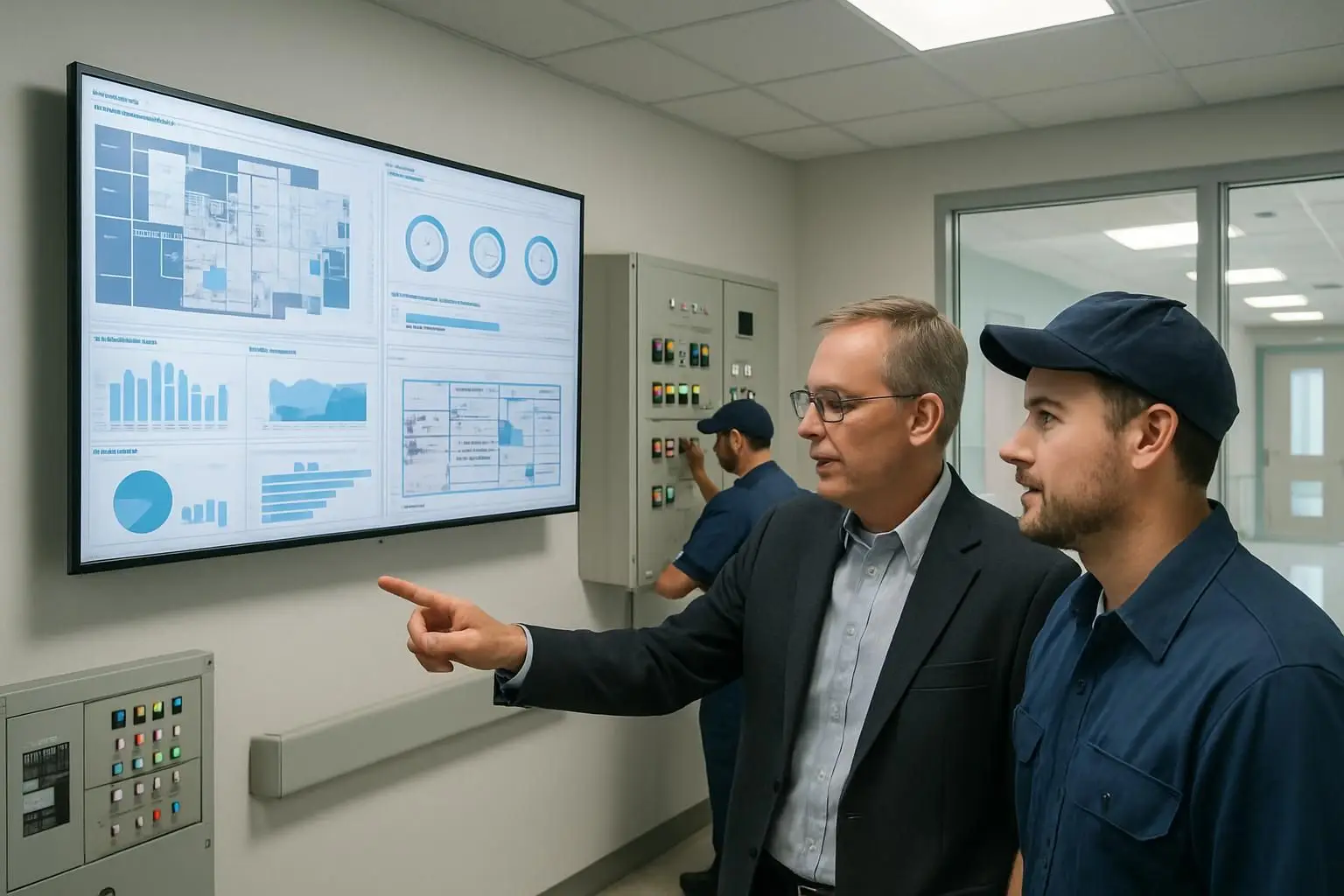
Healthcare facilities create faster, more auditable response workflows when every incident report and fault report follows one connected path: capture the issue immediately, assess safety and service impact, route it to the accountable team, document troubleshooting, verify resolution, and retain a time-stamped record. A messaging-first reporting channel can reduce friction at the first—and often most important—step, while structured work orders ensure the record remains complete through closure.
Key takeaways
- Incident reporting captures events that may affect people, safety, operations, or compliance; fault reporting captures a defect or loss of function in an asset or building system.
- In a hospital, every report should be triaged by risk, location, affected service, and asset criticality—not simply by who submitted it first.
- A complete audit trail must record ownership, actions, communications, escalation decisions, resolution evidence, and closure approval.
- Standardised troubleshooting and root-cause analysis turn repeated failures into preventive maintenance improvements.
- Fast reporting should be simple for frontline staff, but the underlying workflow must remain structured, permissioned, and auditable.
Incident reporting and fault reporting are related—but not identical
Teams often use the words *incident*, *fault*, *issue*, and *request* interchangeably. That can create uncertainty about urgency, ownership, and the documentation required. Clear definitions help staff know when to report incident events and help facilities leaders apply the right workflow.
Incidents meaning: an incident is an unplanned event that has caused, or could cause, harm, disruption, safety risk, security concern, regulatory exposure, or service degradation. In healthcare, examples include a water leak near a clinical area, a lift outage affecting patient transfer, a fire alarm activation, or loss of cooling in a critical equipment room.
A fault is a defect, abnormal condition, or failure in an asset, component, or building system. A failing door closer, flickering light, blocked drain, malfunctioning nurse call point, or unusual HVAC noise may be a fault report. A fault can become an incident when it affects safety, patient care, compliance, or continuity of operations.
| Aspect | Incident reporting | Fault reporting |
|---|---|---|
| Primary purpose | Record and manage an event, risk, or service disruption | Record and correct an asset or facility defect |
| Typical trigger | Harm, near miss, operational interruption, security or safety concern | Equipment malfunction, damage, abnormal reading, or loss of function |
| Initial priority | Potential impact on people, clinical services, safety, and compliance | Asset criticality, severity, and effect on operations |
| Likely workflow | Triage, containment, escalation, investigation, corrective action | Diagnose, assign work order, repair, test, close |
| Relationship | May generate one or more corrective work orders | May escalate into an incident if impact or risk increases |
The distinction is not about creating unnecessary administration. It is about making sure a report of a dripping tap is handled efficiently, while a report of water entering an electrical room triggers immediate escalation, isolation, and incident controls.
Why healthcare response workflows need a connected record
In a healthcare environment, facilities issues can affect clinical operations quickly. A fault in ventilation, power distribution, medical gas infrastructure, access control, water systems, or vertical transportation may require coordination across facilities, safety, security, infection prevention, clinical operations, and specialist contractors.
A fragmented process makes that coordination difficult. If reports start in informal chats, get copied into email, and are later transcribed into spreadsheets, teams can lose the original observation, timing, photographs, and handover context. They may also struggle to answer basic audit questions:
- Who reported the issue, and when?
- Where exactly was it observed?
- Was any immediate safety action taken?
- Who accepted responsibility for the response?
- Which technicians or vendors attended?
- What troubleshooting was completed?
- Was the area or equipment tested before being returned to service?
- Who confirmed closure, and what evidence supports that decision?
An auditable workflow answers these questions from one case record, rather than relying on staff memory or a trail across multiple systems.
The CARE workflow for incident and fault response
A practical healthcare workflow needs to be fast enough for real operations and disciplined enough for governance. The CARE workflow provides a simple structure: Capture, Assess, Respond, Evaluate.
C: Capture the report at the point of observation
The easiest report incident process is the one staff will actually use. A nurse, porter, security officer, cleaner, visitor-services employee, or contractor should be able to report a problem without knowing the maintenance system’s internal codes.
Capture the essentials first:
- Incident or fault type
- Exact location, including building, floor, room, and nearby landmark where useful
- Brief description of what was observed
- Time observed and reporter contact details
- Photo, video, or voice note when appropriate and permitted
- Affected asset or asset tag, if known
- Whether anyone is at immediate risk
- Immediate action already taken, such as isolating an area or notifying security
Messaging-first fault reporting can be especially useful here. Staff can submit an issue through an approved workplace chat channel they already use, rather than downloading and learning a separate application. The platform should then convert the conversational report into a structured case or work order, preserving the submitted details and timestamps.
For sensitive clinical or personal information, design the form and guidance to minimise unnecessary data collection. A facilities report should describe the environmental or asset issue without putting patient-identifiable information into an operational ticket.
A: Assess urgency, impact, and ownership
Not every fault requires the same response. Triage should be defined before an emergency occurs, with clear escalation thresholds and on-call responsibilities.
| Triage factor | Questions to ask | Example healthcare response |
|---|---|---|
| Life safety | Is there fire, electrical danger, flooding, hazardous material, or immediate injury risk? | Activate emergency procedures, make the area safe, and notify the designated response team immediately. |
| Patient-care impact | Does the issue affect a clinical service, patient movement, infection-control condition, or critical care support? | Notify clinical stakeholders and prioritise restoration or approved contingency arrangements. |
| Asset criticality | Is the affected system essential to a critical area or safety function? | Route to the specialist technician or contractor and escalate by the criticality matrix. |
| Service scope | How many rooms, users, departments, or systems are affected? | Coordinate a broader response and issue appropriate stakeholder updates. |
| Compliance or security | Does the event require formal review, notification, or evidence preservation? | Keep the incident record, attachments, and approval history intact. |
Triage should not rely solely on labels such as “high” or “urgent.” The report must state *why* it is urgent and what action is required now. Automated routing can assign work based on site, trade, asset category, severity, and duty roster, while managers retain the ability to reclassify a report as new information emerges.
R: Respond with containment, work orders, and communications
Response has two tracks: stabilise the immediate situation and restore normal operations safely. The first responsible person should acknowledge the report, record the initial assessment, and make ownership visible.
For a routine fault, the response may be a single work order sent to the correct trade. For a higher-risk incident, one incident record may create several linked activities: an electrical inspection, a cleaning task, an engineering repair, a security action, and a communication to the affected department.
A good work order record includes:
- Assigned person or vendor, acknowledgement time, and attendance time
- Safety requirements, permits, or access constraints
- Asset history and relevant manuals or drawings
- Troubleshooting observations and diagnostic readings
- Parts used, temporary controls, and permanent repair actions
- Status updates that are visible to appropriate stakeholders
- Escalation history when response or repair targets are at risk
Where work carries material risk, the workflow should connect to the organisation’s e-Permit to Work process. For example, electrical isolation, hot works, confined-space entry, or work that affects a protected clinical environment may require documented authorisation and controls before repair starts.
The emergency action plan should also be accessible from the workflow for relevant incident categories. An emergency action plan sets out roles, communications, evacuation or shelter procedures, assembly arrangements, and immediate controls. Facilities teams should not attempt to use a normal fault ticket as a substitute for emergency notification procedures.
E: Evaluate resolution and preserve learning
Closing a work order because a technician has left the site is not the same as verified resolution. Before closure, confirm that the reported condition has been corrected, any affected area is safe to use, and the appropriate stakeholder has been informed.
The resolution record should include the fault found, actions taken, test results where relevant, images or documents, restoration time, and any outstanding follow-up. If a temporary repair was made, create a linked planned task for the permanent corrective action rather than allowing the issue to disappear from view.
For material incidents or repeat failures, evaluate whether the team needs an investigation. This is where RCA meaning matters: RCA stands for *root cause analysis*, a structured method for identifying the underlying factors that allowed a problem to occur. It goes beyond the immediate symptom.
For example, replacing a failed fan belt restores a ventilation unit. RCA may reveal that inspection intervals were missed, the correct spare was unavailable, alignment was poor, or an operating condition was accelerating wear. The corrective action might then change preventive maintenance tasks, spares planning, training, or operating procedures.
Make troubleshooting repeatable, not dependent on memory
Effective troubleshooting is systematic diagnosis: observe the condition, make it safe, gather evidence, test likely causes, apply a controlled fix, and verify performance. In busy facilities operations, checklists and guided decision trees help technicians work consistently across shifts.
A troubleshooting template can prompt teams to document:
1. The reported symptom and operating conditions. 2. Initial safety checks and isolation actions. 3. Equipment status, alarms, readings, and visible conditions. 4. Diagnostic steps attempted and their results. 5. The confirmed cause, or the reason an external specialist was required. 6. Repair performed, components replaced, and testing completed. 7. Follow-up requirements, including monitoring or preventive maintenance changes.
This detail builds a useful equipment history. Over time, supervisors can identify recurring locations, repeated asset failures, long response patterns, and common causes of rework. That insight supports risk-based maintenance planning and aligns with the asset-management principles described in ISO 55000, the international standard for asset management systems.
Prepare for fire drills and real emergency events
A fire drill is a planned test of emergency arrangements, not merely an evacuation exercise. It is an opportunity to test alarm response, communication paths, access and egress conditions, assembly processes, role clarity, and post-drill review.
The same workflow discipline used for daily incident reporting can strengthen fire-drill documentation. Create a planned drill record, assign roles and checklists, record observations and time-stamped issues, and create corrective work orders for defects found. Examples might include obstructed escape routes, damaged signage, door-release problems, or communication gaps.
Keep planned drill reports distinct from a real fire or life-safety incident. However, link the corrective actions from both to the same maintenance and compliance system so no safety issue is lost after the event report is filed.
Choosing technology for auditable response workflows
The right system should remove reporting friction without sacrificing control. During selection, test the workflow with realistic hospital scenarios—not only a simple maintenance request.
| Capability | Why it matters in healthcare |
|---|---|
| Simple multi-channel reporting | Enables staff to report a fault quickly from approved channels and reduces delays at the point of discovery. |
| Configurable triage and routing | Sends reports to the appropriate on-call trade, manager, or specialist based on risk and location. |
| Time-stamped audit trail | Demonstrates who did what, when, and why across the report lifecycle. |
| Linked work orders and permits | Connects response actions, contractor work, safety controls, and approvals. |
| Asset and location history | Gives technicians context for troubleshooting and helps identify repeat issues. |
| Evidence-based closure | Stores photos, readings, checklists, and sign-off before a case is closed. |
| Reporting and dashboards | Helps leaders monitor open risks, response performance, repeat faults, and corrective actions. |
A platform such as FacilityBot can support this model by allowing staff to raise faults through familiar messaging channels while maintaining structured tracking, work orders, checklists, and audit records behind the conversation. When assessing operational value, compare the workflow’s fit, implementation approach, and total cost against your existing reporting gaps; see FacilityBot pricing for a starting point.
Build a response process that staff can trust
The goal is not to make every small defect feel like a major incident. It is to ensure every report receives the appropriate response, and that high-consequence issues are never obscured in informal communication.
Start by defining incident and fault categories, assigning escalation ownership, creating practical triage rules, and standardising the closure evidence required for each class of work. Then make reporting genuinely convenient for frontline staff. When capture is simple and the record stays connected through resolution, healthcare facilities teams can restore service faster, demonstrate accountability, and use recurring issues to improve the built environment.
To map a messaging-first, auditable incident reporting workflow for your healthcare facilities team, book a FacilityBot demo.
