
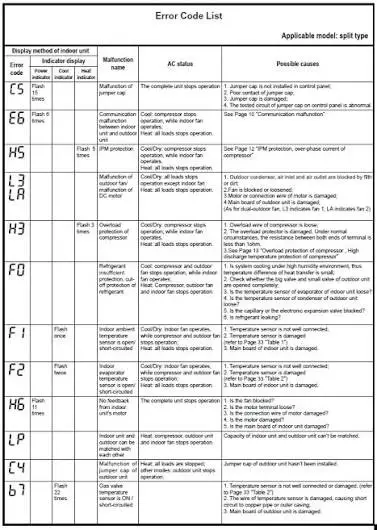
The call usually comes at the worst moment: a hot afternoon, a full building, and a chiller display showing a code nobody on shift recognises. Someone presses reset. It runs for ten minutes and trips again. By the time a contractor arrives, the original fault has been cleared and re-triggered so many times that the useful information is gone.
Chiller fault codes are the machine’s way of telling you what it protected itself from. Read properly, they save hours of diagnosis. Read badly, or reset blindly, they hide the real problem and sometimes make it worse.
This guide explains how to interpret chiller error codes, what to check before you touch a reset button, which faults a facilities team can safely handle, and which ones need a qualified technician. It also shows how to turn every fault into a record that helps you prevent the next one.
First: Not Every Code Is a Fault
Before you troubleshoot anything, confirm that the message is actually an alarm. Some displays show status or restart messages that look alarming but are normal.
A common example is a power-interruption message. On some coded-display chillers, a short code followed by a firmware or version number appears after the power supply is interrupted, and the unit simply shuts off. That is a normal response to losing power, not a fault. Pressing the power button again starts the unit as usual.
So the first question is always: did the chiller lose power, or did it detect a problem? Check for a tripped breaker, a building power blip, or someone switching the unit off at the wall. If the answer is yes, restart and monitor. If the message returns, treat it as a real fault.
Why Chiller Fault Codes Differ From Brand to Brand
There is no universal standard for chiller error codes. A code that means “water flow fault” on one machine may mean something unrelated on another. Large commercial chillers from different manufacturers use their own alarm names, numbering, and lockout logic. Smaller packaged and process chillers often use short codes on a simple display.
Three practical consequences follow:
- Always use the manufacturer’s manual for the exact model. The tables in this article show common patterns, not a replacement for it.
- Record the code exactly as displayed. Write down the full text or character string, plus any version or sub-code.
- Store manuals and code lists against the asset. If they live in a technician’s truck or a drawer in another building, they are useless at 11 PM.
The Common Categories of Chiller Error Codes
Although the labels differ, most chiller fault codes fall into a handful of families. Knowing the family tells you where to look first.
| Fault family | What the chiller is telling you | Typical first checks |
|---|---|---|
| Flow faults | Not enough water is moving through the evaporator or condenser | Water level, strainers and filters, valve positions, pump operation, flow switch |
| Water temperature alarms (high or low) | Water has moved outside its safe operating range | Setpoint, load, ambient conditions, freeze protection |
| Sensor faults | A temperature or pressure probe is reading out of range or not at all | Wiring, connectors, probe seating, comparison with a calibrated reference |
| Pressure alarms (low or high) | The refrigerant circuit is outside its safe limits | Flow, condenser fouling, airflow, charge; usually needs a technician |
| Ambient or environmental warnings | The surroundings are outside the unit’s operating range | Location, ventilation, cold-weather or heat-wave provisions |
| Electrical and drive faults | Starter, drive, or motor protection has tripped | Panel temperature, fan operation, connections; qualified electrician or technician |
| Communication faults | The chiller has lost its link to the building controls | Network cabling, protocol settings, controller power |
Let us walk through each one.
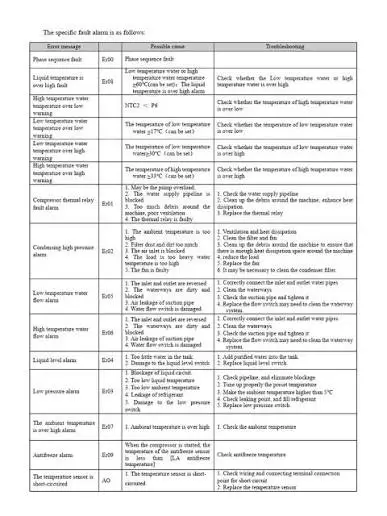
1. Flow Fault Codes
What it means: The chiller has detected insufficient or no water flow and has shut down to protect the evaporator or condenser.
Why it matters: Low evaporator flow can lead to very low refrigerant pressure and, in the worst case, frozen tubes. Low condenser flow drives up pressure and strains the compressor.
Check first:
- Water level in the reservoir or loop. Low level is the simplest and most common cause.
- Strainers, filters, and screens. A blocked filter is frequently the culprit.
- Isolation and balancing valves. Confirm none were left closed after recent work.
- Pump operation. Is it running, rotating the right way, and delivering pressure?
- The flow switch. Confirm it is clean, correctly installed, and actually closing when flow is present.
Many chillers will not start unless both chilled water and condenser water flow are proven. If flow is not confirmed, the chiller will not run, which is exactly what it should do.
When to escalate: If flow is good and the alarm persists, the flow switch or sensor may have failed. Have it tested rather than bypassing it. Never jumper out a flow safety to get the machine running.
2. Low Water Temperature Alarms
What it means: The water temperature is at or below a lower limit, often at or near freezing.
Why it matters: Freezing water inside a heat exchanger can split tubes and cause serious damage and leaks.
Check first:
- Is the setpoint set sensibly for the loop and fluid? If the system uses water only, a very low setpoint risks freezing.
- Is there very low load so the chiller overcools a small volume of water?
- Has flow dropped, allowing the water in the evaporator to chill too far?
- Is the loop protected with the right glycol concentration where it is required?
Typical action: Raise the setpoint and let the water warm back above freezing before restarting. If the unit froze or you suspect ice in the exchanger, call a technician before running it again.
3. High Water Temperature Alarms
What it means: The water has risen above a safe upper limit, or the chiller cannot hold setpoint.
Why it matters: High temperatures can indicate that the chiller is overloaded, that heat is not being rejected properly, or that a fault is reducing capacity.
Check first:
- Is the setpoint appropriate, and has someone changed it recently?
- Is the building load unusually high?
- Is the condenser clean and getting enough airflow (air-cooled) or condenser water at the right temperature (water-cooled)?
- Are cooling tower fans, nozzles, and water treatment working normally?
A rising condenser approach temperature, meaning the gap between the condensing temperature and leaving condenser water temperature widening over time, is a classic sign of fouled tubes that is worth catching before an alarm occurs.
4. Sensor Fault Codes
What it means: A temperature or pressure sensor is reading outside its valid range or not communicating.
Some chillers identify sensors by name or number. For example, a unit might report separate faults for inlet water, outlet water, ambient air, defrost, fin or coil temperature, and low-side or high-side pressure sensors. The label tells you which probe to inspect.
Check first:
- Power the unit down and reset once to see whether the fault was a one-off.
- Inspect the sensor connector for looseness, moisture, or corrosion.
- Check the cable for damage, kinks, or rodent chewing.
- Confirm the probe is seated correctly in its pocket.
- Compare its reading with a calibrated thermometer or gauge.
Important: A sensor fault that returns after a reset usually needs a repair or replacement. Sensors that drift can also cause phantom shutdowns that look like real faults, so verify before replacing expensive components.
5. Pressure Alarms (Low and High)
What it means: The refrigerant side of the system is operating outside safe pressure limits.
Why this category is different: Pressure alarms relate to the sealed refrigerant circuit. They are not a place for guesswork, and they are not a job for repeated resets.
What a facilities team can check safely:
- Water-side flow, strainers, and filters, since poor flow is a frequent cause of pressure alarms
- Condenser cleanliness and airflow or condenser water temperature
- Obvious signs of oil staining or damage that might suggest a leak
- Recent changes in load, setpoint, or operating conditions
What to leave to a qualified technician:
- Leak searching, recovery, and recharging
- Diagnosing expansion valve problems, non-condensable gas, or overcharge
- Any work on the refrigerant circuit
Adding refrigerant without confirming the cause is both a diagnostic mistake and, in many places, a compliance problem. Log any recharge for environmental reporting.
6. Ambient and Environmental Warnings
What it means: The air around the chiller is too cold or too hot for normal operation.
Check first:
- Is the unit installed where air can circulate freely, away from walls, other equipment, and discharge air from neighbouring units?
- Are louvres, screens, and coils clear of leaves, dust, and debris?
- In cold weather, does the unit have the correct provisions, such as heaters, glycol, or relocation to a warmer space?
- In hot weather, is the condenser overloaded by recirculated hot air?
Environmental warnings are often a siting or seasonal readiness problem rather than an equipment failure, which makes them ideal candidates for a pre-season checklist.
7. Starter, Drive, and Electrical Faults
What it means: Motor protection, a starter, or a variable frequency drive has tripped.
Common causes: High panel temperature, failed cooling fans in the drive, clogged air filters in the panel, loose power connections, or the motor drawing excess current because of high lift, overcharge, or winding degradation.
What a facilities team can do:
- Check that the drive or panel ventilation is clear and filters are clean
- Look for signs of overheating or burn marks
- Confirm the room or enclosure temperature is within limits
What to leave to qualified personnel: Insulation testing, voltage and bus checks, and any work inside live panels.
8. Communication Faults With Building Controls
What it means: The chiller has lost its connection to the building management system, so staging and demand-based control may stop working.
Check first:
- Network cabling, connectors, and switches
- Protocol and address settings
- Controller power
- Whether recent software or network changes were made
The chiller may still run locally, but the plant may lose coordinated control, so correct it quickly.
A Safe Response Routine for Any Chiller Alarm
Whatever the code, the same sequence protects the equipment and preserves evidence.
- Record the code exactly. Note the full text, sub-codes, time, and date. Photograph the display.
- Retrieve the fault history if the controller stores it. The most recent code can mask an earlier root cause, so look at the sequence, not just the last entry.
- Capture operating conditions. Note leaving and entering water temperatures, pressures, motor current, ambient temperature, and load if available.
- Check the simple things first. Power, water level, valves, strainers, filters, and airflow cause a surprising share of alarms.
- Fix the cause before resetting. A reset clears a message. It does not fix a problem.
- Reset once, properly. Many chillers require a full power-off reset after the cause is resolved: switch off, wait about 30 seconds, then power back on. Follow the manufacturer’s procedure.
- Do not reset repeatedly. If the alarm returns, the fault needs diagnosis, and repeated restarts can cause damage.
- Log everything. Record what you found, what you did, and the outcome.
Troubleshooting Quick Reference
| Symptom | Likely area | Facilities team can check | Escalate when |
|---|---|---|---|
| Unit shuts off and shows restart message | Power interruption | Breaker, supply, wall switch | Message keeps returning |
| Flow alarm | Water side | Level, filters, valves, pump, flow switch | Flow is good but alarm persists |
| Low water temperature | Controls or freeze risk | Setpoint, load, glycol | Any sign of ice in the exchanger |
| High water temperature | Heat rejection or capacity | Setpoint, condenser, tower, load | Capacity does not recover after cleaning |
| Sensor fault | Probe or wiring | Connectors, cables, probe seating | Fault returns after one reset |
| Low or high pressure alarm | Refrigerant circuit | Flow, condenser airflow or water temperature | Any suspected leak, charge, or valve problem |
| Ambient warning | Siting or season | Clearances, debris, cold or hot weather provisions | Unit cannot operate in its location |
| Drive or starter trip | Electrical | Panel ventilation, filters | Repeated trips or visible damage |
| Communication loss | Controls network | Cabling, settings | Plant staging fails |
Why Fault Codes Are a Maintenance Signal, Not Just an Emergency
Most chiller alarms are the end of a trend. Fouling builds gradually. Filters clog gradually. Sensors drift gradually. Oil pressure declines gradually. By the time a code appears, the unit has often been telling you something for days or weeks.
Tracking a handful of readings over time lets you act before a trip:
- Condenser approach temperature: a rising trend points to tube fouling
- Evaporator approach temperature: a rising trend points to evaporator fouling or refrigerant distribution problems
- Motor current at comparable load: an upward drift can signal bearing wear, overcharge, or rising lift
- Oil pressure differential: a declining trend suggests pump wear, filter restriction, or dilution
- Water flow and filter condition: simple checks that catch the most common alarm
- Fault history: the same code recurring on the same machine means root cause investigation, not another reset
A fault that repeats is information. Recording each occurrence against the specific chiller lets you spot patterns that a one-off repair would never reveal.
Building a Chiller Fault Response Into Your Maintenance Program
Fixing alarms quickly is good. Reducing alarms is better. A practical program includes:
A pre-season readiness check. Before each cooling season, confirm clearances, clean coils and screens, check strainers and filters, test flow switches, verify setpoints, and review last year’s fault log.
Planned cleaning and servicing. Tube and coil cleaning, oil and filter service, leak checks, and sensor verification should happen on schedule, not after a trip. Our guide on how to start a preventive maintenance program explains how to build the foundation.
Documented alarm procedures. Keep a one-page response guide for each chiller model with code meanings, safe first actions, and escalation contacts.
Clear escalation rules. Define who can reset, who must be called, and when a unit must stay off.
Spare parts and consumables. Keep common items such as filters, strainers, and sensors on hand so a minor fault does not become a long outage.
Training. Make sure every technician who might respond to an alarm knows the difference between a status message and a fault, and understands what not to touch.
How a CMMS Helps With Chiller Fault Codes
A paper log or a shared spreadsheet makes fault codes hard to learn from. Entries are inconsistent, photos are missing, and nobody can search for every time a specific code appeared on a specific unit.
A CMMS (computerised maintenance management system) solves several problems at once:
- Every alarm becomes a record. Code, time, readings, photos, actions, and outcome are stored against the asset.
- Repeat faults get flagged. Recurring codes on the same chiller become visible, prompting root cause work.
- Manuals and code lists live with the asset. Anyone responding can find them on a phone.
- PM tasks generate automatically. Cleaning, inspection, and testing happen on time rather than from memory.
- Contractor visits are documented. Reports and recharge logs are filed where an audit can find them.
For a deeper look at how this works, read why a CMMS is essential for preventive maintenance and how a CMMS can streamline preventive maintenance. If you are evaluating platforms, FacilityBot’s CMMS software page shows how work orders, assets, and maintenance history fit together.
Common Mistakes When Dealing With Chiller Error Codes
Resetting before diagnosing. It clears the evidence and can let the fault repeat.
Resetting repeatedly. If an alarm returns, stop and investigate. Repeated restarts can damage equipment.
Looking only at the latest code. The most recent alarm may be a symptom of an earlier one.
Bypassing safeties. Jumpering a flow switch or pressure control is never an acceptable shortcut.
Adding refrigerant to chase a symptom. Without a confirmed leak and diagnosis, this is both wrong and potentially non-compliant.
Assuming every code is a fault. Some messages are normal status or restart indicators.
Not recording the code. Without the exact code and conditions, a technician has to start from scratch.
Treating alarms as unrelated events. Patterns across weeks and seasons are where the real insight lives.
Frequently Asked Questions
What are chiller fault codes?
Chiller fault codes are alphanumeric messages or named alarms shown on a chiller’s display or controller when it detects a condition outside its safe operating limits, such as low flow, abnormal temperature, a sensor failure, or a pressure problem. They identify what triggered a protective shutdown.
What do chiller error codes usually mean?
Most chiller error codes fall into a few families: water flow faults, high or low water temperature alarms, sensor faults, pressure alarms, ambient temperature warnings, electrical or drive faults, and communication faults. The exact meaning depends on the manufacturer, so check the manual for your model.
Can I reset a chiller after a fault?
Yes, but only after the cause is addressed. Many chillers need a full power-off reset: switch off at the isolator, wait about 30 seconds, then power back on. If the alarm returns, do not keep resetting. Investigate or call support.
What is the most common cause of a chiller flow fault?
On many chillers, a blockage or low water level is the most common cause. Check the water level, clean strainers and filters, confirm valves are open, and verify the pump and flow switch before assuming a larger problem.
What should I do if a sensor fault code keeps coming back?
Check the connector, cable, and probe seating, and compare the sensor with a calibrated reference. If the fault returns after a reset, the sensor or its wiring usually needs repair or replacement.
Are pressure alarms safe to troubleshoot myself?
You can check water-side flow, condenser cleanliness, airflow, and operating conditions. Anything involving the refrigerant circuit, such as leak testing, recovery, or recharging, should be handled by a qualified technician.
Why does my chiller shut off and show a code after a power cut?
Some chillers display a short restart or version message when power is interrupted and then shut off. That is normal behaviour rather than a fault. Press the power button to restart, and investigate only if the message repeats without a power interruption.
How can I reduce the number of chiller alarms?
Maintain filters, strainers, and condensers on schedule, complete a pre-season readiness check, track key readings over time, review repeat codes for root causes, and document every alarm so patterns become visible.
Where should I keep chiller error code information?
Attach manuals, code lists, and response procedures to each chiller’s asset record in your maintenance system, so anyone responding to an alarm can find them immediately.
Simplify Chiller and Facility Management with FacilityBot
A fault code is only useful if the right person sees it, understands it, and records what happened. FacilityBot helps facilities teams do that consistently. Our facilities management software keeps chiller records, manuals, work orders, and service history in one place, so the next responder never starts from zero. As a facility management solution built for lean teams, it supports planned cleaning, inspections, and contractor visits alongside reactive repairs. Because it is cloud based CMMS software, technicians can log alarm codes, attach photos, and close out work from a phone in the plant room. And with built-in fault reporting software, staff and occupants can flag a warm room or an alarming noise instantly, so problems reach your team before they become chiller shutdowns. Book a demo to see how FacilityBot can help you stay ahead of chiller fault codes and error codes.
