
Maintenance management has a coordination problem. The physical work — inspecting equipment, replacing components, diagnosing faults, restoring systems to operational condition — is performed by skilled technicians who know their craft. But surrounding that skilled work is an enormous administrative scaffolding of logging, scheduling, assigning, tracking, documenting, and reporting that consumes a disproportionate share of every facilities management team’s time and attention.
In organisations still relying on manual processes, this administrative burden is not just inefficient — it is a source of genuine operational risk. Maintenance tasks get missed because nobody remembered to schedule them. Work orders sit unassigned because a coordinator was occupied with something else. Technicians arrive at jobs without the right information or the right parts. Compliance deadlines pass unnoticed because the tracking system was a spreadsheet that nobody updated consistently.
Computerised Maintenance Management System (CMMS) software exists to solve exactly this problem. By automating the administrative scaffolding around maintenance work, CMMS platforms like FacilityBot — Singapore’s best CMMS software — allow maintenance teams to focus on the skilled work they were hired to do, while the system handles the coordination, scheduling, and documentation that previously consumed so much of their capacity.
The Two Pillars of Maintenance Automation
Maintenance automation in a CMMS platform operates across two primary domains: work order management and maintenance scheduling. These are distinct but deeply interconnected functions, and the most effective CMMS platforms handle both with equal sophistication.
Work order management covers the reactive dimension of maintenance — the requests, faults, and incidents that arise unpredictably and require a structured process to log, assign, execute, and close efficiently. Maintenance scheduling covers the proactive dimension — the planned inspections, servicing tasks, and compliance checks that must occur at defined intervals to keep assets healthy and meet regulatory requirements.

Together, these two functions account for the vast majority of activity in any facilities management operation. Automating them comprehensively is the foundation of a modern, high-performing maintenance programme.
Automating Work Order Creation
In a manual operation, work order creation begins when someone notices a problem and reports it — by email, phone call, or walking up to the facilities desk. A coordinator receives the report, interprets it, decides how to categorise it, and manually creates a work order in whatever system the team uses. This process introduces delay at the very first step of the maintenance cycle and depends entirely on the coordinator being available and attentive when the report arrives.
FacilityBot automates work order creation from multiple entry points simultaneously. Occupants submit requests through a structured portal accessible via web browser, mobile app, WhatsApp, or Telegram — channels that require no training and no behavioural change for Singapore’s building users. The submission form captures all relevant information — location, asset, fault type, urgency, and supporting photographs — at the point of entry, creating a complete work order record without any coordinator intervention.
Beyond occupant-initiated requests, FacilityBot can generate work orders automatically from IoT sensor data when asset performance falls outside defined parameters, from inspection findings when a technician identifies a secondary fault during a scheduled visit, and from preventive maintenance schedules when a planned task is due. Work orders enter the system through multiple automated channels, ensuring that nothing that requires attention goes unlogged.
Intelligent Assignment and Routing
Creating a work order is only the first step. Getting it to the right person quickly is where manual processes typically introduce their most significant delays. A coordinator must assess the job, identify the appropriate technician based on skill, availability, and zone coverage, and communicate the assignment — a process that introduces both time delay and the possibility of suboptimal assignment decisions.
FacilityBot’s routing engine eliminates this bottleneck by applying configurable assignment logic automatically the moment a work order is created. Fault category, asset type, building location, technician certification, and current workload distribution all feed into the routing decision, directing each work order to the most appropriate available technician within seconds of creation.
The assigned technician receives an immediate mobile notification with full job details, asset history, location, and any required compliance documentation. They can acknowledge the assignment, update job status, capture completion evidence, and close the work order entirely from their mobile device — without visiting a back office or completing paper-based job cards. The entire assignment-to-acknowledgement cycle, which might take an hour or more in a manual operation, compresses to minutes.
Preventive Maintenance Scheduling at Scale
If work order automation addresses the reactive dimension of maintenance, preventive maintenance scheduling automation addresses the proactive one — and it is here that CMMS software delivers some of its most compelling long-term value.
A comprehensive preventive maintenance programme requires regular servicing of every asset in a facility’s portfolio at intervals specified by manufacturers, regulatory bodies, or operational best practice. In a large building or multi-site portfolio, this means hundreds or thousands of individual maintenance tasks scheduled across the year — each with its own asset, frequency, assigned technician, required checklist, and compliance documentation requirement.
Managing this manually is not merely difficult. It is effectively impossible at scale without either dedicating significant coordinator time purely to schedule management or accepting that a meaningful proportion of tasks will be missed. Either outcome is operationally costly.

FacilityBot solves this through automated preventive maintenance scheduling. Facility managers configure a maintenance plan for each asset — specifying the tasks required, the interval at which they should occur, the responsible technician or contractor, and any compliance documentation that must be captured. The platform then manages the entire schedule automatically — generating work orders at the right time, assigning them to the right people, sending reminders ahead of due dates, and escalating overdue tasks to supervisors without any manual intervention.
The system never forgets a scheduled task regardless of team workload, staff absences, or competing priorities. Every asset in the register receives its required maintenance on schedule, every time.
Compliance-Driven Scheduling for Regulated Assets
Singapore’s regulatory environment imposes specific maintenance and inspection requirements on a wide range of building assets. Lifts, fire suppression systems, electrical installations, pressure vessels, and water storage facilities all carry statutory maintenance schedules that must be followed and documented to satisfy inspections by the BCA, SCDF, and other regulatory agencies.
FacilityBot integrates compliance requirements directly into the maintenance scheduling framework. Statutory inspection tasks are configured with mandatory checklists, documentation requirements, and certification capture that must be completed before a work order can be closed. The platform generates compliance tasks automatically ahead of regulatory deadlines and maintains a complete, timestamped audit trail of every compliance-related maintenance activity across the portfolio.
When regulatory inspections occur, the compliance history is already assembled and searchable within the platform — eliminating the document retrieval scramble that characterises audit preparation in organisations relying on paper records or disconnected filing systems.
Parts and Inventory Integration
Maintenance scheduling automation delivers its full value only when the parts and materials required for planned tasks are available when the technician needs them. A preventive maintenance work order generated and assigned perfectly by the scheduling system achieves nothing if the technician arrives on site to find the required filter, belt, or component is out of stock.
FacilityBot integrates parts inventory management directly with the work order and scheduling system. When a preventive maintenance task is generated, the platform checks current stock levels for the required parts and triggers a procurement alert if stock is below the minimum threshold for that task. Technicians can view parts availability before commencing a job and request transfers or purchases directly through the platform.
Over time, the consumption data generated through work order completion builds an accurate picture of parts usage patterns by asset type and maintenance cycle — enabling smarter inventory planning that reduces both stockouts and the carrying cost of excess inventory.
The Analytics Layer That Drives Continuous Improvement
Automation without measurement is incomplete. The true power of CMMS work order and scheduling automation emerges through the analytics layer that transforms operational activity into strategic insight.
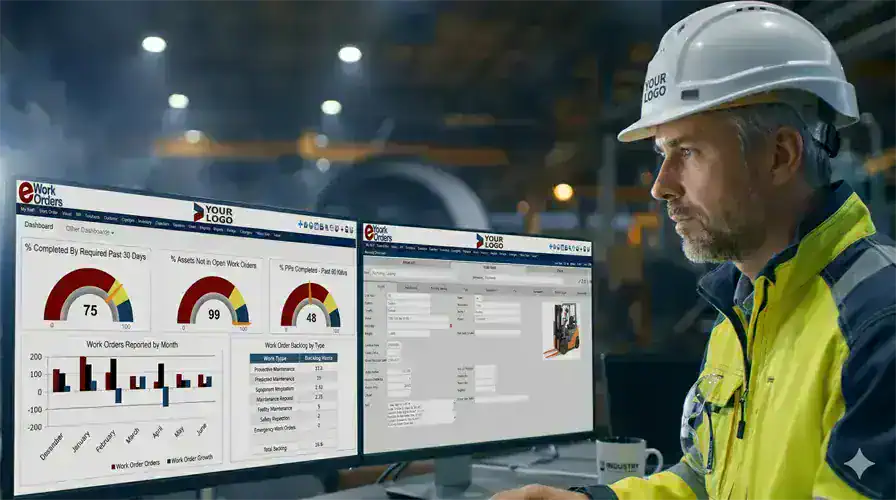
FacilityBot’s reporting tools aggregate the data generated by every work order created, assigned, executed, and closed — presenting it through dashboards that give facility managers visibility into the metrics that matter most. Preventive maintenance compliance rates show what proportion of scheduled tasks are being completed on time. Mean time to repair analysis identifies which asset categories or building zones are consuming the most corrective maintenance resource. Work order volume trends reveal seasonal demand patterns that should inform staffing and contractor capacity planning.
This analytical capability converts the maintenance function from a reactive cost centre into a data-driven operational discipline — where performance is continuously measured, understood, and improved based on evidence rather than intuition.
Why FacilityBot Is Singapore’s CMMS of Choice
FacilityBot has earned its position as Singapore’s leading CMMS software by delivering work order and scheduling automation that is genuinely accessible to the full range of organisations operating in Singapore’s facilities management market — from single-site commercial buildings to multi-property enterprise portfolios.
Its cloud-native architecture means deployment is measured in days rather than months. Its mobile-first design ensures technician adoption without lengthy training programmes. Its configurable workflows and scheduling tools allow facility managers to build maintenance programmes that reflect their specific operational requirements rather than conforming to a rigid system template.
For Singapore organisations ready to move beyond manual maintenance management, FacilityBot provides the complete automation platform that makes the transition straightforward — and the operational improvements immediate.
