

A cracked bearing rarely announces itself. It runs a little hotter, vibrates a little more, and then one shift it seizes and takes a production line down with it. Industrial preventive maintenance exists to catch that bearing weeks before the seizure, not hours after.
For plants running heavy machinery around the clock, the gap between a maintenance program that works and one that only looks good on paper shows up directly on the P&L: in overtime labor, in expedited freight for a part that should have been reordered a month earlier, in a shift supervisor explaining to leadership why the line was down for six hours. This guide walks through what industrial preventive maintenance is, why it matters at industrial scale specifically, the types of PM strategies plants actually mix together, and how to build (or rebuild) a program that holds up under real production pressure.
What Is Industrial Preventive Maintenance?
Industrial preventive maintenance is the practice of servicing production equipment, on a planned basis, before it fails, rather than repairing it after a breakdown has already stopped output. Instead of waiting for a compressor to trip or a conveyor motor to burn out, maintenance teams inspect, clean, lubricate, calibrate, and replace wearing components on a schedule tied to time, usage, or measured equipment condition.
The word “industrial” matters here. Preventive maintenance principles apply just as well to a hotel HVAC unit as they do to a stamping press, but industrial environments raise the stakes considerably. A single unplanned stoppage on a production line can cascade through an entire manufacturing schedule, trigger missed shipment windows, and put safety at risk in ways an office building rarely does. So when people search for what is industrial preventive maintenance, they’re usually asking a slightly different question than a facilities team would: not “how do we keep the lights on,” but “how do we keep a production asset from taking down the whole operation.”
Some sources use “industrial preventative maintenance” as an alternate spelling for the same concept. Both terms describe the same discipline: planned, proactive work performed to stop failures before they happen, rather than reacting to them after the fact.
Why Industrial Preventive Maintenance Matters
Reactive maintenance feels cheaper in the moment, since nothing is spent until something actually breaks. On a factory floor, that math falls apart fast. A single hour of unplanned downtime on a manufacturing line can easily run into six figures once you account for idle labor, missed output, expedited parts, and the ripple effect on downstream schedules. Layer in the fact that a meaningful share of industrial safety incidents trace back to equipment that wasn’t properly maintained, and reactive maintenance stops looking like a cost-saving strategy and starts looking like a liability.
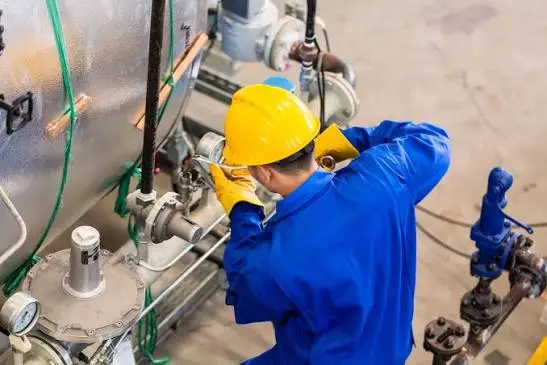
A mature industrial PM program changes that equation in several concrete ways:
- Fewer unplanned stoppages. Plants that lean on scheduled and condition-based maintenance consistently report far less unplanned downtime than plants running reactive-heavy operations.
- Longer equipment life. Bearings, motors, seals, and gearboxes wear out on a curve. Catching early-stage degradation, rather than letting a component run to failure, routinely extends the working life of industrial assets by years, not months.
- Lower total maintenance spend. Emergency repairs typically cost several times more than the same work done on a planned basis, once overtime labor, rush shipping, and lost production are factored in.
- Better safety outcomes. Well-maintained guarding, electrical systems, and rotating equipment reduce the failure modes most likely to injure a technician or operator.
- More predictable production planning. When maintenance windows are scheduled instead of forced, operations can plan around them rather than being blindsided by them.
Types of Industrial Preventive Maintenance
Not every asset on a plant floor should be maintained the same way. A conveyor motor that runs 16 hours a day wears differently than a backup generator that starts once a month for a test cycle. Industrial teams typically draw from a mix of the following strategies, matched to how each asset actually fails.
| Type | How the Trigger Works | Where It Fits Best |
|---|---|---|
| Time-based (calendar) PM | Task is performed at a fixed interval, e.g., every 30, 60, or 90 days, regardless of how the asset has been used | Equipment under regulatory or warranty requirements, and assets where wear correlates loosely with the calendar |
| Usage-based PM | Task is triggered by an operating metric, such as run hours, production cycles, or units processed | Motors, pumps, and machinery where failure tracks with actual workload rather than time |
| Condition-based PM | Task is triggered by an inspection finding or a sensor reading crossing a threshold, such as vibration or temperature | Rotating equipment and critical assets where a physical symptom reliably precedes failure |
| Predictive maintenance (PdM) | Sensor data and trend analysis are used to forecast failure and schedule intervention just ahead of it | High-value, high-criticality assets where the cost of monitoring is justified by the cost of unplanned failure |
In practice, most industrial plants run a blend of all four. Calendar-based lubrication schedules coexist with vibration monitoring on critical gearboxes and usage-triggered oil changes on forklifts. The goal isn’t to pick one method and apply it everywhere; it’s to match the trigger to how each specific asset actually degrades.
Industrial Preventive Maintenance vs. Reactive and Predictive Maintenance
It helps to see where preventive maintenance sits relative to the two strategies it’s most often compared against.
| Strategy | What Triggers the Work | Typical Cost Profile |
|---|---|---|
| Reactive maintenance | Equipment has already failed | Highest per-event cost, plus overtime, rush parts, and lost output |
| Preventive maintenance | A schedule based on time, usage, or condition | Moderate and predictable, with some risk of doing work before it’s strictly needed |
| Predictive maintenance | Real-time sensor data and failure trend analysis | Higher upfront investment in sensors and software, lower cost per intervention over time |
Reactive maintenance still has a place for low-value, easily replaceable parts where the cost of monitoring exceeds the cost of just letting the part run to failure and swapping it. But for anything that drives production, preventive or predictive strategies almost always come out ahead over the equipment’s working life. For a closer look at how the predictive and preventive approaches differ and when to use each, see Predictive Maintenance vs. Preventive Maintenance.
How to Build an Industrial Preventive Maintenance Program
Step 1: Build a complete asset register
Every industrial PM program starts with knowing exactly what you’re maintaining: location, manufacturer and model, install date, warranty status, maintenance history, and any manuals attached to it. Skipping this step is the most common reason PM programs stall within the first year, since nobody can schedule work reliably against an inventory that’s incomplete or out of date. For a more detailed walkthrough of turning an asset register into a working schedule, see Preventive Maintenance: How to Build a Practical Schedule for Facility Assets.
Step 2: Rank assets by criticality
Not every asset deserves the same level of attention. A criticality assessment scores each piece of equipment against factors like safety risk, production impact, downtime cost, and how often it tends to fail. Assets that score highest, the ones whose failure would stop the line, injure someone, or trigger a compliance violation, get the tightest PM schedules and the most detailed procedures. Lower-criticality assets can often run on lighter-touch or even reactive strategies without meaningfully increasing risk.
Step 3: Choose the right trigger for each asset
Once you know which assets matter most, decide what will actually trigger maintenance on each one: a calendar date, an operating hour count, a cycle count, or a condition reading. Where you have historical failure or work order data, use it to set intervals. Where you don’t, OEM manuals and published industry benchmarks are a reasonable starting point, though they tend to be conservative and are worth revisiting once your own failure data starts to accumulate.
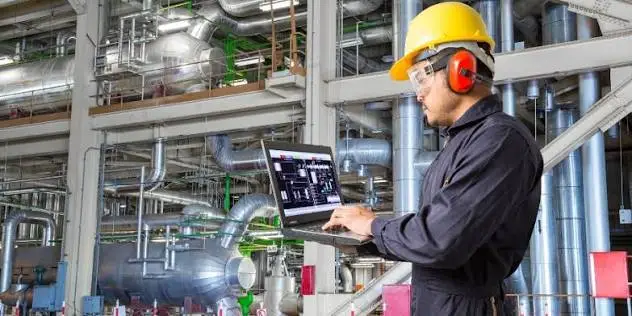
Step 4: Write detailed, repeatable job plans
A schedule only tells a technician when to show up. A job plan tells them what to do once they’re there: the steps, required tools and parts, estimated time, and any lockout/tagout requirements. Standardizing these across shifts and sites is what keeps one technician’s shortcut from becoming another site’s failure mode. See Everything You Need to Know About Preventive Maintenance Checklists for a closer look at building checklists that hold up under daily use.
Step 5: Put the program on a CMMS
Spreadsheets and paper checklists can technically run a PM program, but they depend entirely on someone remembering to check a calendar. A CMMS automates that dependency away: it generates work orders on schedule, assigns them to the right technician, attaches the job plan, and gives managers a live view of what’s overdue. See How CMMS Software Supports Preventive Maintenance for more on what this looks like in practice. Digitizing a PM program is consistently one of the highest-leverage changes a plant can make to improve compliance without adding headcount.
Step 6: Track a small set of KPIs and keep refining
A PM program isn’t something you build once and leave alone. Track a focused set of metrics, review them on a regular cadence, and use what they show to adjust intervals, retire tasks that aren’t earning their keep, and add coverage where failures keep repeating.
Metrics That Show Whether an Industrial PM Program Is Working
| Metric | What It Tells You |
|---|---|
| PM Compliance Rate | Share of scheduled PM tasks completed on time; a proxy for whether the program is actually running as designed |
| Mean Time Between Failures (MTBF) | How long, on average, an asset runs between failures; rising MTBF signals the program is working |
| Mean Time To Repair (MTTR) | How quickly the team resolves issues once they occur |
| Planned Maintenance Percentage | Share of total maintenance hours spent on planned work versus reactive firefighting |
| Repeat Failures | Same asset, same failure code, within a short window; a strong indicator that a PM task needs redesigning rather than just repeating |
A high PM compliance rate paired with a rising repeat-failure count is usually a sign that tasks are being closed out without being done properly, sometimes called pencil-whipping. It’s worth watching for that pattern specifically, since compliance numbers alone can look healthy while the underlying maintenance quality quietly erodes.
Common Mistakes That Undermine Industrial PM Programs
Over-maintaining low-risk assets. Servicing equipment far more often than its actual failure pattern justifies wastes technician hours that could go toward higher-criticality work. If a task keeps turning up nothing wrong, it’s a candidate for a longer interval or a switch to condition-based triggers.
Inconsistent execution across shifts or sites. Without a documented job plan, PM quality varies by whoever happens to be holding the wrench. Multi-site operations feel this acutely: the same nominal PM task can mean completely different things depending on which plant performed it.
Poor or delayed documentation. Work performed but not recorded is functionally invisible. It can’t inform future scheduling decisions, and it leaves nothing to show an auditor or a regulator when compliance is questioned.
Leaving technicians out of program design. The people running the equipment daily usually know exactly which PM tasks are useful and which are busywork. Programs built entirely from a desk, without technician input, tend to produce schedules that look reasonable on paper and get ignored on the floor.
Letting one person own both reactive and preventive work. When the same technician handles emergency repairs and scheduled PM, the emergencies always win, and PM quietly slides to the bottom of the list until it’s someone else’s problem.
Industrial Preventive Maintenance FAQs
What is industrial preventive maintenance, in one sentence? It’s the practice of servicing production equipment on a planned schedule, based on time, usage, or condition, to prevent unexpected failures rather than repairing them after the fact.
Is industrial preventive maintenance the same as industrial preventative maintenance? Yes. “Preventative” and “preventive” are used interchangeably across the industry to describe the same planned-maintenance approach.
How often should industrial PM tasks be scheduled? It depends entirely on the asset and how it fails. Critical, high-wear equipment might need weekly or monthly attention, while low-criticality assets may only need an annual check. Historical failure data and OEM guidance are the two most reliable starting points.
What’s the difference between industrial preventive maintenance and predictive maintenance? Preventive maintenance runs on a schedule set in advance. Predictive maintenance uses live sensor data to time the work based on the asset’s actual condition, which can reduce both over-maintenance and surprise failures, at the cost of a higher upfront investment in monitoring equipment.
Do small and mid-sized industrial operations need a full PM program, or is that only for large plants? Any operation running production-critical equipment benefits from a PM program. The scale of the program, the number of assets covered and the sophistication of the tools used, should match the size and risk profile of the operation, but the underlying discipline of planning maintenance instead of reacting to failure applies at any scale.
How FacilityBot Supports Industrial Preventive Maintenance
Running an industrial PM program on spreadsheets works right up until a plant scales past a handful of assets. FacilityBot is cloud-based CMMS software built to take that manual burden off maintenance teams: it schedules recurring PM tasks automatically, attaches job plans and safety procedures to each work order, and gives managers a live view of overdue and completed work across every site. Paired with FacilityBot’s fault reporting software, technicians and operators can flag an early warning sign the moment they spot it, routing it straight into the maintenance queue instead of waiting for the next scheduled inspection. For teams managing PM alongside broader building systems, FacilityBot’s facilities management solutions bring preventive maintenance, asset tracking, and fault resolution into a single platform, so nothing depends on someone remembering to check a calendar.
