Last updated on January 21st, 2026 at 12:10 am
Facility managers today face growing operational complexity driven by rising sustainability expectations, workplace flexibility, higher asset utilization, and increased compliance demands. Managing all of these through isolated systems, manual spreadsheets, and reactive processes is no longer feasible.
This is why interest in Integrated Workplace Management Systems (IWMS) has surged, especially as enterprises adopt IWMS smart buildings strategies to automate building functions, track performance data, and streamline maintenance activities. With centralized reporting, cross-system visibility, and automated workflows, IWMS has become the digital command center of the modern facility ecosystem.
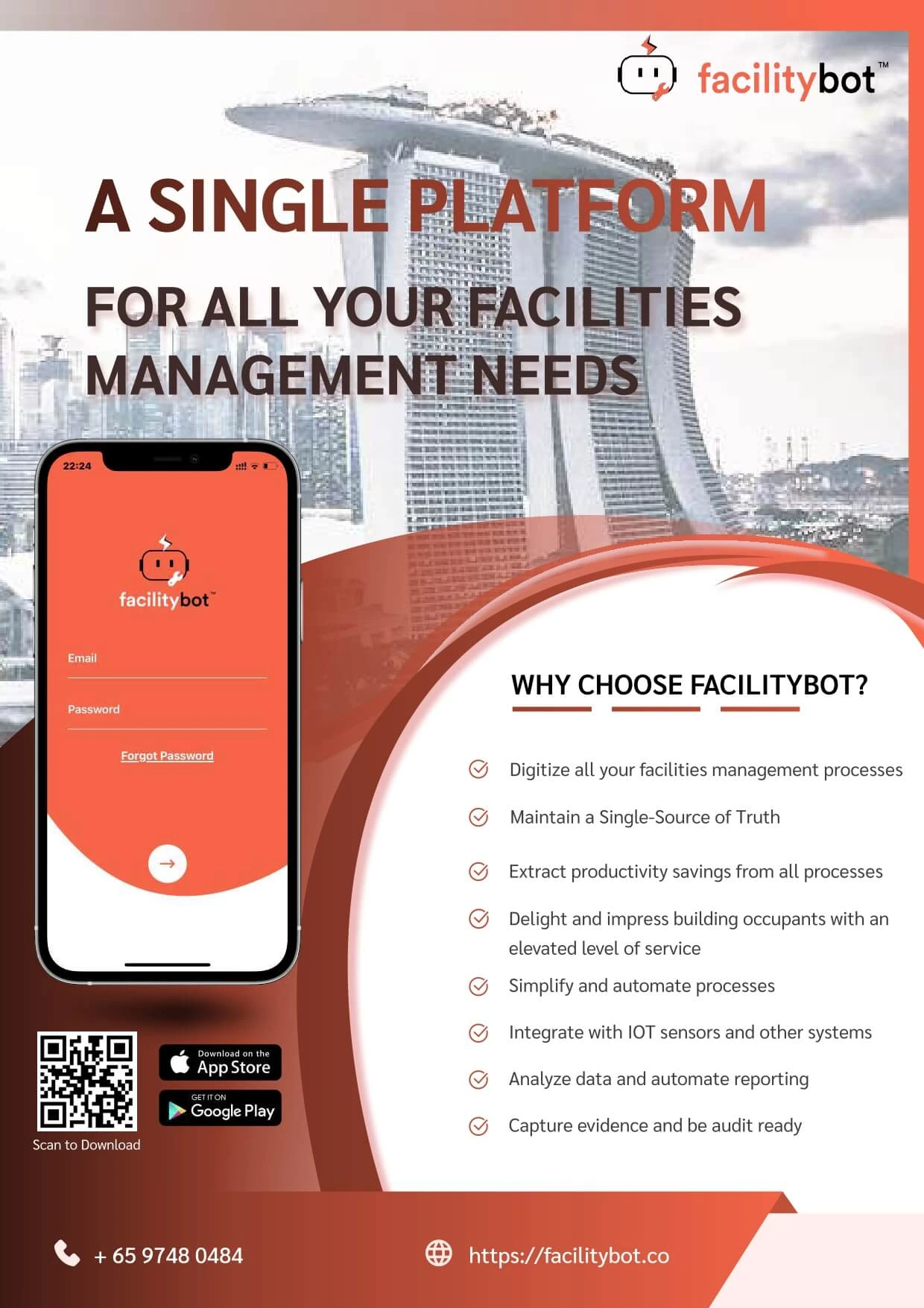
Platforms like FacilityBot extend these capabilities by modernizing work order management, mobile-first maintenance execution, and smart building integrations—enabling faster decision-making and more efficient operations.
What Is IWMS and Why It Matters for Facility Managers
An IWMS consolidates multiple facility-related functions into a unified software platform, including:
- Real estate & space management
- Maintenance & asset management
- Sustainability & energy performance
- Health & safety
- Vendor & contract management
- Compliance & ESG reporting
By centralizing this data, facility managers gain real-time visibility into the lifecycle of buildings, spaces, assets, occupants, and vendors—removing the silos that create inefficiency.
The Shift Toward Smart, Data-Driven Buildings
The rise of smart buildings is driven by IoT sensors, building automation systems, and digital workplace tools that enable:
✔ Automated environmental controls
✔ Real-time occupancy tracking
✔ Predictive maintenance
✔ Energy optimization
✔ Smart access and security
However, these systems generate massive volumes of operational data. Without consolidation, the data remains fragmented and underutilized. IWMS solves this by becoming the single layer that connects building management integration with facility operations and strategic planning.
How IWMS Centralizes Facility Operations
Facility managers benefit most from IWMS in four primary operational domains:
1. Maintenance & Asset Management
Maintenance-related activities are among the most labor-intensive and costly facility functions. IWMS platforms help by:
- Automating preventive schedules
- Tracking asset health and performance
- Managing work orders and contractors
- Supporting predictive maintenance workflows
Platforms like FacilityBot make this even easier through mobile maintenance execution, contractor coordination, fault reporting automation, and IoT-triggered work orders—reducing downtime and improving asset lifecycle outcomes.
2. Space and Occupancy Planning
Hybrid work and flexible seating have made space planning more dynamic than ever. IWMS allows facility managers to:
✔ Track real-time occupancy levels
✔ Allocate seats, rooms, and zones
✔ Forecast future space requirements
✔ Improve space utilization ratios
In smart buildings, IoT occupancy sensors feed usage data directly into IWMS for optimization—eliminating guesswork and maximizing utilization.
3. Sustainability & Energy Performance
Energy and sustainability reporting are now strategic priorities due to ESG regulation and cost control. IWMS enhances sustainability performance by:
- Collecting energy usage data
- Monitoring emissions and waste output
- Benchmarking against corporate sustainability goals
- Generating ESG compliance reports
This capability integrates directly with building automation systems to support active reductions in energy consumption and carbon output.
4. Vendor, Contractor & Service Management
Facility managers rely on vendors for HVAC, electrical, cleaning, landscaping, security, and more. IWMS centralizes these workflows by:
- Tracking contracts and SLAs
- Monitoring vendor performance
- Managing dispatch and service requests
- Ensuring compliance documentation
FacilityBot strengthens this by digitizing vendor coordination, enabling contractors to receive, execute, and close work orders through mobile devices—removing friction and manual communication.
Centralized Reporting: The Most Underrated IWMS Benefit
Improving reporting accuracy and speed is one of the most impactful outcomes for facility managers. With IWMS, reporting becomes:
✔ Automated
✔ Real-time
✔ Cross-functional
✔ Auditable
✔ Data-rich
Common reports include:
- Maintenance KPIs (MTTR, MTBF, backlog)
- Energy & utility consumption
- Asset lifecycle performance
- Vendor compliance
- Occupancy & space utilization
- Sustainability & ESG metrics
- Budget and financial forecasting
These insights support both day-to-day tactical decisions and long-term strategic planning.
How IWMS Improves Decision-Making
When operations and reporting are centralized, facility managers gain decision advantages such as:
✔ Faster escalation of issues
✔ Better capital planning
✔ Reduced downtime and resource waste
✔ Improved workplace experience
✔ Higher compliance assurance
✔ Clear visibility into cost drivers and ROI
This moves facility management from reactive firefighting to proactive optimization.
Integration: The Key to Smart Facility Ecosystems
The value of IWMS multiplies when it integrates with other systems common in smart buildings, including:
- Building Management Systems (BMS)
- IoT sensors
- Access control systems
- CMMS platforms
- Energy management platforms
- Safety & compliance systems
- Digital twin models
Building environments can then respond autonomously to triggers such as occupancy, temperature, or asset vibration—creating intelligent, automated workflows that reduce human intervention.
This is the essence of building management integration—and it represents the next frontier for operational efficiency.
Why FacilityBot Strengthens IWMS Adoption
While IWMS provides the enterprise command layer, FacilityBot adds operational execution capabilities through:
⭐ Mobile-first work order management
⭐ IoT-triggered maintenance workflows
⭐ Vendor and contractor coordination
⭐ Space and asset visibility
⭐ Automated fault reporting
⭐ Preventive maintenance scheduling
⭐ Analytics dashboards and reporting
This makes FacilityBot particularly effective in environments where facility teams need fast response, high mobility, and strong visibility over the built environment.
Industries Benefiting from IWMS
Industries experiencing the strongest IWMS adoption include:
- Commercial real estate
- Corporate offices
- Healthcare and hospitals
- Industrial manufacturing
- Data centers
- Education and campuses
- Hotels and hospitality
- Government and public infrastructure
These sectors rely heavily on physical assets, occupant experience, and regulatory compliance—making IWMS an operational necessity.
Conclusion
For facility managers, IWMS delivers a unified platform to manage operations, enhance reporting, integrate smart building technologies, and elevate service delivery. As smart building strategies mature, the ability to centralize maintenance, sustainability, energy, and space data will define operational excellence.
Platforms like FacilityBot complement IWMS by bringing modern, mobile, and automated maintenance and vendor workflows—ensuring that digital facility strategies actually translate into real-world performance.