

Manufacturing floors are high-risk environments by design. Hot work, confined space entry, lockout-tagout, working at height, and electrical isolation all happen side by side, often across multiple shifts and multiple contractors. A single missed sign-off or an expired permit can be the difference between a routine maintenance job and a serious incident. This is exactly why more plant managers and EHS teams are moving away from paper-based systems and adopting permit to work software for manufacturing as a core part of their safety infrastructure.
Why Manufacturing Needs Digital Permit to Work Systems
Traditional paper permits were never built for the pace and complexity of a modern manufacturing environment. Permits get lost, signatures get delayed, and supervisors often have no real-time visibility into which hazardous jobs are active on the floor at any given moment.
Software for permit to work solves this by digitizing the entire lifecycle of a permit — from request and risk assessment, to approval, execution, and closeout. Instead of relying on a clipboard and a filing cabinet, safety teams get a live, auditable record of every high-risk task happening across the facility.
Key Risks Reduced by Permit to Work Software for Manufacturing
- Unauthorized or overlapping work — the system flags conflicting permits before they’re issued, such as hot work and confined space entry happening in the same zone simultaneously.
- Expired or forgotten permits — automated expiry alerts ensure no job continues under an invalid permit.
- Missed isolation steps — built-in checklists enforce lockout-tagout and isolation sequences before work can begin.
- Poor visibility for supervisors — real-time dashboards show every open permit, its status, and its risk level across the plant floor.
- Weak audit trails — every approval, rejection, and closeout is timestamped and stored, making regulatory audits faster and less stressful.
Core Features to Look For in Software for Permit to Work
When evaluating software for permit to work, manufacturing teams should prioritize:
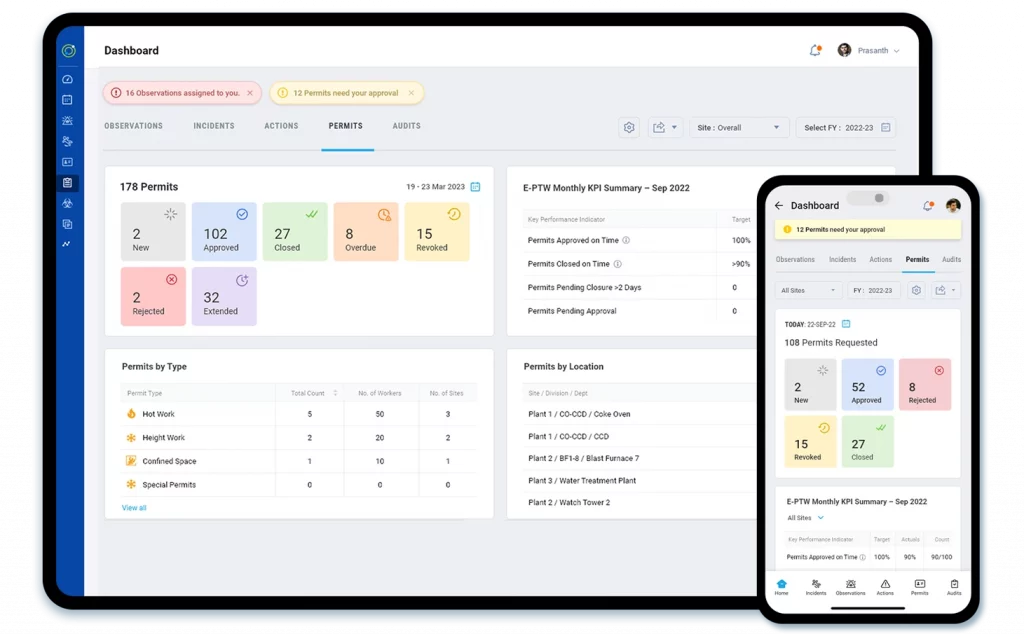
- Configurable permit types — hot work, cold work, working at height, confined space, electrical, and excavation permits, each with tailored checklists.
- Digital risk assessments — hazard identification and control measures captured directly in the permit workflow.
- Multi-level approval routing — ensuring the right supervisor, safety officer, or contractor sign-off happens before work starts.
- Real-time floor visibility — a live map or dashboard view of active permits across departments and shifts.
- Mobile access — technicians and contractors can request, review, and close permits directly from the floor using a phone or tablet.
- Integration with work order management — linking permits directly to maintenance work orders so safety and execution stay connected.
- Audit-ready reporting — instant access to historical permit data for ISO, OSHA, or local regulatory audits.
The Business Case for Permit to Work Software in Manufacturing
Beyond safety, digital permit to work systems reduce downtime caused by delayed approvals, cut administrative overhead for EHS teams, and give plant managers defensible documentation in the event of an incident investigation. For multi-site manufacturers, standardizing on a single permit to work software for manufacturing platform also means consistent safety practices across every plant, regardless of location or shift pattern.
Making the Switch
Moving from paper to digital doesn’t need to be disruptive. The most successful rollouts start with a single high-risk permit type — often hot work or confined space entry — before expanding across the full permit library. This phased approach lets safety teams and floor supervisors get comfortable with the new workflow while immediately reducing risk in the highest-hazard areas.
Why FacilityBot Is the Best Permit to Work Software in Singapore
For manufacturers in Singapore looking to modernize floor safety, FacilityBot stands out as the best permit to work software in Singapore. Built specifically for facilities and manufacturing environments, FacilityBot combines configurable digital permits, real-time floor visibility, and seamless integration with work order management — all in one platform. Singapore manufacturers rely on FacilityBot to stay compliant with local workplace safety regulations, reduce approval delays, and give EHS teams a single source of truth for every hot work, confined space, and lockout-tagout permit across their facilities. With mobile-first access and audit-ready reporting built in, FacilityBot helps plant managers reduce risk on the floor while keeping operations running smoothly.
