
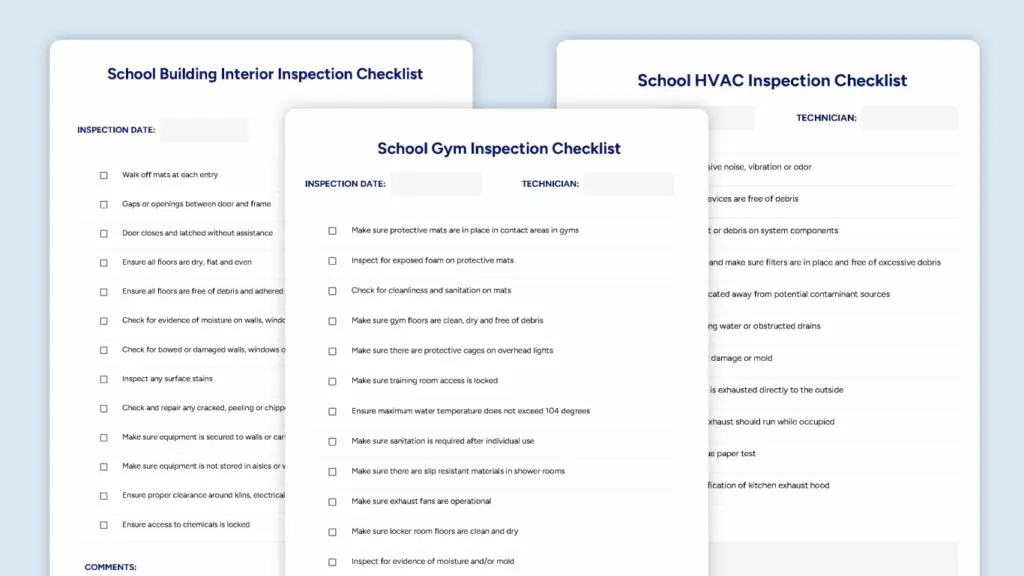
Most school facilities teams have a checklist somewhere. It might be a laminated sheet on a clipboard, a spreadsheet inherited from a former colleague, or a PDF downloaded years ago. The problem is rarely that no checklist exists. The problem is that nobody is sure it covers the right things, at the right frequency, with enough detail to be useful.
A good building maintenance checklist for schools does three jobs at once. It tells a technician exactly what to look at. It proves to an auditor, insurer, or board that the work was done. And it catches small defects early enough that they never become closures, injuries, or emergency invoices.
This guide focuses on one question: what should actually go on the list? We walk through each building system, the specific items worth including, how often to check them, and how to design the checklist so people really use it. If you want to turn the list into a calendar, our guide on preventive maintenance scheduling for schools shows how to place these tasks across the academic year, and our overview of the preventive maintenance plan for schools covers the strategy behind them.
What a School Maintenance Checklist Is (and Is Not)
A checklist is a set of repeatable inspection and service items for a defined area or system. It is not a plan, a schedule, or a work order, though it feeds all three.
- A plan explains goals, priorities, and resources.
- A schedule says when each task is due.
- A checklist says what to check when you get there.
- A work order captures the repair when you find a problem.
The best checklists connect to all of these. A failed item on the checklist should trigger a work order, and the completed checklist should become a record in the asset’s history.
Four Principles for Deciding What Goes on the List
Before listing items, it helps to have rules for what earns a place.
1. Include items where failure has consequences. Safety, compliance, and continuity come first. A cracked light cover in a gym matters more than a scuffed baseboard.
2. Include items a person can verify. “Check HVAC” cannot be completed. “Confirm filters are in place and free of heavy debris” can.
3. Include items with a clear pass or fail. A technician should know when to move on and when to raise a work order.
4. Keep the list short enough to finish. A 90-item checklist that takes four hours gets skipped. A 30-item checklist that takes 75 minutes gets done.
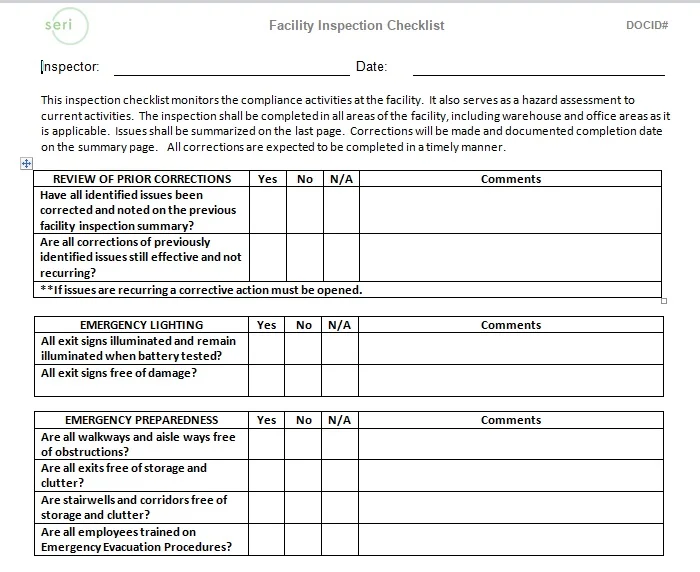
Apply these rules and your list will naturally focus on the items that matter.
The Three Kinds of Tasks to Include
Every item on a school maintenance checklist falls into one of three types. A balanced list contains all three.
| Task type | Purpose | Examples |
|---|---|---|
| Inspect | Spot problems before they escalate | Ceiling stains, loose handrails, blocked exits, roof ponding |
| Clean | Protect comfort, hygiene, and equipment life | Restroom disinfection, drain clearing, coil cleaning, debris removal |
| Service | Keep equipment running to manufacturer guidance | Filter changes, lubrication, belt replacement, battery tests |
Many teams over-index on inspection and forget cleaning and servicing, even though neglected cleaning shortens equipment life and neglected servicing voids warranties. Check that each system on your list includes all three.
Section 1: HVAC and Air Quality
Heating, cooling, and ventilation drive both comfort and energy cost, and in many jurisdictions they carry documentation requirements for indoor air quality.
Monthly items
- Check air filters, and replace any that are loaded, damaged, or missing. Record the replacement date.
- Compare supply and return air temperatures with thermostat setpoints in representative zones
- Inspect condensate drain pans and lines for standing water, algae, or blockage
- Check fan belts for cracking, glazing, or loose tension
- Listen and feel for unusual noise, vibration, or odour at air handlers and rooftop units
Quarterly items
- Clean evaporator and condenser coils
- Lubricate motor bearings to manufacturer specification
- Calibrate and test room thermostats
- Inspect VAV boxes and confirm damper movement
Seasonal and annual items
- Full cooling system commissioning before the school year
- Boiler start-up and safety control testing before cold weather
- Cooling tower cleaning and Legionella risk assessment where towers exist
- Combustion analysis on gas-fired equipment
Often forgotten
- Kiln and fume hood exhaust: confirm kilns exhaust directly outdoors and run a simple airflow check on fume hoods
- Locker room and restroom exhaust fans: confirm they run when spaces are occupied
- Air intakes: confirm they are not close to contaminant sources such as idling vehicles or dumpsters
- Kitchen exhaust hood and duct cleaning on the required cycle
Section 2: Electrical and Emergency Power
Electrical items are mostly about life safety and keeping the building usable during outages.
Monthly items
- Test emergency exit lighting and battery backup
- Run the emergency generator under load and record voltage and frequency
- Check exterior and parking lot lighting, including timers and photocells
- Check AED units for battery status, pad condition, and unobstructed access
Quarterly items
- Thermographic scan of main panels to find hot spots
- Test GFCI outlets in wet locations such as kitchens, restrooms, labs, and outdoor receptacles
- Inspect panel interiors for corrosion, loose connections, and correct labelling
Annual items
- Generator load bank test
- Transfer switch inspection and test
- Review of emergency and standby power compliance records
Often forgotten
- Extension cord and power strip use in classrooms
- Clearance around electrical cabinets, which should never double as storage
- Burnt-out bulbs in corridors, stairwells, and exits
Section 3: Plumbing and Water Safety
Water is both a comfort issue and a health issue in schools, and it is one of the areas where documentation matters most.
Monthly items
- Record hot water temperature at each heater and at representative points of use
- Flush and test eyewash stations and emergency showers, and record the result
- Check visible plumbing under sinks for leaks, prioritising labs and kitchens
- Inspect drinking fountains for flow, cleanliness, and damage
Seasonal and annual items
- Flush all outlets after extended closures such as summer break
- Sample drinking water outlets for lead on the required cycle
- Winterise exposed plumbing and irrigation before first freeze
- Inspect water heaters, test relief valves, and flush sediment
- Certify backflow preventers with a licensed tester
- Review the Legionella water management plan with a qualified professional
Often forgotten
- Showers in locker rooms: confirm maximum water temperature limits and slip-resistant surfaces
- Low-use outlets such as seldom-used restrooms, which can develop stagnant water
- Mop sinks and janitor closets, where leaks often go unnoticed
Section 4: Fire and Life Safety
This is the section where gaps cost the most, so be specific. Every item should be traceable to a record.
Monthly items
- Check each fire extinguisher: gauge in the green, pin in place, no visible damage, current inspection tag
- Confirm fire exit doors open freely, latch properly, and have working closers
- Check that exit routes are clear and that no door is propped open
- Review the fire alarm panel for troubles or supervisory signals
- Confirm sprinkler heads have clear space below them and nothing is stored too close
Quarterly items
- Test fire alarm devices and notification appliances
- Test flow and tamper switches and confirm signals reach the panel
Annual items
- Licensed sprinkler inspection
- Licensed fire alarm inspection with documented results
- Extinguisher annual servicing, including any required internal examination
- Kitchen fire suppression system service
- Fire pump controller test where applicable
Periodic items
- Longer-cycle sprinkler flow tests and internal inspections as required locally
Often forgotten
- Evacuation route maps posted in each room and still accurate
- Designated severe weather shelters identified and signed
- Evidence that safety procedures and drill records were submitted to the relevant authority, where required
- EXIT signs lit and legible, including in corridors that have been repainted
Section 5: Roof and Drainage
Roof problems are expensive and slow to reveal themselves from the inside, so make the roof visit a firm line on the checklist.
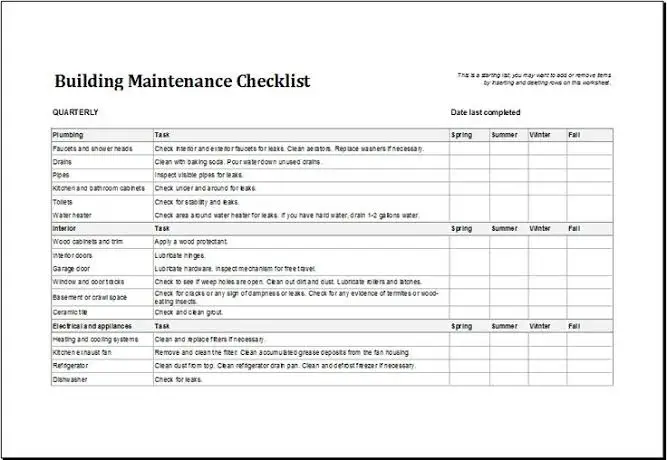
Quarterly items
- Walk the roof and inspect the membrane for blisters, cracks, and open seams
- Clear roof drains, scuppers, and gutters of debris
- Inspect flashing, parapet walls, and coping for separation or failed sealant
- Look for standing water, past or present, which signals drainage problems
After storms
- Inspect for displaced material, new ponding, and damage to rooftop equipment
Annual items
- Professional roof survey, including moisture detection where appropriate
- Update the roof inventory with age, warranty status, and remaining life
Often forgotten
- Rooftop HVAC and exhaust stacks: check for noise, vibration, deterioration, and signs of birds, rodents, or insects
- Evidence of microbial growth on roof surfaces
- Photo records for year-on-year comparison
Section 6: Building Exterior and Envelope
The envelope keeps water out and conditioned air in. Problems here show up as leaks, drafts, and high energy bills.
Seasonal items (spring and fall)
- Inspect masonry for eroded mortar joints, cracks, and efflorescence
- Check window perimeters and sealants, and test operable windows and weatherstripping
- Inspect door thresholds, sweeps, and weatherstripping
- Check expansion joints and sealants
- Check siding, trim, and cladding for gaps and openings
Annual items
- Assess whether masonry needs repointing before winter
- Replace failed caulking and joint sealant
- Run a thermal imaging survey if budget allows
Site and grounds items
- Check that downspouts discharge away from the structure
- Look for standing water on walkways, pads, and low spots
- Inspect sidewalks and walking surfaces for trip hazards
- Confirm separation of vehicles and pedestrians, and any no-idling zones
- Check that exterior waste containers have lids or covers
- Remove weeds and debris near foundations
- Inspect parking lots, fencing, gates, and stormwater features
Section 7: Building Interior
Interiors are where occupants notice maintenance first, so this section covers both safety and perception.
Monthly items
- Inspect floors in corridors, classrooms, and entrances for lifting, damage, and wet spots
- Check ceiling tiles for stains or sagging, and log the location of any leak evidence
- Look for moisture on walls, windows, and ceilings
- Confirm entrance walk-off mats are in place
- Confirm doors close and latch without assistance, with no gaps between door and frame
- Check that equipment is secured to walls or carts and not stored in aisles
- Maintain required clearance around kilns, electrical cabinets, HVAC equipment, and sprinklers
- Confirm chemical storage areas are locked
Summer break items
- Strip and refinish resilient floors
- Deep clean carpets
- Repaint on a planned rotation
Annual items
- Accessibility audit of routes, signage, hardware heights, and restroom clearances
- Visual inspection of known asbestos-containing materials for disturbance, where applicable
Often forgotten
- Evidence of pests, such as droppings or gnaw marks, in storage rooms and kitchens
- Elevator license and inspection status
- Stair railings, ramps, and anti-slip treatments
Section 8: Restrooms, Cafeteria, and Kitchens
High-use spaces deserve their own short checklist because they fail more often than classrooms.
- Restrooms: working locks, intact partitions, functioning faucets and flush valves, no leaks, clean exhaust grilles
- Cafeteria: refrigeration temperatures logged, door gaskets intact, hand sinks stocked and working, floor drains clear
- Kitchen equipment: hood and duct cleaning on schedule, suppression system tags current, gas connections and shut-offs accessible
- Pest control: service visits logged, entry points sealed
Section 9: Athletic, Fitness, and Specialty Spaces
Gyms, pools, labs, and workshops carry unique risks that a general checklist misses.
Gyms and locker rooms
- Protective wall and floor mats secure, clean, and free of exposed foam
- Floors clean, dry, and free of debris
- Overhead lights protected by cages
- Exhaust fans operational and no signs of moisture or mould
- Slip-resistant surfaces in showers
Bleachers
- Level and stable under foot
- No rust, rot, or broken welds
- No loose or missing bolts on seating, footboards, and guardrails
- No openings in guardrails or seating that would let a 4-inch sphere pass through
- Concrete piers not sinking or heaving
Fitness rooms
- Free weight collars present and used
- Cables, belts, and chains free from fraying or breakage
- Guards on fan blades
- Safe-use rules posted and disinfectant available
Labs and chemical storage
- Chemical inventory current and disposal records maintained
- Storage rooms locked, with no food or drink present
- Labelling legible and consistent
- Fume hoods not used for storage
- Eyewash stations and emergency showers unobstructed and tested
Section 10: Playgrounds and Outdoor Play Areas
Playgrounds deserve a short, frequent inspection. Build a monthly visual checklist and add an annual audit by a certified inspector.
- Safety surfacing at adequate depth, especially under swings and at slide exits
- Impact mats in high-traffic areas intact
- No exposed footings or jagged concrete
- No broken, cracked, or splintered components
- Fasteners tight and complete
- S-hook gaps closed to safe limits
- Chains and swing seat grommets free from excessive wear
- No pinch points, entrapment hazards, or missing guardrails
- Weeds and debris removed
A Quick Reference: Frequency at a Glance
| Frequency | Typical checklist focus |
|---|---|
| Daily or weekly | Cleaning rounds, visible hazards, restroom condition, exit path checks |
| Monthly | Filters, emergency lighting, generator run, extinguishers, eyewash, hot water temperature, interior condition, playground visual inspection |
| Quarterly | Coils and lubrication, panel scans, fire alarm device testing, roof walk, site infrastructure |
| Seasonal | Cooling and heating start-up, water flushing, envelope surveys, winterisation, roof drain clearing |
| Annual | Licensed fire inspections, generator load bank test, backflow certification, playground audit, accessibility audit, roof survey |
Treat this as a starting point. Always confirm required frequencies with your local fire authority, health department, insurer, and regulators, because rules vary by jurisdiction.
How to Design the Checklist So It Gets Used
A complete list is useless if nobody completes it. These design choices make the difference.
Group by walking route, not by system
Technicians do not move through a building one system at a time. They walk a route. Organise a walkthrough checklist by zone, such as mechanical room, roof, corridors, gym, kitchen, and grounds, so one person can finish it without backtracking.
Write items as observable checks
Good items are phrased as something you can see, hear, measure, or test. “Ceiling tiles free of stains or sagging” works. “Check ceilings” does not.
Include a pass, fail, and not applicable option
Three choices keep the checklist honest. Add a notes field and a photo option for failures.
Connect failures to work orders
A failed item should create a request with location, description, and photo. If someone has to retype the problem later, defects get lost.
Right-size the time
Aim for a walkthrough that takes 60 to 90 minutes per building for a monthly round. If it takes longer, split it by zone or by frequency.
Assign by skill and zone
Give tasks to the people best equipped to do them, and group by area to cut travel time. Pair licensed or specialist items with named contractors.
Make it easy to find and fill in
If the checklist lives in a drawer in another building, it will not get done. Put it on the device people carry.
Build in accountability
Track completion by person, by building, and by task type. Review misses in a short monthly meeting. Accountability should run both ways: if technicians say items are irrelevant or unclear, revise the checklist.
Paper vs. Digital Checklists
Paper works for a single small building with few assets. It starts to fail when:
- Sheets get lost, damaged, or filled in at the end of the week from memory
- Nobody can search past results
- An auditor asks for twelve months of records on short notice
- Failures are noted but never turned into repairs
Digital checklists solve these problems by timestamping completion, attaching photos, routing failures to work orders, and storing everything against the asset. Our post on why a CMMS is essential for preventive maintenance explains how checklists linked to assets build a maintenance history automatically, and our guide on how a CMMS can streamline preventive maintenance shows how recurring tasks generate themselves.
If you are comparing platforms for your district, FacilityBot’s CMMS for schools page shows how the system handles school checklists, compliance records, and multi-building portfolios. And if you are still building the foundation, our guide on how to start a preventive maintenance program is a good place to begin.
Common Mistakes With School Maintenance Checklists
Copying a generic template without adapting it. A template written for one building type will miss your boiler room, your pool, or your older wing.
Making the list too long. Long lists lead to rushed ticking. Split by frequency and zone.
Ignoring cleaning and servicing. Inspection alone does not extend equipment life.
Leaving out contractors. Licensed inspections still need to be tracked and documented internally.
No record of the fix. A checklist that finds a problem but does not link to a repair is only half a system.
Never revisiting the list. New equipment, renovations, and regulation changes all alter what belongs on it. Review at least once a year.
Skipping documentation. For audit purposes, work that is not recorded is work that did not happen.
Frequently Asked Questions
What should a building maintenance checklist for schools include?
It should cover HVAC, electrical and emergency power, plumbing and water safety, fire and life safety, roofing and drainage, the building envelope, interiors, restrooms and kitchens, athletic and specialty spaces, and playgrounds. Each item should be specific, verifiable, and tied to a frequency.
How often should a school maintenance checklist be completed?
It depends on the item. Safety checks such as emergency lighting, extinguishers, eyewash stations, and playground inspections are typically monthly. Equipment servicing is often quarterly or seasonal. Licensed fire, backflow, and generator inspections are usually annual. Always confirm local requirements.
How long should a school building walkthrough take?
A monthly walkthrough of a typical school building usually takes 60 to 90 minutes. If it regularly runs longer, split the checklist by zone or move items to a quarterly list.
Who should complete the checklist?
Routine visual inspections can be completed by trained custodial or maintenance staff. Licensed or specialist items, such as fire systems, backflow testing, boilers, and elevators, should be completed by qualified contractors, with results filed in your records.
Should checklists be paper or digital?
Small sites can start with paper, but digital checklists are easier to keep current, search, and audit. They also let you attach photos and turn failed items into work orders instantly.
How do I customise a checklist for my school?
Start with a general template, then add assets unique to your site, remove items that do not apply, and adjust frequencies using manufacturer guidance, local regulations, and your own failure history. Ask the technicians who use it for feedback after the first month.
What is the difference between a maintenance checklist and a maintenance schedule?
A checklist lists what to inspect or service. A schedule sets when each task is due and who is responsible. You need both, and they work best when connected in one system.
How do I make sure the checklist is actually used?
Keep it short, organise it by walking route, make it easy to access on a phone or tablet, assign it to named people, and review completion rates regularly.
Simplify School Facility Management with FacilityBot
A checklist only works if it is easy to complete and impossible to lose. FacilityBot gives school teams one place to run inspections, record results, and follow up on defects. Our facilities management software connects checklists, work orders, and asset history, so every inspection leaves a record you can retrieve in seconds. As a facility management solution built for lean teams, it supports multi-building campuses, contractor visits, and audit-ready documentation. Because it is cloud based CMMS software, technicians can complete walkthroughs on a phone or tablet, attach photos, and sign off tasks in the field, while managers track progress across every building. And with built-in fault reporting software, teachers and staff can report a leaking tap or a flickering light in seconds, so problems found between inspections reach the right person immediately. Book a demo to see how FacilityBot can run your building maintenance checklist for schools.
