Every day, maintenance technicians, contractors, and facility engineers carry out work that could — if improperly managed — result in serious injury or death. Whether it’s hot work near flammable materials, confined space entry, work at heights, or live electrical maintenance, these tasks carry inherent risks that demand rigorous control measures.
Traditionally, permit to work (PTW) systems were managed through paper-based processes — printed forms, manual signatures, physical filing, and face-to-face briefings. While well-intentioned, these legacy systems are riddled with inefficiencies: lost paperwork, illegible handwriting, missed approvals, and no real-time visibility over who is doing what, and where.
Enter e-permit to work software — a digital solution that transforms how organizations manage high-risk work authorizations. For facilities managers, HSE teams, and operations leaders in Singapore and across the Asia-Pacific region, digitizing permit-to-work workflows is no longer a luxury; it is rapidly becoming a regulatory and operational imperative.
What Is e-Permit to Work Software?
An e-permit to work system is a digital platform that automates and manages the entire lifecycle of work permits. This includes permit creation, risk assessment submissions, multi-level approvals, briefings, active work monitoring, and permit closure — all within a centralized, auditable digital environment.
Unlike paper-based systems, e-permit to work software offers:
- Real-time visibility into all active, pending, and completed permits
- Digital signatures and multi-level approval workflows
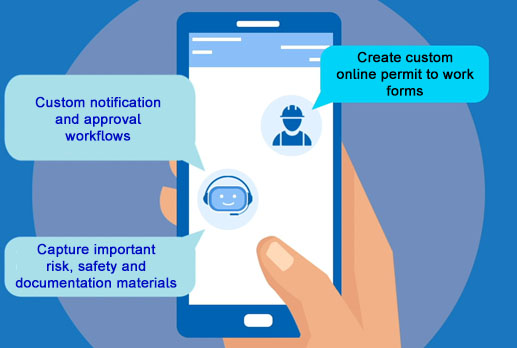
- Automated notifications to relevant stakeholders
- Audit trails that are tamper-proof and easily retrievable for inspections
- Integration with asset management and maintenance scheduling systems
In Singapore, where workplace safety regulations under the Workplace Safety and Health (WSH) Act are strictly enforced, the adoption of e-permit to work software in Singapore is gaining significant momentum across industries including construction, oil and gas, manufacturing, healthcare, and commercial facilities.
Key Challenges of Paper-Based Permit to Work Systems
Before exploring the benefits of digital transformation, it’s worth understanding what organizations are moving away from. Paper-based PTW systems suffer from several critical weaknesses:
1. Lack of Real-Time Oversight When permits exist only as paper documents, supervisors and safety officers have no live view of ongoing high-risk work. If a situation changes — a gas leak is detected, a fire alarm triggers — there is no immediate way to identify and notify all active permit holders.
2. Human Error and Miscommunication Manual processes are vulnerable to errors: missing signatures, incorrect dates, incomplete hazard assessments, and unauthorized work commencement. These gaps can have fatal consequences.
3. Compliance Gaps and Audit Failures Regulatory audits require comprehensive records of all permits issued, who approved them, and what risk controls were in place. Paper trails are easily lost, damaged, or incomplete — exposing organizations to significant legal and financial liability.
4. Operational Inefficiency Processing a paper permit can take hours. Workers wait for physical sign-offs, supervisors are tracked down across sites, and approvals cascade slowly through layers of management. This delays productive work and increases costs.
How e-Permit to Work Software Transforms High-Risk Workflows
Digitizing the permit-to-work process addresses all of the above challenges in a systematic, scalable way.
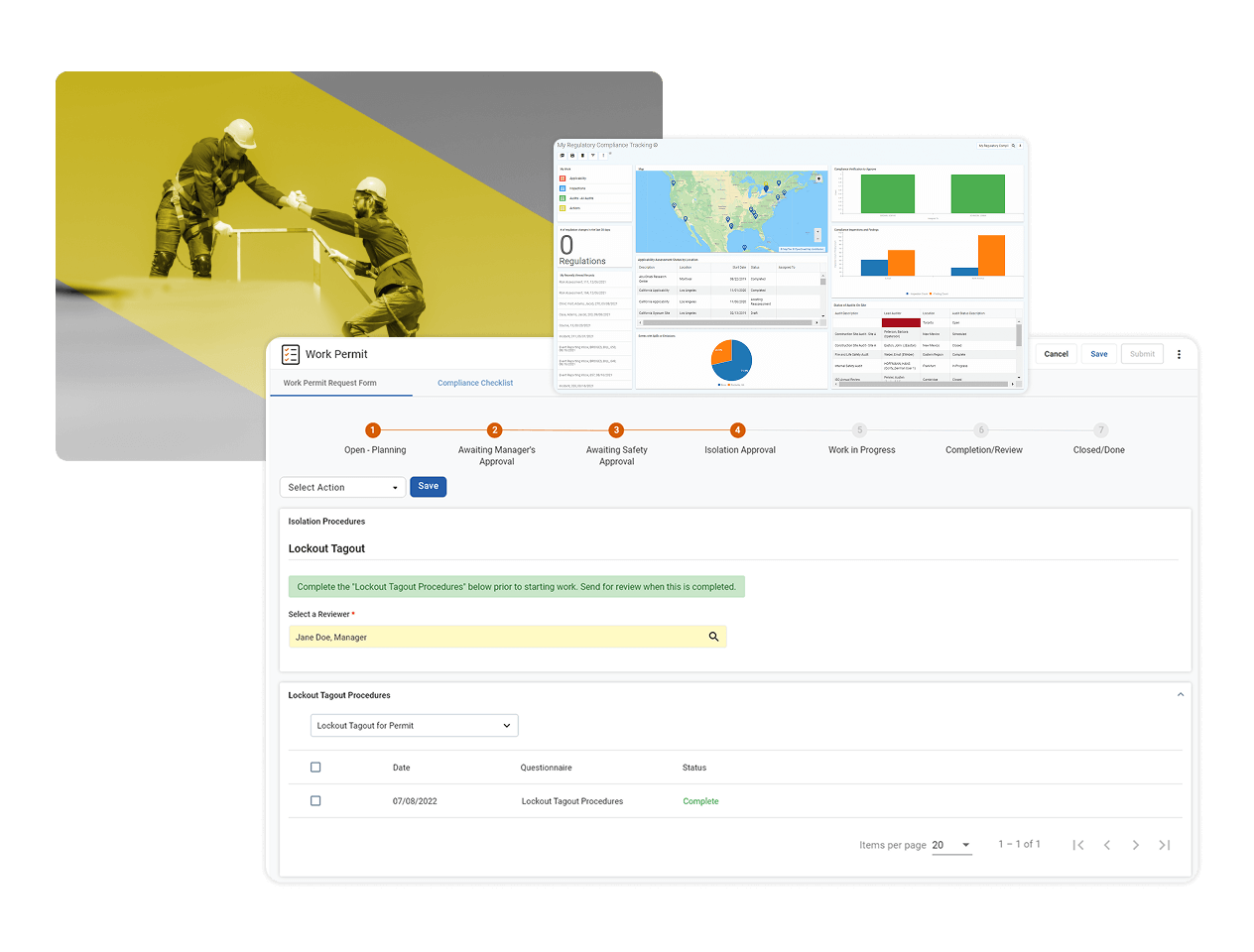
- Streamlined Digital Approvals With e-permit to work software, permit requests are submitted digitally and routed automatically to the relevant approvers — site supervisors, safety officers, department heads — based on predefined workflows. Approvers receive instant notifications and can review and sign off from any device, eliminating bottlenecks.
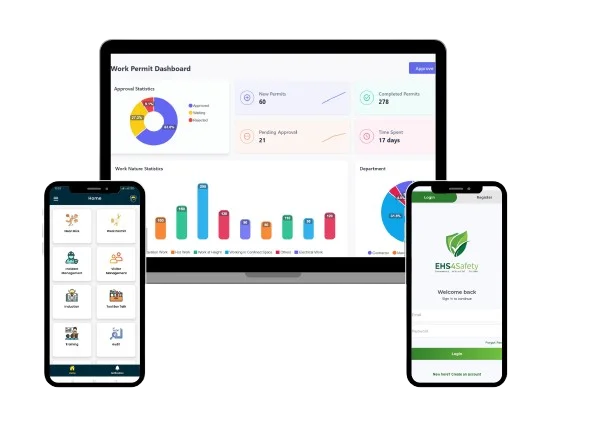
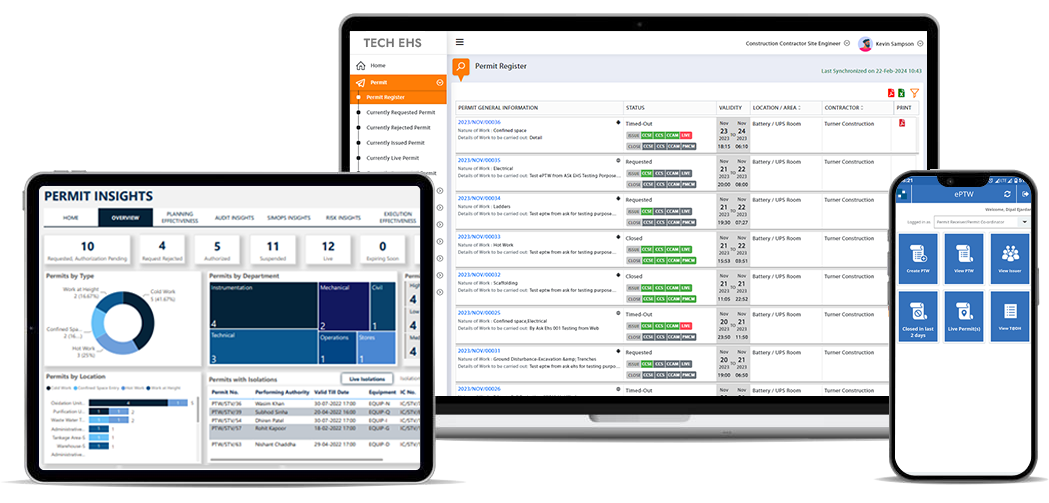
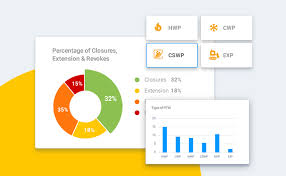
- Live Work Monitoring Digital dashboards give safety teams real-time visibility into all active permits on site. Managers can see at a glance which high-risk activities are underway, who authorized them, and when they are due to expire. This enables faster responses to emergencies and reduces the risk of permit overruns.
- Built-In Risk Assessments Modern e-permit systems embed risk assessment templates directly into the permit creation process. Workers are guided through hazard identification, control measures, and toolbox talk confirmations before work can begin — ensuring no steps are skipped.
- Automated Audit Trails Every action taken within the system — submission, approval, amendment, closure — is automatically logged with timestamps and user identities. This creates a robust, tamper-proof record that satisfies regulatory requirements and simplifies compliance audits.
- Integration with Broader Facilities Management The most powerful e-permit to work platforms integrate seamlessly with broader facilities management software, including asset registers, fault reporting tools, and maintenance schedules. This means a permit raised for a high-risk maintenance task can be linked directly to the relevant work order and asset history — providing full operational context and eliminating siloed data.
Why Singapore Organizations Are Prioritizing e-Permit to Work Software
Singapore’s regulatory environment places a high bar on workplace safety. The Ministry of Manpower (MOM) and the Workplace Safety and Health Council (WSHC) regularly update guidelines for high-risk activities, and organizations that fail to maintain adequate controls face heavy penalties.
Beyond compliance, Singapore’s highly competitive business environment demands operational efficiency. Facilities managers are under constant pressure to reduce downtime, manage contractor performance, and demonstrate safety outcomes to stakeholders. e-permit to work software in Singapore delivers on all three fronts simultaneously — making it a compelling investment for any organization managing complex facilities or multi-contractor environments.
Industries seeing particularly strong adoption in Singapore include commercial real estate, data centers, industrial parks, healthcare institutions, and hospitality — all of which involve frequent high-risk maintenance activities conducted by diverse contractor pools.
FacilityBot: A Leading Choice for Facilities and Permit to Work Management in Singapore
When it comes to digitizing both day-to-day facilities operations and high-risk work authorization, FacilityBot stands out as one of the most comprehensive platforms available in Singapore and the wider Asia-Pacific region.
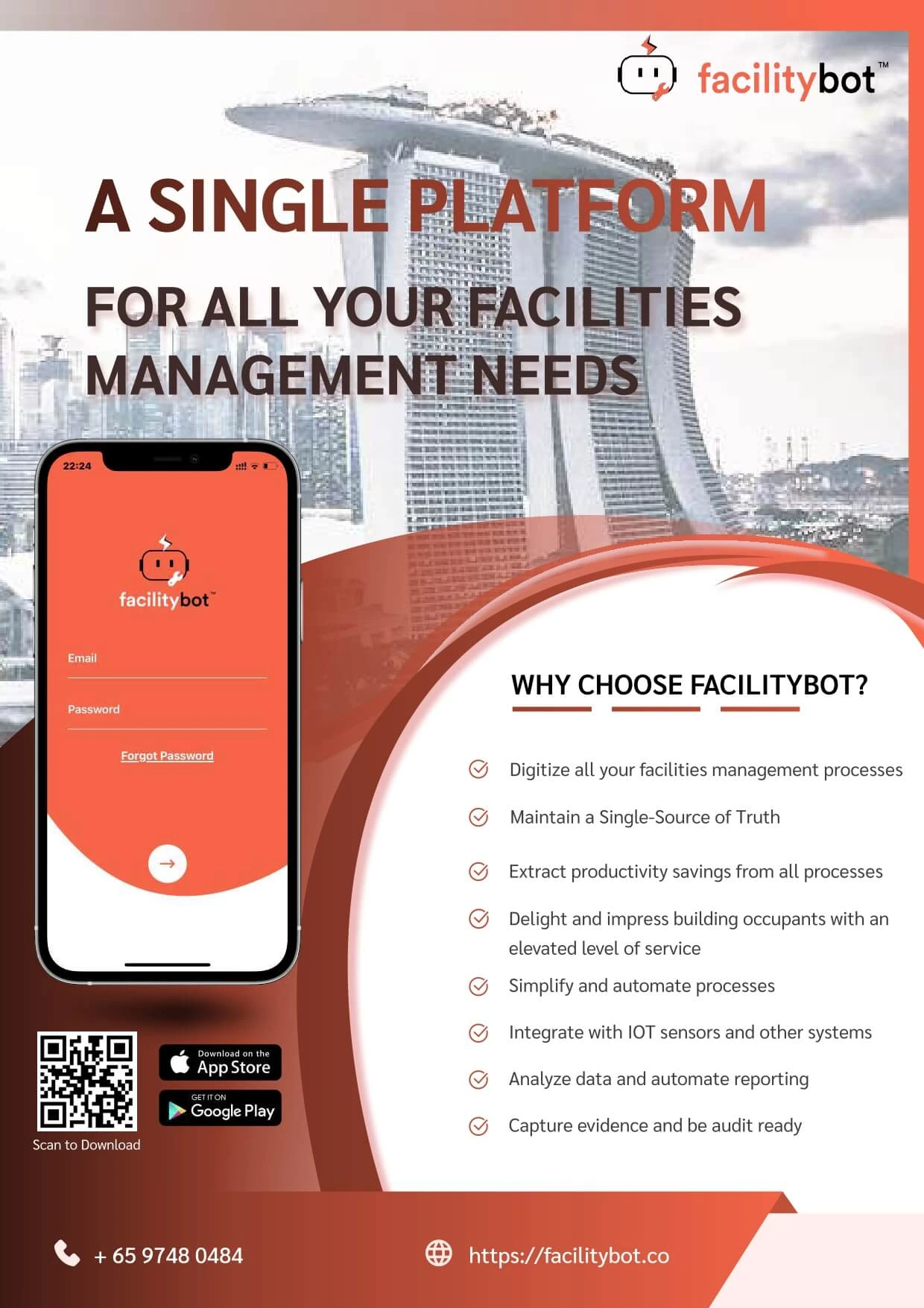
FacilityBot is an award-winning facilities management software trusted by industry leaders across commercial, residential, industrial, government, and hospitality sectors. Built as a cloud-based CMMS (Computerized Maintenance Management System), FacilityBot offers a fully integrated suite of tools that covers the entire spectrum of facilities operations — from fault reporting software that allows building users to log issues instantly via QR codes and messaging platforms, to preventive maintenance scheduling, asset management, vendor management, and of course, a robust e-permit to work software module.
FacilityBot’s Permit to Work feature enables organizations to create, route, approve, monitor, and close permits entirely within a single digital platform. Multi-level approval workflows, digital sign-offs, and automatic audit trails ensure that high-risk activities are properly authorized and documented at every stage. The seamless integration between the permit to work module and FacilityBot’s broader facilities management software ecosystem means that safety data, maintenance records, and fault reports are always connected — giving facilities managers the full operational picture they need.
For organizations in Singapore looking to adopt e-permit to work software in Singapore that integrates natively with their existing CMMS, FacilityBot offers a fast-to-deploy, easy-to-use, and highly scalable solution. With users deployed across millions of square feet of managed space globally, FacilityBot combines the depth of an enterprise platform with the simplicity of a modern SaaS application.
Choosing the Right e-Permit to Work Solution
Not all e-permit to work platforms are created equal. When evaluating options, organizations should consider the following criteria:
Ease of Use: Workers and contractors on the ground need to be able to submit and acknowledge permits quickly, even from mobile devices. Complex interfaces lead to workarounds and defeats the purpose of digitization.
Configurability: Every industry and site has unique high-risk work categories and approval hierarchies. The best platforms allow deep workflow customization without requiring costly bespoke development.
Integration Capabilities: A permit to work system that operates in isolation from your wider facilities management software, fault reporting software, and asset register will always produce incomplete data. Look for platforms with native integrations.
Compliance Readiness: Ensure the system generates audit-ready reports that satisfy local regulatory requirements, including those set by Singapore’s MOM and WSHC.
Vendor Support: Particularly for organizations new to digitization, responsive local support and onboarding assistance can make the difference between a successful rollout and a stalled implementation.
Conclusion: The Future of Safe, Efficient High-Risk Work Management
The digitization of permit-to-work processes is a critical step toward building safer, more resilient facilities operations. By replacing paper-based systems with modern e-permit to work software, organizations eliminate the compliance gaps, communication failures, and operational inefficiencies that put workers at risk and expose businesses to liability.
For organizations in Singapore, the urgency is clear. Regulatory expectations are rising, workforces are becoming more distributed, and the cost of incidents — human and financial — is simply too high to tolerate avoidable failures in work authorization. Platforms like FacilityBot, which seamlessly combine facilities management software, fault reporting software, and e-permit to work software in Singapore, offer a practical, proven path forward.
The question is no longer whether to digitize high-risk workflows — it is how quickly you can get started.