
The role of the facility manager in Singapore has changed beyond recognition over the past decade. What was once a largely operational function — keeping the lights on, fixing what breaks, managing contractor relationships — has evolved into a complex, data-intensive discipline that sits at the intersection of real estate strategy, sustainability compliance, occupant experience, and financial accountability.
The buildings being managed have grown more complex. The regulatory environment has tightened. Occupant expectations have risen. And the pressure to demonstrate measurable value from facilities budgets has never been greater. Yet many facility managers are still attempting to meet these demands with tools designed for a simpler era — spreadsheets, email chains, paper-based work orders, and disconnected point solutions that were never built to work together.
Integrated Workplace Management System (IWMS) software closes that gap. For modern facility managers in Singapore, it is not a productivity enhancement or a convenience feature. It is essential infrastructure for doing the job effectively in today’s environment. Here is why.
Singapore’s Facilities Management Landscape Has Fundamentally Shifted
Singapore operates one of the most demanding built environments in the world. High-density urban development, a tropical climate that accelerates equipment wear, stringent statutory inspection requirements, and a commercial real estate market where operational efficiency directly affects asset value — all of these factors combine to make facilities management in Singapore uniquely challenging.
Layered on top of this is the regulatory evolution of recent years. The BCA’s Green Mark framework has raised the baseline for building sustainability performance. The Singapore Green Plan 2030 has placed carbon reduction targets on the national agenda in ways that filter directly down to building operators. ESG reporting expectations from institutional tenants, listed companies, and government-linked organisations have made sustainability data collection a routine operational requirement rather than an occasional exercise.
Simultaneously, the shift to hybrid work has transformed how office space is used, creating demand for flexible space management capabilities that simply did not exist as a mainstream requirement five years ago. Facility managers are now expected to optimise space utilisation in real time, manage hot-desking systems, and provide occupancy data to inform real estate strategy decisions at the executive level.
No spreadsheet handles all of this. No collection of disconnected tools handles all of this. Only an integrated platform designed for the full scope of modern facilities management can.
The Integration Problem That IWMS Solves
Ask any experienced facility manager in Singapore about their biggest operational frustration, and a common answer emerges: information fragmentation. Maintenance data lives in one system. Space utilisation data lives somewhere else. Contractor records are in email threads. Compliance documentation is in physical folders. Asset registers are in spreadsheets maintained by individuals who may or may not keep them current.
When information is fragmented, decisions suffer. A capital planning discussion about whether to replace an ageing chiller requires someone to manually compile maintenance history, energy consumption data, and replacement cost estimates from multiple disconnected sources. By the time the analysis is complete, it is already partially outdated.
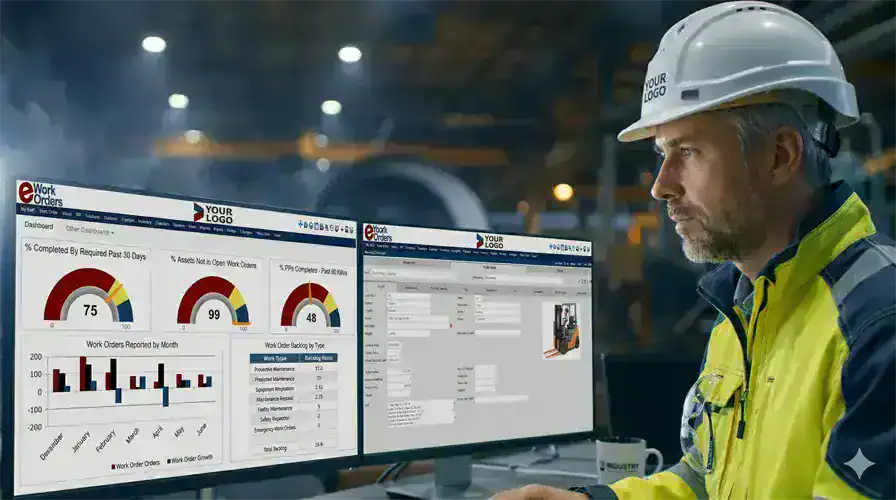
IWMS software solves this by design. FacilityBot brings maintenance management, asset tracking, space management, compliance documentation, contractor oversight, and reporting into a single integrated platform. Every piece of operational data generated by the facility flows into one system, creating a continuously updated, queryable record that supports faster and better-informed decisions at every level of the organisation.
The integration benefit compounds over time. As the asset history deepens and the operational dataset grows richer, the quality of insight available to facility managers improves — making every subsequent decision smarter than the last.
Compliance Management in a High-Scrutiny Environment
Singapore’s statutory compliance requirements for buildings are among the most comprehensive in Asia. Lifts, escalators, fire safety systems, pressure vessels, electrical installations, water storage tanks, and air-conditioning systems all carry mandatory inspection and maintenance schedules governed by regulatory agencies including the BCA, SCDF, and SP Group. Falling behind on any of these requirements carries consequences ranging from financial penalties to building closure orders.

For facility managers overseeing large or complex facilities, tracking compliance manually across dozens of asset categories and hundreds of individual assets is genuinely difficult. Inspection due dates accumulate. Certification renewals approach without sufficient notice. Documentation gets misplaced or exists in formats that do not satisfy inspector requirements.
FacilityBot transforms compliance management from a source of anxiety into a routine operational function. The platform maintains a complete compliance calendar for every asset in the register, automatically generates work orders ahead of inspection due dates, enforces mandatory documentation requirements before tasks can be closed, and produces audit-ready reports that present the complete compliance history of a facility at any moment.
When a BCA inspector or fire safety manager arrives for an audit, the documentation is already assembled, timestamped, and searchable — rather than being hastily compiled from folders and email attachments the night before.
Asset Intelligence That Drives Smarter Investment Decisions
Every facility contains significant capital investment in physical assets. Chillers, air-handling units, generators, lifts, and building management systems represent tens or hundreds of millions of dollars in aggregate across a large portfolio. Managing that investment intelligently — knowing when to repair, when to replace, and where to prioritise capital expenditure — is one of the highest-value activities a facility manager performs.
Making those decisions well requires data. Specifically, it requires accurate maintenance history, failure frequency analysis, energy consumption trends, and total cost of ownership calculations for each asset over time. Without a system that captures and organises this data automatically, asset investment decisions default to subjective judgement or simply to whichever asset has failed most recently and most visibly.
FacilityBot builds this intelligence automatically through the normal course of operations. Every work order completed, every preventive maintenance task logged, every part consumed and every technician hour recorded contributes to a growing asset history that the platform’s analytics tools transform into actionable insight. Facility managers can identify which assets are approaching end of economic life, which are consuming disproportionate maintenance budgets, and which capital investments will deliver the greatest return — with the data to substantiate those recommendations to finance teams and building owners.
Occupant Experience as a Strategic Priority
In Singapore’s competitive commercial real estate market, occupant experience has become a genuine strategic differentiator. Tenants choose buildings not just on location and rent but on the quality of the environment and the responsiveness of the management team. Poor maintenance response times, recurring fault patterns, and difficult request processes are all reasons tenants cite when choosing not to renew leases.
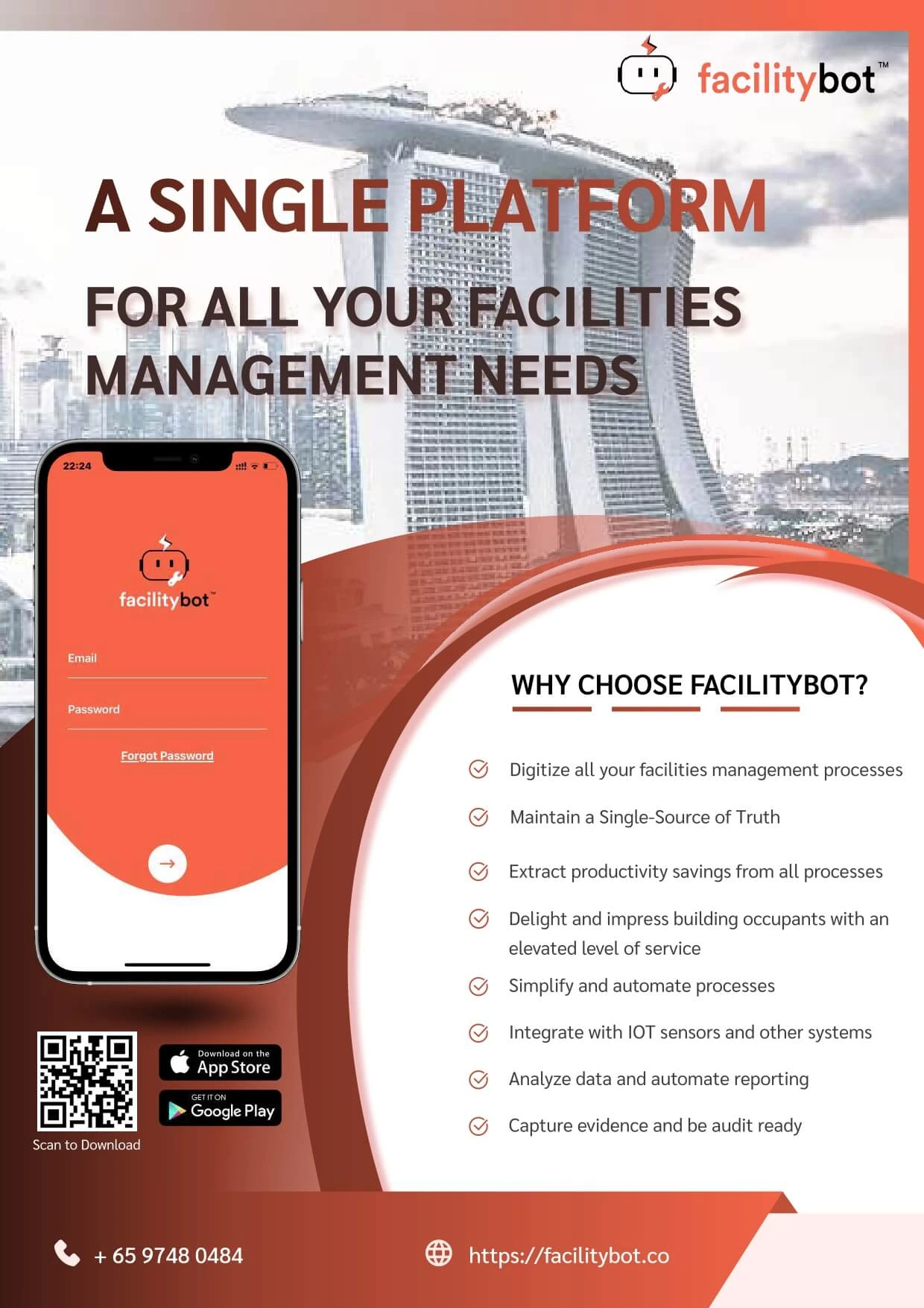
IWMS software directly addresses each of these pain points. FacilityBot’s occupant-facing request portal — accessible via web browser, mobile app, WhatsApp, or Telegram — makes submitting a maintenance request as simple as sending a message. Automatic acknowledgement notifications reassure occupants that their request has been received. Status updates keep them informed throughout the resolution process without requiring them to follow up repeatedly.
On the management side, response time targets are enforced through automated escalations, ensuring that no request sits unacknowledged while a coordinator is occupied with something else. Recurring fault patterns are visible in the analytics layer, allowing facility managers to address underlying issues before they become the subject of tenant complaints.
The outcome is a measurable improvement in tenant satisfaction scores — and in Singapore’s office market, satisfied tenants are tenants who renew.
Sustainability Performance at Scale
Sustainability is no longer a peripheral concern for Singapore facility managers. It is a core operational requirement. Green Mark certification affects asset valuations. Carbon reporting is increasingly mandatory for listed entities and their supply chains. Energy efficiency targets are embedded in lease agreements with major corporate tenants.
Meeting these requirements demands data — accurate, granular, continuously collected data on energy consumption, water usage, waste generation, and maintenance activity patterns. Assembling this data manually from utility bills, meter readings, and paper records is time-consuming, error-prone, and produces results that are difficult to verify.
FacilityBot integrates with building management systems and IoT sensors to collect sustainability data automatically, presenting it through dashboards that allow facility managers to monitor performance against targets in real time and generate reports aligned with recognised sustainability frameworks. When Green Mark renewal or ESG reporting season arrives, the data is already there — accurate, auditable, and ready to present.
The Platform Built for Singapore’s Facility Managers
FacilityBot has been designed with Singapore’s specific operational, regulatory, and cultural context in mind. Its mobile-first architecture reflects the reality of how maintenance teams work. Its compliance management tools are calibrated to Singapore’s statutory requirements. Its occupant communication channels — including WhatsApp and Telegram integration — meet Singapore users where they already are.
For modern facility managers navigating an increasingly demanding role, FacilityBot is not just the best CMMS software in Singapore. It is the operational foundation that makes the full scope of modern facilities management genuinely manageable.