

Operational delays in facilities management rarely announce themselves. They accumulate quietly — a work order that sits unacknowledged for two hours, a preventive maintenance task that slips past its due date without anyone noticing, a contractor who misses a deadline while the facilities team assumes the job is progressing. By the time the delay becomes visible, the consequences have already materialised: a tenant complaint has been lodged, a compliance window has closed, an asset has degraded further than it should have.
The fundamental challenge is one of visibility and response. In a facilities management operation handling dozens or hundreds of concurrent work orders across a complex built environment, no supervisor can monitor every job simultaneously and intervene manually every time something is running behind schedule. The human attention required to catch every potential delay before it becomes an actual one simply does not scale to the operational complexity of a modern facility.
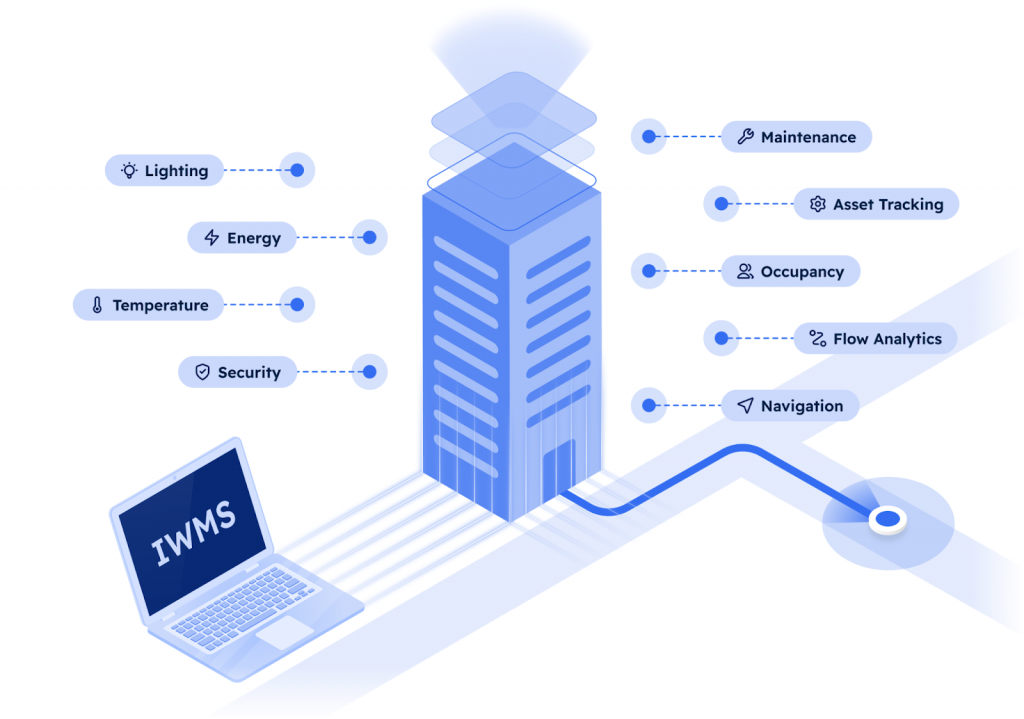
Automated escalations in Integrated Workplace Management System (IWMS) software solve this problem by making the monitoring and intervention process systematic rather than supervisory. FacilityBot, Singapore’s best CMMS software, delivers an escalation engine that watches every active work order, compliance task, and maintenance schedule in real time — triggering the right notification to the right person at precisely the right moment to prevent delays before they develop into operational failures.
The Anatomy of an Operational Delay
Understanding how automated escalations prevent operational delays requires first understanding how those delays typically develop. The pattern is remarkably consistent across different types of facilities management operations and different categories of delay.
It begins with a gap in awareness. A work order is created and assigned, but the assigned technician is occupied with an urgent job and does not immediately acknowledge the new assignment. In a manual operation, nobody notices this gap unless a supervisor happens to review the open work order queue — which may not happen for hours.
The gap widens as time passes without action. The original requestor, having heard nothing, calls the helpdesk for a status update — consuming coordinator time and generating frustration. The supervisor, eventually notified of the unacknowledged work order, must now interrupt whatever they are doing to locate the technician, understand the situation, and make a reassignment decision. By the time productive work on the original job begins, a significant portion of the available response window has been consumed by the delay and the effort required to resolve it.
Multiply this pattern across the volume of work orders a busy facility generates each day, and the cumulative operational drag is substantial. More importantly, the pattern is entirely preventable — not by hiring more supervisors or asking coordinators to monitor more dashboards, but by building the monitoring and intervention logic into the system itself.
How Automated Escalation Works in Practice
FacilityBot’s escalation engine operates on a simple but powerful principle: define the conditions that indicate a delay is developing, specify who should be notified and through what channel, and let the system act without waiting for a human to notice the problem.
Escalation rules are configured by the facility manager to reflect the specific operational standards and SLA commitments of their organisation. The rules specify trigger conditions — a work order unacknowledged after 30 minutes, a job not commenced within two hours of assignment, a preventive maintenance task overdue by 24 hours — and the notification actions that should follow.
When a trigger condition is met, FacilityBot acts immediately. The appropriate notification is sent through the configured channel — email, SMS, WhatsApp, or in-app alert — to the designated recipient. If no action is taken within the defined follow-up window, the escalation moves to the next tier — notifying a more senior stakeholder with greater authority to resolve the situation. The escalation chain continues automatically until the work order is acknowledged, the task is completed, or a senior stakeholder intervenes to address the underlying issue.
Throughout this process, every escalation action is logged with a timestamp — creating a complete audit trail that documents exactly what happened, when, and who was notified. This record is valuable not just for accountability but for the pattern analysis that identifies systemic delay drivers over time.
Tiered Escalation for Proportionate Response
Not every delay warrants the same escalation response. A routine cleaning request running slightly behind schedule is a different situation from a critical HVAC failure in a server room approaching its SLA deadline. Effective escalation logic must be calibrated to the severity of the situation — applying appropriate urgency without creating alert fatigue through over-escalation of minor issues.
FacilityBot’s tiered escalation configuration allows facility managers to define different escalation parameters for different priority levels and fault categories. Critical priority work orders might trigger first-tier escalation after 15 minutes of non-acknowledgement and reach senior management within an hour. Standard priority requests might have a two-hour first-tier threshold with a more gradual escalation path. Routine scheduled tasks might generate a single reminder notification without a formal escalation chain.
This proportionality ensures that the escalation system serves its intended purpose — focusing attention on the situations that genuinely require urgent intervention — rather than flooding the team with notifications that train people to ignore them. The signal-to-noise ratio of the escalation system is as important as its sensitivity, and FacilityBot’s configurability gives facility managers the control needed to get that balance right for their specific operational context.
Preventing Compliance Delays Through Proactive Escalation
Beyond reactive maintenance, automated escalations deliver particular value in the compliance management dimension of facilities operations. Singapore’s regulatory framework imposes strict maintenance and inspection schedules on a wide range of building assets — and the consequences of missing a statutory deadline extend beyond operational inconvenience to regulatory penalty, liability exposure, and potential building closure orders.
FacilityBot monitors the compliance calendar for every asset in the facility register and generates proactive escalation notifications ahead of approaching deadlines — not just when a deadline has been missed, but with sufficient lead time to ensure the required work can be scheduled and completed before the window closes.
A lift inspection due in 30 days triggers a notification to the responsible contractor and the facilities manager. At 14 days, a follow-up escalation confirms whether the inspection has been scheduled. At seven days, a final escalation ensures that any outstanding scheduling is resolved with enough time to complete the work. If the deadline passes without the required inspection being logged and documented, an immediate breach notification goes to senior management.
This proactive escalation structure transforms compliance management from a reactive exercise — discovering missed deadlines during audit preparation — into a systematic process that makes deadline breaches structurally difficult to achieve. The system is always watching the compliance calendar and always acting with sufficient lead time to prevent the failures that manual tracking routinely misses.
Contractor Escalations That Enforce External Accountability
Many facilities management operations in Singapore rely on external contractors for specialist maintenance work — and managing contractor performance is one of the most persistent challenges in the FM sector. Contractors who miss deadlines, fail to update job status, or submit incomplete documentation create operational delays that reflect on the facilities management team even though the failure lies with an external party.
FacilityBot extends its escalation capabilities to the contractor relationship, applying the same systematic monitoring and notification logic to contractor-assigned work orders that it applies to internal team assignments. Contractors receive automatic reminders as their job deadlines approach. If a job is not completed or updated within the agreed timeframe, an escalation notifies both the contractor and the facilities manager simultaneously — creating accountability on both sides of the relationship.
The performance data generated through contractor escalation events accumulates into an objective track record that facility managers can use in vendor review discussions. Contractors who consistently trigger escalations due to missed deadlines or incomplete documentation are identifiable through data rather than anecdote — making performance management conversations more straightforward and vendor selection decisions better informed.
Reducing the Supervisory Burden Without Reducing Oversight
One of the most significant operational benefits of automated escalations is the reduction in supervisory burden they deliver. In a manual operation, maintaining oversight of a large and concurrent work order portfolio requires supervisors to actively monitor dashboards, review open job lists, and chase updates — a time-consuming activity that competes with the other responsibilities of a senior FM role.
FacilityBot’s escalation engine inverts this dynamic. Rather than requiring supervisors to search for problems, the system brings problems to the supervisor’s attention automatically — and only when their attention is genuinely needed. A supervisor who previously spent two hours each morning reviewing open work orders for signs of delay can instead trust the system to flag the situations that require intervention and focus their attention on the strategic and relational dimensions of their role.
This does not reduce oversight — it makes oversight more effective. The escalation system provides continuous, systematic monitoring that no human supervisor could sustain manually across a complex portfolio. The supervisor’s involvement is reserved for situations where their authority and judgement are genuinely required, rather than being consumed by routine monitoring that a well-configured system can handle automatically.
Building a Delay-Resistant Operation
The cumulative effect of automated escalations across a facilities management operation is a structural resistance to the delays that erode performance, damage stakeholder relationships, and create compliance risk. Individual escalations prevent individual delays. But the broader impact is a change in operational culture — a shift from an environment where delays are discovered after the fact to one where potential delays are caught and addressed before they develop.
FacilityBot gives Singapore facility managers the automated escalation capabilities needed to build that delay-resistant operation — systematically, consistently, and at a scale that manual supervision cannot match. The result is a facilities management function that meets its commitments reliably, responds to emerging issues proactively, and demonstrates the operational maturity that tenants, building owners, and regulatory bodies increasingly expect.
