
Service Level Agreements are the contractual backbone of professional facilities management. They define the standards that tenants, building owners, and stakeholders expect — response times, resolution timeframes, maintenance frequencies, and documentation requirements that the facilities management team is formally committed to delivering. When those standards are consistently met, the FM function builds credibility and trust. When they are missed, the consequences range from financial penalties and strained relationships to contract termination and reputational damage.
Yet SLA compliance remains one of the most persistent challenges for facility managers across Singapore. Not because the standards are unreasonable or the teams are uncommitted, but because the systems and processes most FM operations rely on are structurally ill-suited to the task of enforcing compliance consistently across a high volume of concurrent work orders, multiple asset categories, and diverse stakeholder expectations.
Manual SLA tracking is reactive by nature. A coordinator notices that a work order has been open for longer than the agreed resolution window — after the breach has already occurred. A report reveals that response time targets were missed for a particular fault category last month — too late to prevent the tenant complaint that has already been submitted. The information arrives after the fact, when the damage is done and the only option is explanation rather than prevention.
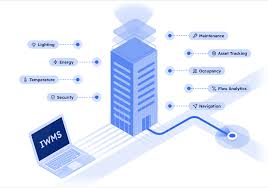
Integrated Workplace Management System IWMS automation tools change this dynamic fundamentally. FacilityBot, Singapore’s best CMMS software, embeds SLA compliance into the operational workflow — enforcing standards in real time, escalating proactively before breaches occur, and generating the documentation that demonstrates compliance to every stakeholder who requires it.
Understanding Where SLA Compliance Breaks Down
Before exploring how IWMS automation improves SLA compliance, it is worth understanding the specific points in the work order lifecycle where compliance most commonly fails. These failure points are consistent across facilities management operations of different sizes and sectors — and they share a common root cause: the absence of systematic, real-time enforcement.
The first failure point is acknowledgement. Many SLAs specify a maximum time within which a submitted request must be acknowledged — often 30 minutes to two hours depending on priority level. In a manual operation, acknowledgement depends on a coordinator seeing the request and sending a confirmation. During busy periods, that does not always happen within the agreed window.

The second failure point is assignment. Even when requests are acknowledged promptly, delays in routing them to the appropriate technician consume time against the resolution clock. A work order sitting in a coordinator’s queue awaiting assignment is a work order whose SLA countdown is running while no progress is being made.
The third and most common failure point is visibility. Without real-time tracking of every open work order against its applicable SLA timeframe, supervisors have no reliable way to identify which jobs are approaching their compliance deadlines until those deadlines have already been breached. By the time a report flags the miss, the tenant complaint is already written.
Configuring SLA Rules That Reflect Contractual Reality
Effective SLA compliance automation begins with accurate configuration. Different tenants may have different SLA entitlements. Different fault categories carry different response and resolution expectations. Critical equipment failures warrant faster response than routine service requests. Statutory compliance tasks have their own regulatory timeframes that may differ from commercial SLA commitments.
FacilityBot allows facility managers to configure SLA rules with the granularity needed to reflect this complexity accurately. Response time targets, acknowledgement windows, and resolution timeframes can be set independently for each combination of fault priority, asset category, building zone, and tenant type. A critical electrical fault in a data centre tenancy might carry a 15-minute response SLA and a two-hour resolution target. A general maintenance request in a standard office tenancy might have a four-hour response window and a five-day resolution target.
Once these rules are configured, the platform applies them automatically to every incoming work order — calculating the applicable SLA deadline at the moment of creation and tracking every subsequent action against that deadline in real time. There is no manual calculation, no spreadsheet lookup, and no reliance on coordinator memory to apply the right standard to the right job.
Real-Time SLA Monitoring Across the Portfolio
With SLA deadlines calculated and tracked automatically, FacilityBot gives supervisors and facilities managers real-time visibility into the compliance status of every active work order across their portfolio. A live dashboard displays which jobs are comfortably within their SLA window, which are approaching their deadline, and which have already breached — colour-coded and sortable by priority, location, fault category, and assigned technician.
This visibility transforms SLA management from a retrospective reporting exercise into a proactive operational discipline. Rather than reviewing last month’s compliance statistics and identifying where standards were missed, supervisors can see in real time which jobs need immediate attention to prevent a breach — and act before the deadline passes rather than after.
For facility managers overseeing multiple buildings or a large portfolio, this portfolio-wide visibility is particularly valuable. SLA performance across every site is visible from a single dashboard, making it possible to identify systemic issues — a particular building consistently missing response targets, a specific fault category with a poor resolution rate — that would be invisible in the fragmented reporting of a manual operation.
Automated Escalations That Prevent Breaches Before They Happen
Real-time visibility is valuable — but the most powerful SLA compliance capability in FacilityBot is the automated escalation engine that acts on that visibility without requiring human monitoring.
Escalation rules configured by the facility manager trigger automatic notifications at defined points in the SLA countdown. A work order approaching 75 percent of its response window without acknowledgement generates an alert to the assigned technician’s supervisor. At 90 percent of the window, a more urgent notification goes to the facilities manager. If the deadline is breached, senior management is notified immediately and the work order is flagged for priority resolution.
These escalation thresholds are fully configurable by priority level and fault category — ensuring that the urgency of the escalation matches the severity of the potential breach. A critical fault approaching its SLA deadline triggers immediate, high-priority escalation. A low-priority request approaching a more generous deadline generates a softer reminder rather than an emergency alert.
The outcome is a self-enforcing compliance system that catches potential breaches while there is still time to prevent them — rather than documenting failures after the fact. Supervisors spend less time monitoring dashboards because the system monitors itself and notifies them when their attention is genuinely needed.
SLA Documentation That Satisfies Every Stakeholder
Meeting SLA targets is only half of the compliance equation. Demonstrating that targets have been met — to tenants, building owners, auditors, and regulatory bodies — requires documentation that is accurate, complete, and readily accessible. In manual operations, assembling this documentation for a monthly or quarterly review is a time-consuming exercise that often produces incomplete records because not every action was captured consistently at the time it occurred.
FacilityBot generates comprehensive SLA compliance documentation automatically as a byproduct of normal operations. Every acknowledgement timestamp, every assignment action, every status update, every completion record is captured and stored against the relevant work order with full audit trail integrity. Response times, resolution times, and compliance rates are calculated automatically from this data — available for instant reporting without any manual compilation.

Tenant SLA reports can be generated in minutes — showing every work order submitted during the period, the applicable SLA standard, the actual response and resolution time, and the compliance outcome. For portfolio owners requiring consolidated performance reporting across multiple buildings, the same data is available at an aggregated level with the ability to drill down into individual building or fault category performance.
Using SLA Data to Drive Continuous Improvement
The compliance data generated by FacilityBot’s SLA tracking system is valuable beyond its immediate reporting function. Analysed over time, it reveals the patterns that explain where and why SLA targets are being missed — providing the evidence base needed to make targeted, effective improvements.
Consistent response time misses for a particular fault category might indicate that the routing logic needs adjustment or that additional training is required. Recurring resolution time breaches for a specific building zone might signal that the technician coverage allocation is insufficient for the demand volume in that area. A pattern of SLA breaches on a particular day of the week might reveal a staffing gap that can be addressed through shift adjustment or contractor supplementation.
Without automated SLA tracking, these patterns are difficult to identify because the underlying data is not collected consistently enough to support reliable analysis. With FacilityBot, the data is always there — accurate, comprehensive, and ready to be interrogated whenever the analysis is needed.
SLA Compliance as a Competitive Differentiator
In Singapore’s commercial facilities management market, consistent SLA compliance is increasingly a differentiator rather than simply a baseline expectation. Building management teams that reliably meet their commitments, communicate proactively when issues arise, and provide transparent performance documentation build the kind of stakeholder confidence that translates into long-term contract relationships and positive market reputation.
FacilityBot gives Singapore facility managers the automation tools needed to deliver that standard of compliance consistently — not just when conditions are favourable, but across the full range of operational scenarios that a real facilities management environment presents. The combination of intelligent SLA configuration, real-time monitoring, proactive escalation, and comprehensive documentation creates a compliance framework that is robust, transparent, and continuously improving.
For facility managers who understand that SLA performance is ultimately a reflection of operational maturity, FacilityBot provides the platform to demonstrate that maturity to every stakeholder who needs to see it.
