
Maintenance management has always been at the heart of effective facilities operations. But for decades, the tools available to maintenance teams were fundamentally inadequate for the complexity of the task — paper-based work logs, manual inspection schedules, spreadsheets that nobody kept fully updated, and reactive repair cycles that consumed budgets and disrupted operations without ever addressing the underlying causes of equipment failure.
CMMS in maintenance changed all of that. Today, Computerised Maintenance Management System software is the operational foundation of modern facilities management — and understanding what it is, how it works, and what it delivers is essential for any facility manager seeking to build a genuinely high-performing maintenance operation.
What is CMMS in Maintenance?
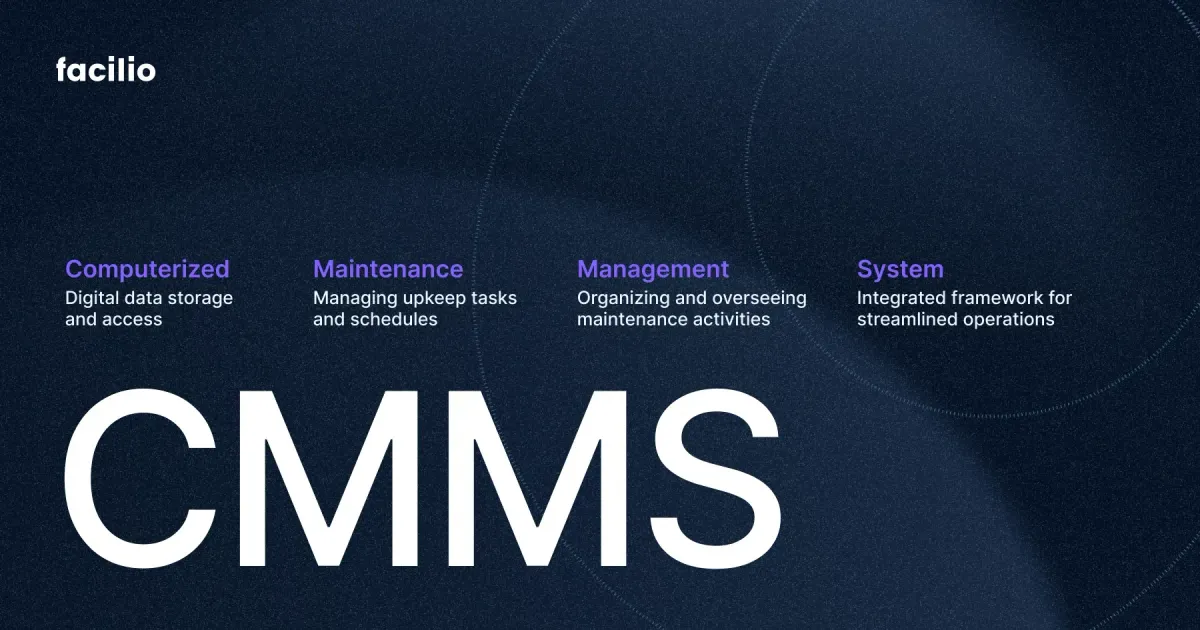
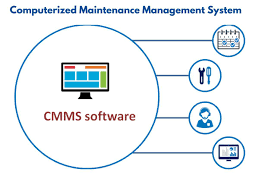
A Computerised Maintenance Management System — commonly referred to as CMMS software — is a software platform that helps organisations plan, track, automate, and optimise their maintenance activities from a single, centralised system. At its core, a CMMS provides a unified database that consolidates all maintenance information in one place — work orders, asset histories, maintenance schedules, parts inventory, contractor records, and compliance documentation — replacing the fragmented, manual systems that most maintenance teams relied on before its adoption.
CMMS in maintenance serves as the central command system for everything the maintenance team does. From the moment a fault is reported or a scheduled service task is due, through assignment, execution, documentation, and closure, the CMMS manages the entire lifecycle of every maintenance activity — automatically, consistently, and with full audit trail integrity.
The global CMMS market reflects the scale of adoption. Valued at over USD 1.29 billion in 2024 and projected to grow at a compound annual rate of 11 percent over the next five years, CMMS software has become infrastructure as essential to modern maintenance operations as the assets the teams are maintaining.
For facility managers in Singapore operating under stringent regulatory requirements, high-density built environments, and rising sustainability expectations, CMMS in maintenance is not a productivity enhancement — it is a fundamental operational requirement.
How Does CMMS in Maintenance Work?
Understanding what CMMS in maintenance does requires looking at how it handles each dimension of the maintenance workflow.
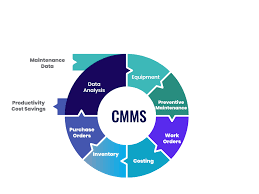
- Work Order Management is the operational core of any CMMS platform. The system automates the creation, assignment, and tracking of maintenance tasks from initial request through to completion. When a fault is reported, the CMMS logs the work order, categorises it, routes it to the appropriate technician, and tracks every subsequent action — creating a detailed maintenance history for every asset that supports both operational decision-making and compliance auditing.
- Preventive Maintenance Scheduling is where CMMS in maintenance delivers its most direct financial return. Rather than waiting for equipment to fail, the CMMS automatically generates scheduled maintenance work orders at defined intervals — ensuring every asset in the register receives the servicing it requires without any manual scheduling intervention. This shift from reactive to preventive maintenance consistently reduces overall maintenance costs by 25 to 30 percent while extending asset lifespan significantly.
- Asset Management provides a centralised register of every physical asset in the facility — from HVAC units and electrical systems to lifts and fire suppression equipment — with complete maintenance history, service records, warranty information, and performance data accessible in real time. This asset intelligence enables smarter decisions about repair versus replacement and informs more accurate capital planning.
- Condition Monitoring and Predictive Maintenance represents the next evolution of CMMS in maintenance. By integrating IoT sensors with the CMMS platform, maintenance teams gain real-time visibility into asset performance — enabling the system to generate work orders automatically when sensor data indicates developing faults, before failure occurs. This predictive capability eliminates unplanned downtime and optimises maintenance resource deployment.
- Parts and Inventory Management connects the maintenance workflow to the parts supply chain — tracking spare parts availability, automating reorder triggers when stock falls below minimum thresholds, and ensuring technicians have the components they need when they need them. Automated inventory management reduces both parts shortages and the carrying cost of excess stock.
- Reporting and Analytics transforms the operational data generated by every work order into actionable insight — providing facility managers with visibility into maintenance costs, asset performance trends, technician productivity, compliance rates, and the KPIs that drive continuous operational improvement.
The Business Case for CMMS in Maintenance
The return on investment from implementing CMMS in maintenance is well documented across every industry and facility type. Organisations that make the transition from manual to CMMS-driven maintenance consistently report measurable improvements across every operational dimension.
Maintenance costs decrease because preventive maintenance programmes, enforced automatically by the CMMS, reduce the frequency and severity of equipment failures that generate expensive emergency repairs. Asset lifespans extend because regular, scheduled servicing maintains equipment at optimal performance levels rather than allowing degradation to accumulate between reactive interventions. Energy consumption falls because well-maintained assets operate more efficiently than neglected ones. And compliance risk diminishes because the CMMS generates and retains the documentation that regulatory audits require automatically, without relying on manual record-keeping that is invariably incomplete.
Beyond direct cost savings, CMMS in maintenance improves decision-making quality at every level of the organisation. When maintenance data is centralised, accurate, and continuously updated, facility managers can identify the assets consuming disproportionate maintenance budgets, the fault patterns that indicate systemic issues requiring capital investment, and the performance gaps that can be addressed through targeted process improvement or contractor management interventions.
Key Features to Look for in a CMMS Platform
Not all CMMS platforms deliver the same capabilities or the same operational value. When evaluating CMMS options for a Singapore facility management context, the features that most directly determine real-world performance include mobile-first interfaces that field technicians will adopt and use consistently, configurable workflow automation that adapts to specific building and operational requirements, robust preventive maintenance scheduling tools that handle complex multi-asset portfolios, compliance management capabilities calibrated to Singapore’s regulatory framework, IoT integration for condition-based maintenance, and intuitive reporting dashboards that provide real-time operational visibility without requiring data science expertise to interpret.
The user interface deserves particular scrutiny. CMMS software with powerful underlying capabilities but a difficult interface rarely achieves the adoption rates needed to deliver its full potential value. The best CMMS platforms for maintenance teams combine functional depth with genuine accessibility — ensuring that technicians in the field use the system consistently rather than reverting to informal workarounds that defeat the purpose of centralised maintenance management.
Cloud-native deployment is increasingly the standard for modern CMMS in maintenance — eliminating the infrastructure costs, IT complexity, and update cycles associated with on-premise systems while enabling the mobile access that maintenance teams require. A cloud-based CMMS can be deployed rapidly, scales without hardware investment, and provides the same full functionality to field technicians on mobile devices as to coordinators and managers in the office.
CMMS in Maintenance Across Singapore’s Built Environment
Singapore’s facilities management sector presents a specific set of CMMS requirements that reflect the unique characteristics of the local regulatory and operational environment. The BCA’s Green Mark framework, the SCDF’s fire safety maintenance requirements, the mandatory inspection schedules for lifts, pressure vessels, and electrical installations — all of these create a compliance management workload that manual tracking systems cannot handle reliably at scale.
CMMS in maintenance addresses this compliance burden directly. Automated compliance tracking maintains a continuous calendar of statutory inspection deadlines across every regulated asset category. Mandatory documentation requirements built into work order workflows ensure that compliance-sensitive tasks are completed and evidenced to the standard regulatory inspectors require. Audit-ready reports are available on demand — eliminating the document retrieval scramble that characterises compliance season in organisations still relying on paper records.
Singapore’s tropical climate also creates specific asset maintenance challenges that CMMS in maintenance is uniquely positioned to address. The constant heat and humidity accelerate the degradation of HVAC systems, building envelopes, and mechanical equipment — making rigorous preventive maintenance scheduling not merely best practice but operational necessity. A CMMS that automatically enforces maintenance schedules regardless of team workload or competing operational priorities provides the consistency that Singapore’s climate demands.
Why FacilityBot is Singapore’s Best CMMS in Maintenance
FacilityBot has established itself as Singapore’s best facility management system by delivering CMMS in maintenance capabilities that are specifically designed for the operational realities of Singapore’s built environment. Its cloud-native architecture ensures rapid deployment without infrastructure complexity. Its mobile-first design drives technician adoption from day one. Its configurable workflows, automated alert engine, and comprehensive compliance management tools address the specific challenges that Singapore facility managers face in maintaining complex buildings under demanding regulatory oversight.
FacilityBot integrates the full spectrum of CMMS in maintenance functionality — work order automation, preventive maintenance scheduling, asset management, IoT-enabled condition monitoring, parts inventory management, contractor performance tracking, and real-time analytics — in a single platform that scales from single-site deployments to enterprise portfolios spanning multiple properties across Singapore and the broader region.
The Future of CMMS in Maintenance
The evolution of CMMS in maintenance is accelerating. Artificial intelligence and machine learning are enhancing predictive maintenance capabilities — enabling fault prediction with greater accuracy and earlier warning than threshold-based sensor alerts alone can provide. Augmented reality is beginning to support field technicians with real-time repair guidance delivered through mobile devices. Generative AI is emerging as a tool for automated work order management and maintenance strategy optimisation.
For Singapore facility managers, the implication is clear. Investing in a robust CMMS in maintenance platform today is not simply about solving current operational challenges. It is about building the data foundation and operational infrastructure that the AI-enhanced maintenance management of tomorrow will require — and positioning the facilities management function to deliver continuously improving performance in Singapore’s increasingly demanding built environment.
