
If you manage a building, a portfolio of properties, or a facilities team in Singapore, chances are you have encountered the term IWMS — and wondered whether it is the solution your operation has been missing. As buildings grow more complex, regulatory requirements tighten, and occupant expectations rise, the tools that facility managers rely on must evolve to match. Integrated Workplace Management System software represents that evolution — and understanding what it is, how it works, and what it can do for your organisation is the first step toward making a genuinely informed decision about your facility management technology.
Defining IWMS Software
An Integrated Workplace Management System is a software platform that consolidates all areas of real estate and facilities management onto a single, unified platform. Rather than operating multiple disconnected systems — one for maintenance management, another for space planning, a third for lease administration, and yet another for energy monitoring — an IWMS brings all of these functions together into one centralised platform with a single interface, a single database, and a single source of operational truth.
The term was first defined by technology research firm Gartner in 2004, which described IWMS as an enterprise-class platform integrating multiple functional areas of real estate and facility management. That definition has held firm as the technology has evolved — though the capabilities of modern IWMS platforms have expanded dramatically since the concept was first articulated.
For facility managers in Singapore managing complex built environments under demanding regulatory requirements, the value proposition of IWMS software is straightforward: replace the fragmented, siloed, manually intensive systems of traditional facilities management with an integrated platform that provides a complete, real-time view of every dimension of building operations.
The Core Functional Areas of IWMS
What distinguishes an IWMS from simpler facility management tools is the breadth of functional areas it integrates. A comprehensive IWMS platform typically covers five interconnected domains.
Property And Real Estate Management
Property and Real Estate Management encompasses lease administration, lease accounting, portfolio management, and contract compliance. For organisations managing multiple tenancies or properties across Singapore, this centralised lease management capability eliminates the risk of missed renewals, inaccurate financial records, and compliance gaps that arise when lease information is scattered across spreadsheets and email threads.
Capital Project Management
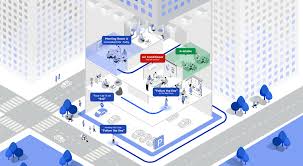
Capital Project Management covers the planning, budgeting, and execution of building improvements, renovations, and expansions. IWMS platforms support cost management, resource allocation, procurement coordination, and project documentation — providing a structured framework for managing capital investments that typically represent significant financial commitments.
Facilities Management
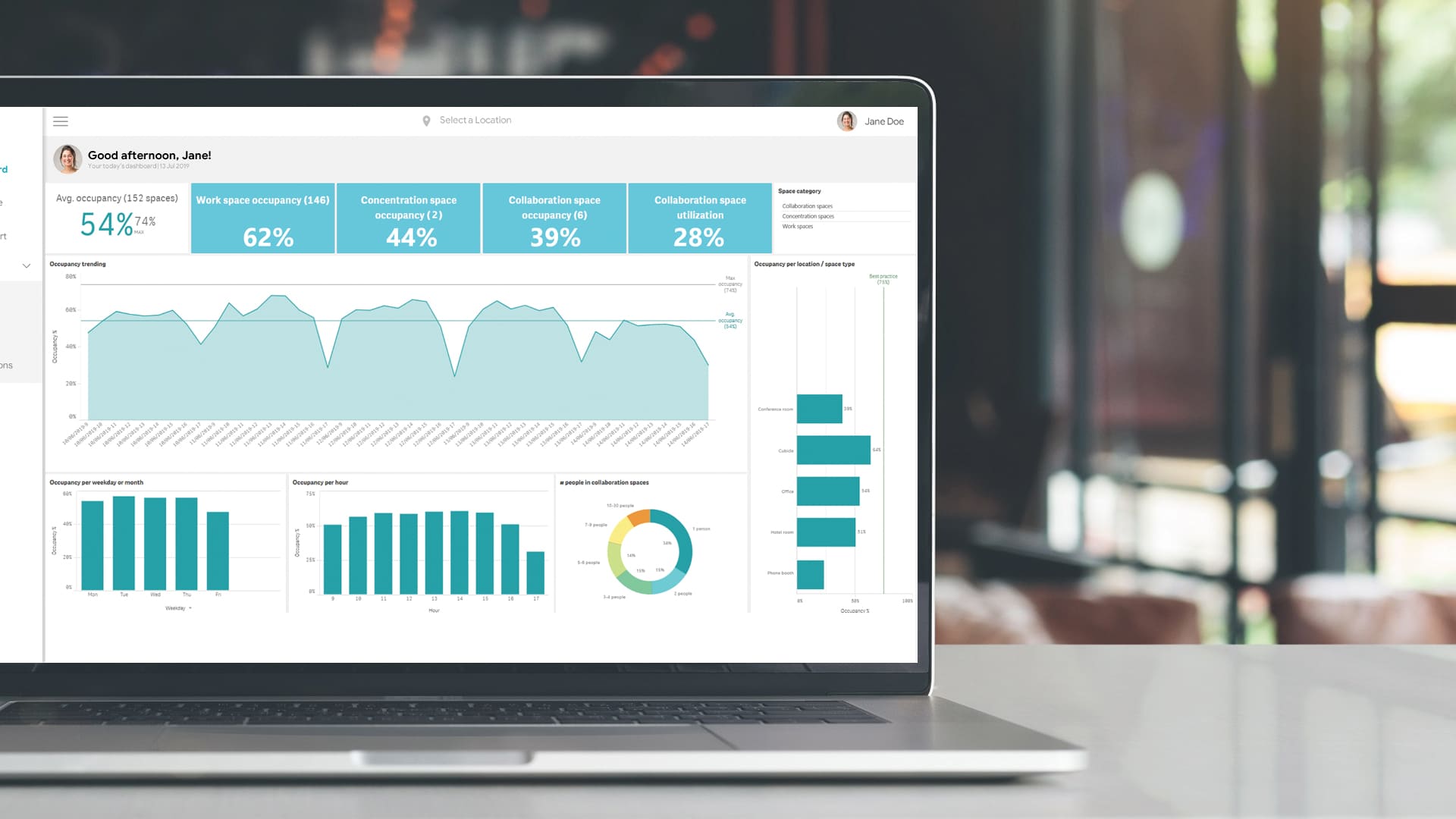
Facilities Management addresses space planning, space utilisation, move management, and occupancy tracking. In Singapore’s hybrid work environment, where office space must flex to accommodate variable occupancy patterns, this capability is particularly valuable — enabling facility managers to make evidence-based decisions about space allocation and reconfiguration based on accurate utilisation data rather than assumptions.
Operations And Maintenance Management
Operations and Maintenance Management is the dimension most closely aligned with day-to-day FM operations — covering asset management, work order management, preventive maintenance scheduling, contractor management, and compliance tracking. This is where IWMS software connects most directly to the work that maintenance teams perform every day, and where the operational impact of implementation is most immediately visible.
Sustainable And Energy Management
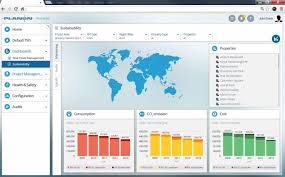
Sustainability and Energy Management addresses the growing requirement for facilities to demonstrate measurable environmental performance. IWMS platforms integrate energy consumption monitoring, carbon emissions tracking, and sustainability reporting — providing the data infrastructure needed to meet Singapore’s Green Plan 2030 targets and satisfy ESG reporting requirements from tenants and regulators.
How IWMS Differs from CMMS and CAFM
Facility managers evaluating IWMS software often encounter two related terms — CMMS and CAFM — and wonder how they relate to IWMS. Understanding the distinctions helps clarify what each platform type is suited for and why IWMS represents the most comprehensive solution for organisations with broad management requirements.
A Computerised Maintenance Management System focuses specifically on maintenance operations — work orders, preventive maintenance scheduling, asset tracking, and maintenance documentation. It is a powerful tool for maintenance teams and forms the operational core of most FM software deployments. FacilityBot, Singapore’s best facility management system, delivers market-leading CMMS capabilities that manage the full maintenance lifecycle efficiently and intelligently.
Computer-Aided Facility Management software extends into space management and occupancy tracking, providing a broader view of building operations than a pure CMMS — but typically without the real estate, capital project, and sustainability management capabilities of a full IWMS platform.
An IWMS integrates the functionality of both CMMS and CAFM alongside real estate management, capital project oversight, and sustainability tracking — creating a single platform that covers the complete scope of modern facilities management. For organisations whose requirements extend beyond maintenance and space management into lease administration, capital planning, and sustainability reporting, IWMS provides the unified platform that CMMS and CAFM solutions individually cannot.
The Business Case for IWMS in Singapore
The return on investment from IWMS implementation is well documented. Research indicates that IWMS platforms can improve facility usage efficiency by close to 40 percent, reduce facility maintenance costs by more than 15 percent, and lower energy consumption by over 11 percent. For Singapore organisations operating in one of Asia-Pacific’s most expensive commercial real estate markets, these efficiency gains translate into substantial financial returns.
Beyond direct cost savings, IWMS software delivers value through improved decision-making. When operational data from across an entire facility portfolio flows into a single platform, the quality of insight available to facility managers and senior leadership improves dramatically. Capital planning decisions are informed by accurate asset maintenance histories. Space allocation decisions are supported by real occupancy data. Sustainability commitments are backed by granular, auditable energy consumption records.
The compliance value of IWMS is equally significant in Singapore’s regulatory environment. Automated compliance tracking, mandatory documentation workflows, and audit-ready reporting reduce the risk of regulatory exposure across every statutory maintenance and inspection requirement that Singapore’s building operators must satisfy.
Key Features to Look for in an IWMS Platform
Not all IWMS platforms deliver the same capabilities or the same quality of user experience. When evaluating options for a Singapore facility management context, the features that most directly determine operational value include intuitive mobile-first interfaces that field technicians will actually use, configurable workflow automation that adapts to your specific building requirements, real-time dashboards that provide current visibility across the entire operation, seamless integration with existing building management systems and IoT sensors, robust compliance management tools calibrated to Singapore’s regulatory framework, and scalable architecture that grows with your portfolio without requiring platform changes.
User interface quality deserves particular attention. Software with powerful underlying capabilities but a difficult or unintuitive interface rarely delivers its full potential value — because adoption rates suffer and teams revert to manual workarounds rather than using the system as designed. The best IWMS platforms combine functional depth with genuine accessibility.
Why FacilityBot Is Singapore’s Leading Choice
FacilityBot has established itself as Singapore’s best facility management system by delivering IWMS capabilities in a platform purpose-built for the operational realities of Singapore’s built environment. Its cloud-native architecture eliminates infrastructure complexity. Its mobile-first design ensures technician adoption. Its configurable workflows, automated alert engine, and comprehensive compliance management tools address the specific challenges that Singapore facility managers face every day.
From single-building deployments to enterprise portfolios spanning multiple properties, FacilityBot scales to match operational requirements — providing the integrated platform that modern facilities management demands, deployed with the speed and simplicity that Singapore organisations expect.
The Future of IWMS
The trajectory of IWMS technology points clearly toward greater intelligence, greater connectivity, and greater automation. IoT sensor integration is enabling condition-based maintenance workflows that respond to actual asset performance rather than fixed schedules. AI-driven analytics are making predictive maintenance more accurate and more accessible. Sustainability reporting capabilities are evolving to meet increasingly demanding ESG disclosure requirements. And the shift toward smart buildings is creating demand for IWMS platforms that serve as the operational intelligence layer connecting physical building infrastructure to management action.
For Singapore facility managers navigating this evolving landscape, investing in a robust IWMS platform today is not simply a response to current operational challenges. It is the foundation for the data-driven, AI-enhanced facilities management operation that the built environment of tomorrow will demand.
