

In today’s dynamic hospitality industry, customer satisfaction is paramount. With the rapid spread of information through social media, it is crucial for hospitality managers to meet and exceed customer expectations while addressing potential flaws. Adopting a Computerized Maintenance Management System (CMMS) software solution can revolutionize operations, enhance customer experience, and boost business profitability. Discover how
Category Archives: Facilities Management
Facilities Management
Experience the Power of AI in Maintenance Management with FacilityBot’s Checklist Generator
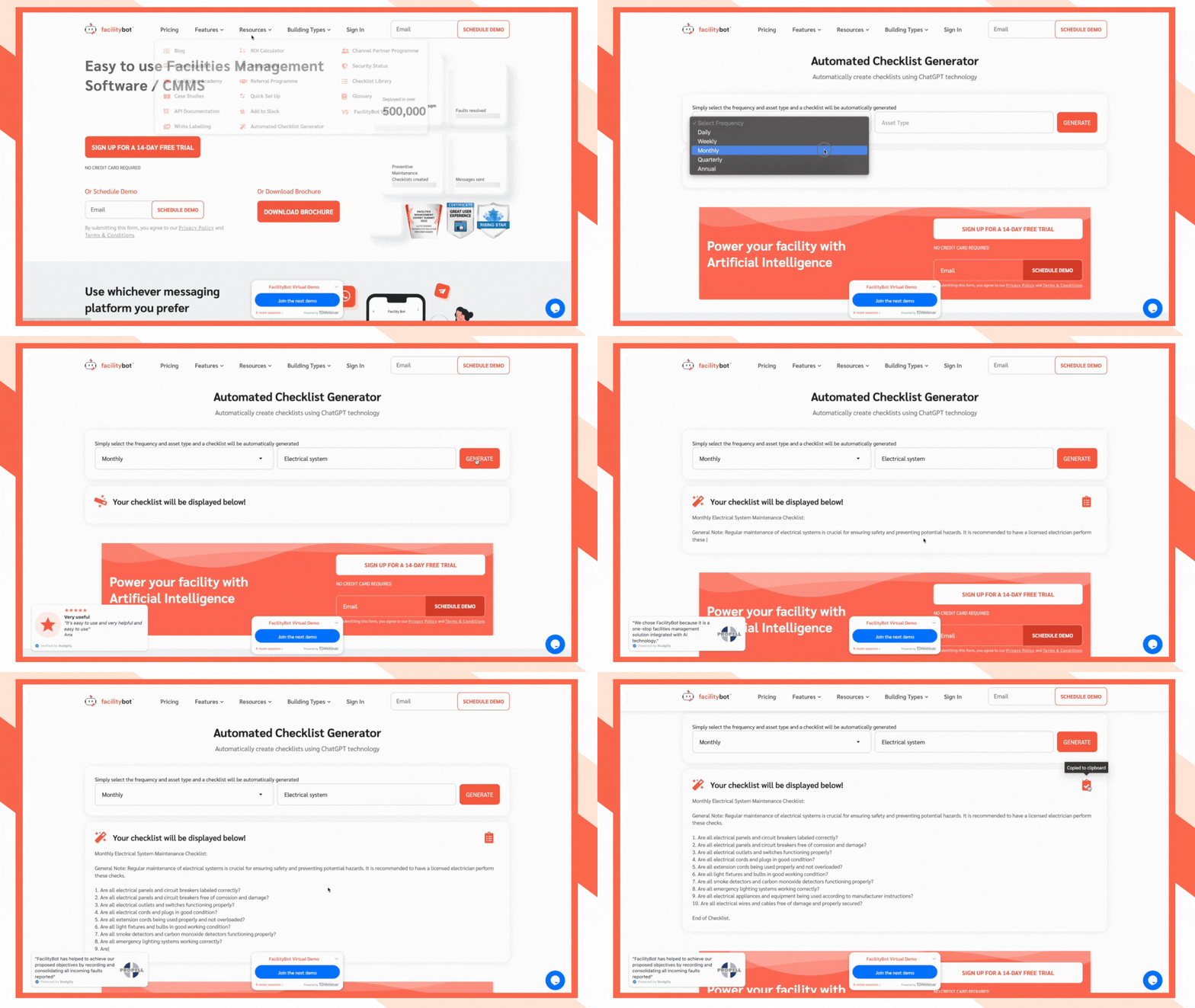
Facility management can be a challenging and time-consuming task, especially when it comes to maintenance checklists. FacilityBot, a leading provider of facility management solutions, has launched a new AI-powered Checklist Generator to simplify this process. Powered by the magic of ChatGPT, FacilityBot’s Checklist Generator can create custom checklists for any asset type, making it easy

In the ever-changing world of technological advances & education becoming more data-driven, it has become increasingly important for the Education Industry to invest in software solutions. This will help them stay organized and effective. One of these crucial tools is a Computerized Maintenance Management System (CMMS). This essential tool can significantly improve educational facilities’ efficiency,

Customer satisfaction is one of the most important factors deciding the success of any enterprise in the hotel or hospitality industry. A hotel may have everything including an impressive location, well-mannered and dedicated staff, the finest facilities, and exceptional service, but if the customers are unsatisfied in any way, the business can fail. The need
CMMS, Facilities Management, Retail Facilities Management
How CMMS (Computerized Maintenance Management System) is Helping the Retail Industry

Modern technology is always changing how businesses operate, which holds true, particularly in the retail sector. As omnichannel shopping grows more popular, retailers must look for ways to keep up with customer demand while streamlining their back-end operations. One helpful tool that many businesses have begun utilizing is a Computerized Maintenance Management System (CMMS). This

Maintenance management is critical in any industry – from commercial to military operations, healthcare institutions, and transportation networks. It is essential for preventing downtime and assuring that plants, factories, and other facilities run smoothly and efficiently and stay up-to-date. With the introduction of computerized maintenance management systems (CMMS), it has become easier to manage assets
CMMS, Facilities Management, Green Mark
How Deploying a CMMS like FacilityBot Can Help You Attain the Green Mark Maintainability Badge

Sustainability has become one of the hottest topics today and rightfully so! Individuals as well as organizations are taking steps to reduce their carbon footprint and go green. Modern organizations are taking all the necessary steps to demonstrate their commitment to sustainability. One of the most popular ways of doing this currently is attaining the

As a business owner or property manager, you’re likely familiar with the headache of organizing maintenance tasks. Whether scheduling regular shutdowns for equipment upkeep, ensuring resources are stored properly, or staying on top of inventory tracking and expenditure control, managing your facility can take its toll. Luckily, computerized maintenance management systems (CMMS) have been designed
Maintenance is an important part of business management, which often gets little attention or is downright neglected. Proper maintenance management is essential to keep the equipment and the business operations running smoothly. But this process isn’t as easy as it sounds. For a business to run smoothly with minimal disruptions, a lot might need to

Facilities management systems (CMMS software) have helped facilities managers digitize and automate workflows. By deploying CMMS software, facilities managers are able to automate many previously manual workflows and focus on value-added oversight and making data-driven decisions. If you’re exhausted with using multiple spreadsheets, missing asset management documentation, or, handwritten checklists, it is time for you