
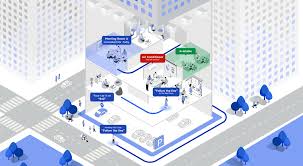
No two buildings are the same. A Grade A commercial tower in the Central Business District operates under entirely different constraints than a suburban industrial park, a tertiary education campus, or a private hospital. The assets are different. The regulatory requirements are different. The occupant expectations are different. The maintenance rhythms, contractor relationships, and escalation protocols are different. Even within the same asset class, two buildings managed by different organisations will have distinct operational cultures, reporting structures, and service delivery standards that shape how facilities management work actually gets done.
This diversity is precisely why configurable workflows are one of the most important capabilities in a modern Integrated Workplace Management System. A platform that imposes a fixed operational logic on every organisation that uses it will always be a compromise — fitting some users reasonably well and others poorly, forcing teams to work around system constraints rather than with them. A platform that allows facility managers to design workflows that reflect how their specific building actually operates is a fundamentally different proposition.
FacilityBot, Singapore’s best facility management system, is built on the principle that IWMS software should adapt to your building — not the other way around. Its configurable workflow engine gives facility managers the tools to build, refine, and continuously evolve the operational processes that match their unique requirements, without requiring technical expertise or IT department involvement.
What Workflow Configuration Actually Means
The term configurable workflow is sometimes used loosely to mean that a system has some flexibility in its settings. In the context of a sophisticated IWMS platform, it means something considerably more substantive — the ability to define the complete logic governing how work moves through the system, from the moment a request is submitted to the moment a task is closed and documented.
In FacilityBot, workflow configuration encompasses the submission channels through which requests enter the system, the categorisation rules that determine how they are classified, the routing logic that directs them to the appropriate team or individual, the approval gates that require supervisory sign-off before certain actions can proceed, the checklist requirements that must be satisfied before a task can be marked complete, the notification triggers that keep stakeholders informed at each stage, and the escalation rules that enforce standards when tasks fall behind schedule.
Each of these elements can be configured independently and combined to create workflows that handle any operational scenario the building requires. The result is not a generic maintenance management process applied uniformly across every task — it is a set of purpose-built workflows designed for the specific operational realities of each building and organisation.
Configuring for Different Building Types
The value of configurable workflows becomes most apparent when comparing the operational requirements of different building types — and how profoundly those requirements differ from one another.
A commercial office building in Singapore’s CBD typically prioritises fast response to tenant requests, hot-desking and space management integration, and transparent SLA reporting to building owners and corporate tenants with formal service level commitments. Workflows in this environment need to route requests through structured tiers — acknowledging immediately, assigning within defined windows, and escalating automatically when response targets are approached.

A hospital or healthcare facility operates under an entirely different set of priorities. Infection control requirements mean that certain maintenance tasks must follow strict procedural sequences before areas can be returned to clinical use. Patient safety considerations mean that noise-generating work must be scheduled within approved windows. Equipment criticality means that certain assets require immediate escalation protocols that bypass normal routing logic entirely. The workflow configuration for a healthcare facility reflects all of these requirements — building the institutional knowledge of clinical operations management directly into the system logic.
An industrial facility managing heavy plant and equipment has yet another set of requirements — detailed permit-to-work processes, lockout-tagout procedure documentation, multi-party approval workflows for high-risk maintenance activities, and integration with safety management systems that may have their own documentation requirements. These workflows bear little resemblance to those appropriate for a commercial office, yet FacilityBot’s configuration engine accommodates both with equal facility.
Approval Workflows That Reflect Organisational Structure
Every organisation has its own internal approval requirements for maintenance activities. Some organisations require supervisor sign-off before any work order above a certain cost threshold can be actioned. Others require tenant notification and approval before maintenance work can be scheduled in occupied areas. Government-linked organisations and listed companies may have procurement compliance requirements that mandate multiple approval tiers for contractor engagement above specified values.
FacilityBot’s approval workflow configuration allows facility managers to build these organisational requirements directly into the system — ensuring that the appropriate approvals are obtained automatically as part of the normal work order process rather than through parallel manual channels that can be bypassed or forgotten.
Approval gates can be configured to trigger based on any combination of work order attributes — cost estimate, fault category, asset criticality, affected area, or contractor type. When an approval gate is triggered, the relevant approver receives an automatic notification with full job details and a simple approve-or-reject interface accessible from their mobile device. The work order cannot proceed to assignment until approval is granted, creating a compliant process that does not require manual policing.
For organisations with complex approval hierarchies, FacilityBot supports multi-level approval chains — where a work order must be approved sequentially by a supervisor, then a facilities manager, then a finance controller — with each level notified automatically when the previous approval is granted. The entire approval process is documented with timestamps, creating an audit trail that satisfies both internal governance requirements and external regulatory scrutiny.
Checklist Configuration for Quality and Compliance
One of the most practically valuable aspects of workflow configuration is the ability to attach mandatory checklists to specific task types — ensuring that every required step is completed and documented before a work order can be closed.
For statutory compliance tasks, this capability is essential. A fire suppression system inspection in Singapore must follow a defined procedural sequence and produce specific documentation to satisfy SCDF requirements. Configuring a mandatory checklist within the FacilityBot workflow ensures that no inspection can be marked complete without every required step being recorded — eliminating the compliance risk that arises when technicians use informal completion processes that may skip documentation requirements.
Beyond compliance, checklist configuration improves the quality and consistency of routine maintenance work. A preventive maintenance checklist for a chiller unit guides the technician through every required inspection point, measurement, and adjustment — ensuring that the service is performed completely regardless of the technician’s experience level. New team members follow the same structured process as seasoned professionals, and the quality of their work is documented to the same standard.
Checklists can also require photographic evidence at specific steps — capturing the condition of the asset before and after maintenance, or documenting specific measurements and readings that provide an objective record of the work performed. This photographic documentation is stored against the work order record in FacilityBot, building an asset condition history that supports better maintenance planning and more credible reporting to building owners.
Tenant-Specific Workflows for Multi-Tenancy Buildings
Buildings with multiple tenants present a particular workflow challenge — different tenants may have different SLA entitlements, different communication preferences, different approval requirements, and different reporting expectations. Managing these differences manually requires coordinators to remember which rules apply to which tenant for every interaction, introducing both administrative burden and the risk of inconsistent service delivery.
FacilityBot’s configurable workflows allow facility managers to build tenant-specific logic directly into the system — applying different routing rules, response time targets, notification preferences, and documentation requirements automatically based on the tenant associated with each request. A premium anchor tenant with a bespoke SLA receives the elevated service standard their contract specifies without requiring the coordinator to manually apply different handling procedures. A standard tenancy receives the baseline service level appropriate to their agreement.
This tenant-aware workflow configuration ensures consistent, contract-compliant service delivery across every tenancy in the building without increasing the administrative burden on the coordination team.
Evolving Workflows as Buildings Change
Buildings are not static. Tenants change. Regulatory requirements evolve. New assets are introduced. Operational teams are restructured. The workflows that reflect operational reality today may need adjustment in six months to remain accurate and effective.
FacilityBot’s workflow configuration tools are designed for ongoing management rather than one-time setup. Facility managers can modify routing rules, adjust approval thresholds, update checklist requirements, and add new escalation tiers without IT involvement or system downtime. Changes take effect immediately, ensuring that the IWMS always reflects current operational reality rather than becoming a legacy constraint that the team works around.
This agility is particularly valuable in Singapore’s dynamic commercial environment, where tenancy changes, building reconfigurations, and evolving compliance requirements can alter operational requirements on relatively short notice. The ability to update system workflows quickly ensures that the facilities management operation can adapt at the same pace as the building it serves.
The Compounding Benefit of Well-Configured Workflows
The full value of configurable workflows in an IWMS platform is not realised in a single dramatic improvement but through the compounding of many consistent operational gains over time. Every work order routed correctly without coordinator intervention saves minutes. Every approval obtained automatically rather than through manual follow-up saves more. Every compliance task completed without documentation gaps prevents a potential regulatory exposure. Every escalation triggered before an SLA breach prevents a tenant complaint.
Individually, these gains are modest. Collectively, across every work order processed through a well-configured FacilityBot workflow, every day of the operational year, they represent a transformation in the efficiency, consistency, and reliability of the facilities management function.
For Singapore facility managers seeking a platform that genuinely adapts to their building’s needs rather than constraining their operations within a rigid system template, FacilityBot’s configurable workflow engine is the foundation of a facilities management operation built to perform.
