

Facility managers rarely think about their HVAC system until it stops working. Then it becomes the only thing anyone thinks about. A rooftop unit going down on the hottest week of the year, or a boiler failing the first cold snap of winter, has a way of turning a routine Tuesday into a crisis, complete
Author Archives: Anns Ahmad

Ninety percent. That’s the number most maintenance teams chase when they talk about preventive maintenance compliance. It’s the industry benchmark, it looks great in a board report, and it’s usually the first KPI a maintenance manager points to when asked how the program is doing. But a high PM compliance metric doesn’t automatically mean equipment

Your building automation system already knows when something is wrong. A chiller pulling too much amperage, an AHU running hot, a fire panel throwing a fault at 2 a.m., the BAS sees all of it in real time. The problem is what happens next. In most facilities, that alarm sits on an operator workstation until
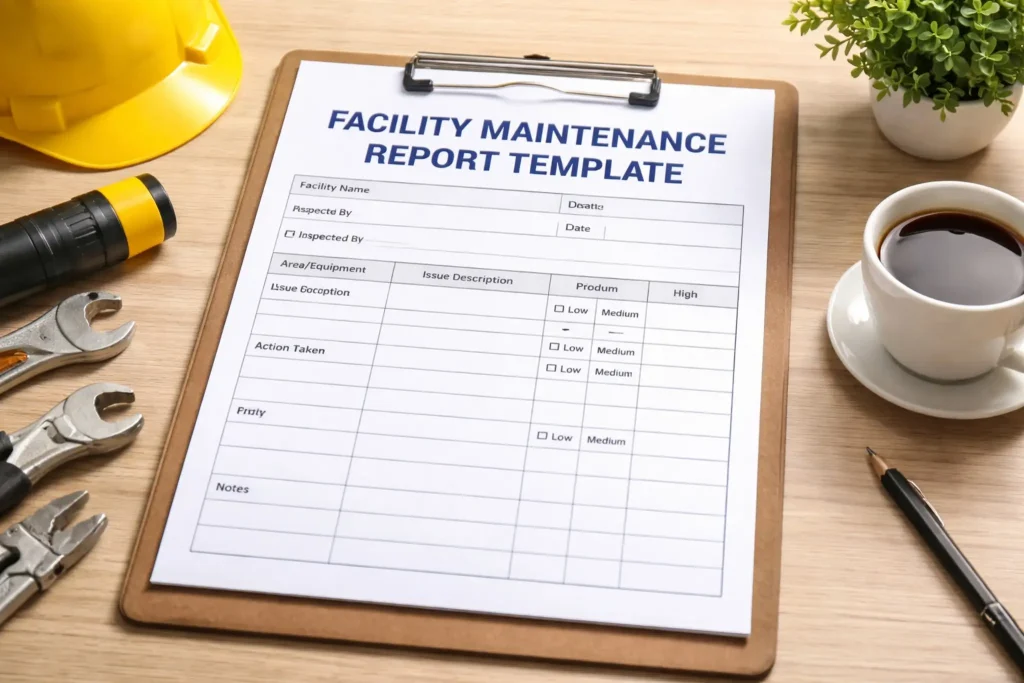
A facilities maintenance report is a formal record of what happened during a maintenance visit or reporting period: what was inspected, what was fixed, what condition your equipment is in, and what still needs attention. Written well, it gives managers and stakeholders a clear, accurate picture of building performance, budget, and risk. Written poorly, it
Facilities Management
Predictive Maintenance vs. Preventive Maintenance: Which Strategy Is Right for Your Facility?
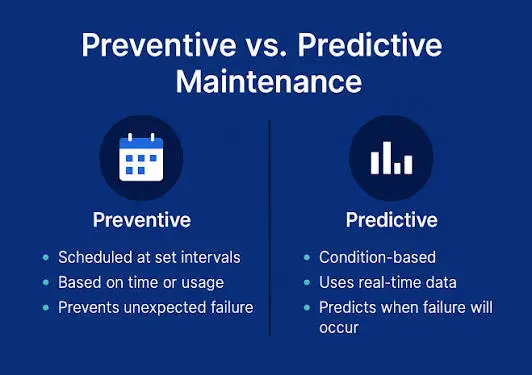
Unplanned downtime is expensive. The average manufacturer loses roughly 800 hours a year to it, and that number climbs fast once aging equipment, tight budgets, and a shrinking pool of skilled technicians enter the picture. Two maintenance strategies exist specifically to bring that number down: preventive maintenance and predictive maintenance. Both are proactive. Both aim

Walk into an office today and you might not notice it, but the lights dim automatically when a meeting room empties out, the HVAC system quietly recalibrates based on how many people are actually in the building, and a facilities manager somewhere is looking at a dashboard that flagged a failing chiller three weeks before

Most facilities teams believe they are more organized than they actually are. Work gets done, breakdowns get fixed, and the building keeps running, so it is easy to assume the operation is in decent shape. But “things aren’t on fire” and “our maintenance program is mature” are two very different statements, and the gap between
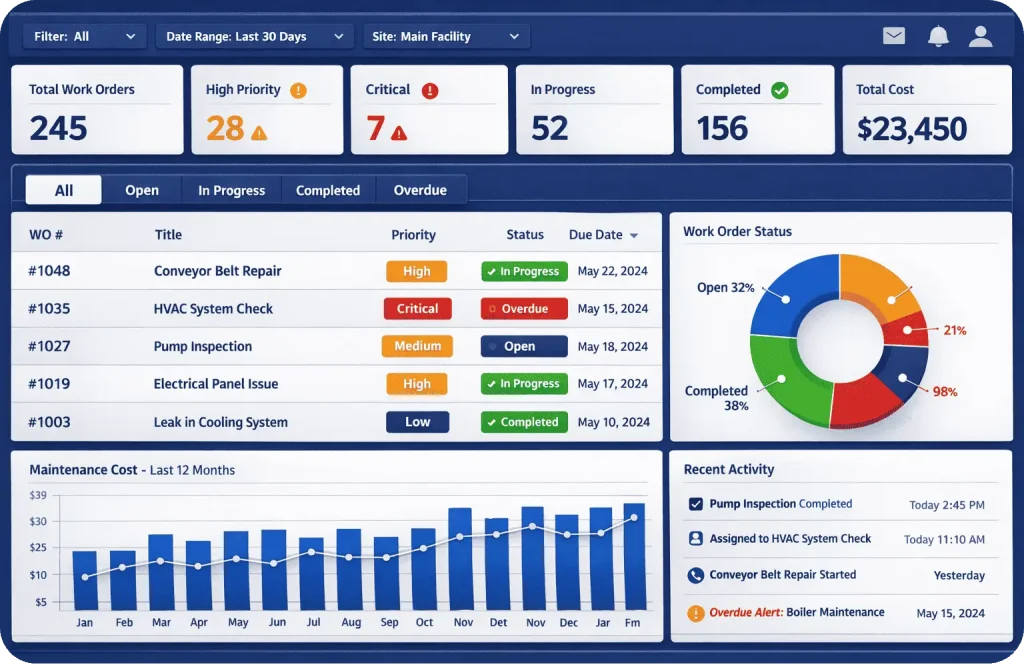
Facilities and maintenance teams are under more pressure than ever to do more with less — fewer technicians, tighter budgets, and higher expectations for uptime and response times. Paper tickets, spreadsheets, and scattered email requests simply can’t keep pace. That’s where work order management software comes in. This guide breaks down what work order management

Manufacturing floors are high-risk environments by design. Hot work, confined space entry, lockout-tagout, working at height, and electrical isolation all happen side by side, often across multiple shifts and multiple contractors. A single missed sign-off or an expired permit can be the difference between a routine maintenance job and a serious incident. This is exactly
CMMS, Facilities Management
Permit to Work Software Systems: How to Choose the Right One for Your Team
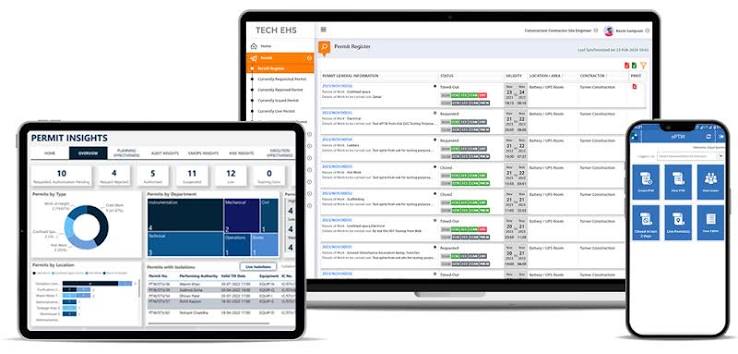
High-risk work doesn’t forgive shortcuts. Hot work, confined space entry, electrical isolation, and lockout/tagout tasks all carry consequences when authorization steps get skipped or lost in paper trails. That’s why more facility and EHS teams are moving away from manual sign-off sheets and adopting permit to work software systems that standardize how permits are requested,